Uttaradit Honors Revered Monk Luang Pho Chan 47 Years After His Death
Uttaradit Province honors Luang Pho Chan Khosokhit on the 47th anniversary of his death, remembering the revered scholar-monk who devoted his life to studying Pali, Sanskrit, and Khmer texts at Wat Had Song Khwae in Tron District.
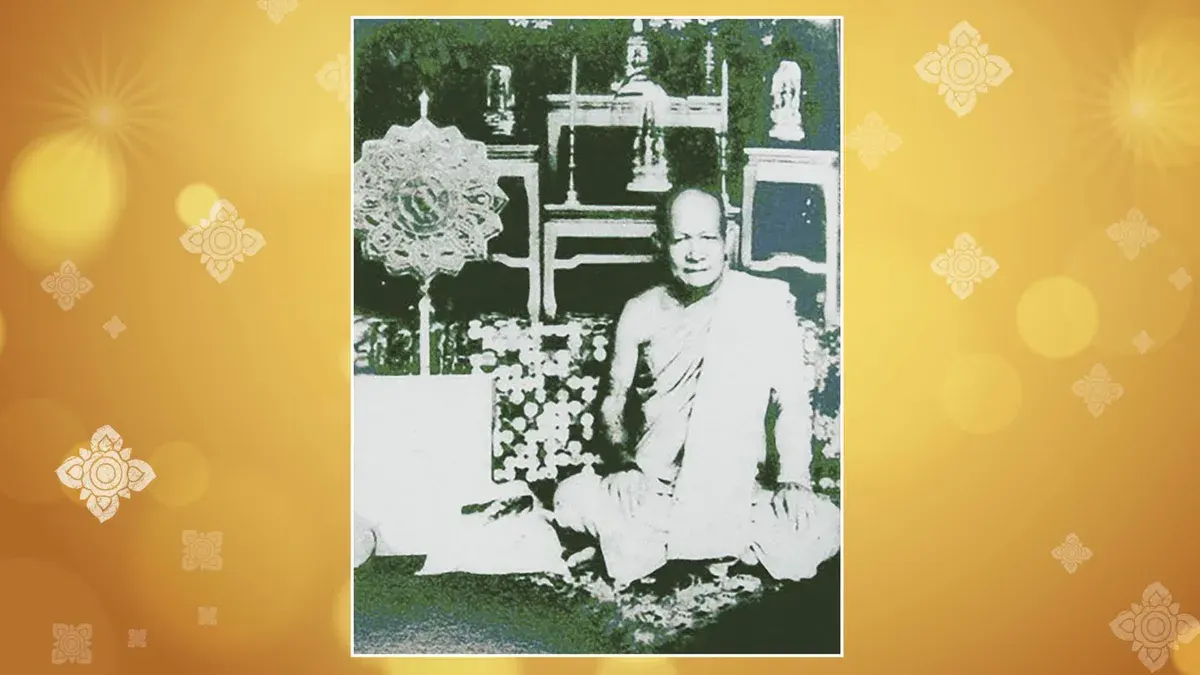
Saturday, August 8, 2025, marks the 47th anniversary of the death of Luang Pho Chan Khosokhit of Wat Had Song Khwae in Tron District, Uttaradit Province, a venerated scholar-monk deeply respected by the people of Uttaradit.
Born on March 14, 1897, as Chan Treeput on a Monday during the eighth lunar night of the fourth lunar month at Had Song Khwae village in Tron District, Uttaradit, to parents Nai Ki and Nang Bua Treeput, young Chan was a well-behaved, obedient child who caused no trouble to his parents. He showed deep compassion for his friends and all living creatures—so much so that the family sometimes went hungry because the boy would secretly take the fish his father had caught for food and release them into the Nan River out of pity.
He spent most of his free time at the temple learning to read, write, and recite sacred texts with the monks until evening. In those days, formal education was not compulsory as it is today; most learning depended on personal initiative and study with the clergy at temples. Chan was an eager learner with a keen interest in Thai and Khmer texts from an early age, and he reportedly recited prayers alongside the monks with remarkable fluency.
Recognizing his dedication to religious study, his parents arranged his ordination as a novice in 1910 when he was 13 years old. This young novice became known for his diligence and ability to fluently recite the Patimokkha and the Chin Banchon chants.
When he reached military conscription age, he was not selected for service, so with his parents' permission, he was ordained as a full monk at Wat Ban Kaeng Tai in Ban Kaeng Sub-district, Tron District, in 1919. Luang Pho Vichiyanpannya Muni (former provincial ecclesiastical chief of Uttaradit) was his preceptor, Luang Pho Pum Chantsaro, abbot of Wat Khlung Krach, served as his teacher of conduct, and Phra Khru Methavorakun (Phra Khru Mi), abbot of Wat Ban Kaeng Tai, was his witness.
He spent his annual retreats at Wat Had Song Khwae, studying Pali and Sanskrit scriptures. He also traveled to Wat Khlung Krach across the water to study and practice preaching with Luang Pho Pum, who became a renowned preacher throughout Uttaradit Province. He further studied Khmer linguistics and texts under Luang Pho Pum and Luang Pho Thongkham of Wat Tha Thong in Wang Kapi Sub-district, Mueang Uttaradit. According to tradition, Luang Pho Pum and Luang Pho Howb of Wat Samakkayaram had once journeyed to study Khmer texts under Luang Pho Ngern of Wat Bang Klang in Phichit Province, and part of their learning also came from Khmer texts from Viang Chan.
When asked about his purpose in studying Khmer, Luang Pho Chan always replied, "I study to help my fellow humans."
Eventually, he was appointed abbot of Wat Had Song Khwae, where he oversaw monks and novices and supported the lay community for many years. He ordained numerous disciples as novices and monks. Through his disciplined conduct and compassion toward his students and relatives over the years, he earned great respect. His creation of sacred amulets and talismans that brought devotees happiness, prosperity, and protection from misfortune further enhanced his reputation as one of Thailand's renowned scholar-monks.
On December 5, 1957, he was granted ecclesiastical promotion to the rank of Phra Khru with the royal title Phra Khru Nawakaan Khosokhit.
He commissioned several series of amulets, including his first edition in 1948 distributed to kitchen staff, amulets from 1961, amulets from 1973 (Friday edition), and amulets from 1977 (80th anniversary Saiyid edition), along with other sacred objects such as black and white photographs (1-inch size and postcard size), lockets, molded busts (5-inch chest size), and male and female golden lucky Gilaen amulets from the second series, as well as sealed yantra Buddha amulets.