Chinese Police Shut Down Drug Lab Network With Thailand Ties
Chinese police dismantled a cross‑border drug network that produced etomidate for 'zombie' e‑cigarettes, tracing the operation to a retired chemistry professor and a master's‑level chemist. The gang shipped precursors to Vietnam, Thailand and Cambodia for final processing, earning the leader over 5 million yuan. Seven labs were smashed in March‑April with cooperation from Vietnamese and Thai authorities.
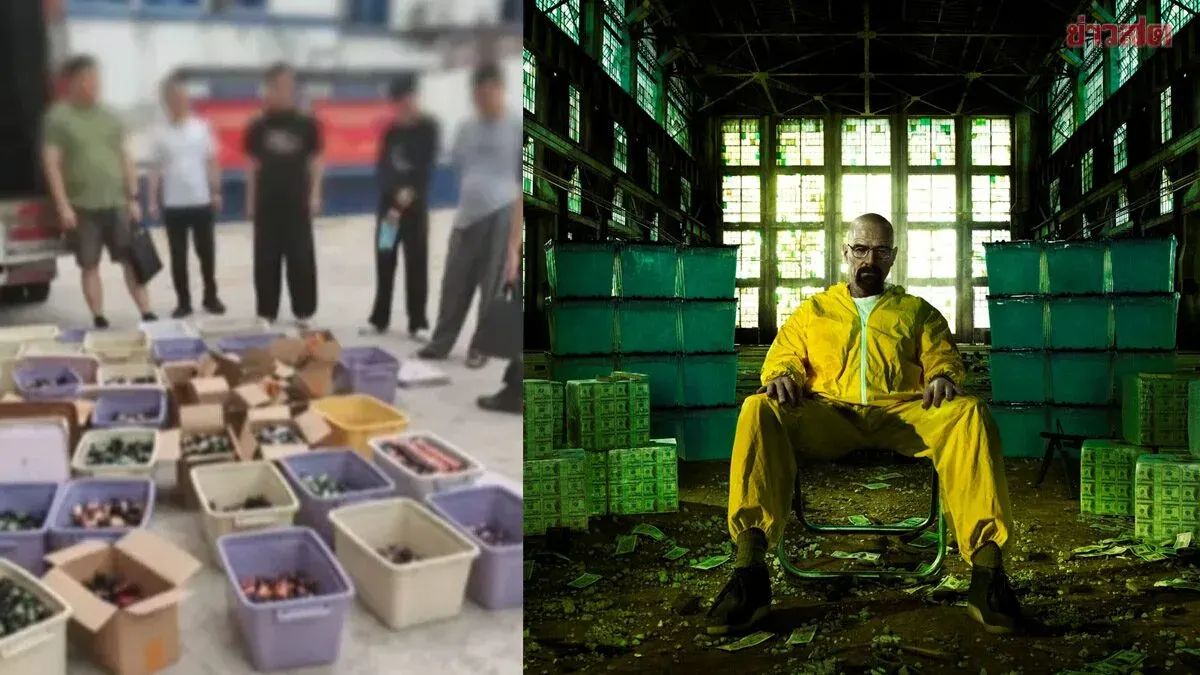
Online users in China quickly drew parallels between the case and the American TV show Breaking Bad, noting the striking similarity of a chemistry teacher and his former student turning to drug production, an image sourced from IMDb. Investigators identified Huang, who holds a master's degree in chemistry, as the purchaser of the chemicals. He had run an e‑cigarette business in Shenzhen for several years before joining the pharmaceutical tech firm for only three months, then quitting abruptly. Further scrutiny revealed he frequently commuted between Zibo and Shenzhen and spent several days with Wu, a retired chemistry professor from a local college. Expanded investigation showed Wu was the mastermind, using his chemical expertise to design and refine the production process and leveraging personal connections to secure laboratory space inside factories across five Chinese cities under the guise of researching new drugs. Huang supervised manufacturing, while a third suspect, Wang, owner of an e‑cigarette business and an international logistics firm, coordinated the shipment of small batches of chemicals and equipment to avoid detection. The gang also exploited legal loopholes to improve efficiency. Crucially, the operation was not confined to China; precursors were produced domestically then smuggled to Vietnam, Thailand and Cambodia for final conversion into etomidate, hoping to evade prosecution since possession of mere precursors in China might not be sufficient for charges. Chinese police spent nearly two years gathering evidence and collaborated with Vietnamese and Thai authorities, eventually dismantling seven operational bases in Cambodia, Vietnam and Thailand during March and April. Investigators said Huang, the ringleader, earned more than 5 million yuan (about 25 million baht) from the illicit enterprise.