Budget Panel Cuts 3 Billion Baht Khlong Dan Payment, Questions Official's Actions
Thailand's budget committee cut 3 billion baht designated for a Khlong Dan compensation payment, with the deputy prime minister questioning whether a hastily arranged court commitment by a Pollution Control Department official constitutes a
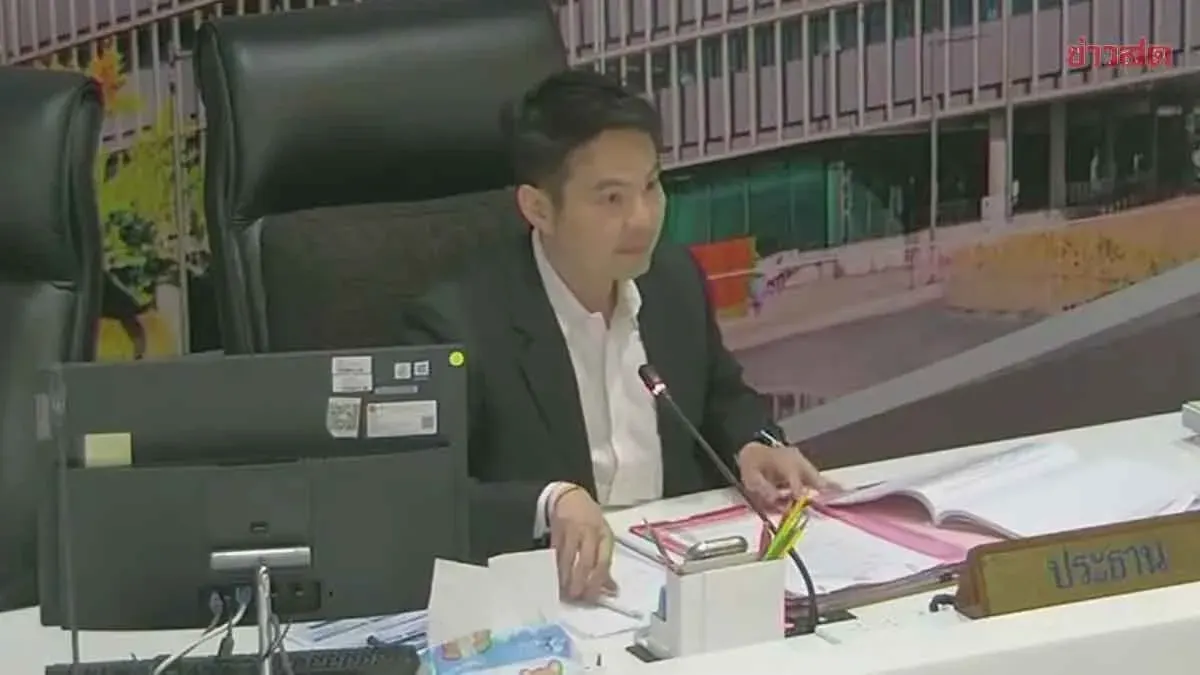
On August 20, 2569, the House of Representatives budget committee held an extraordinary session to review the fiscal year 2570 budget bill, chaired by Deputy Prime Minister Phradorn Perisnanandkul. The committee reviewed a subcommittee report recommending budget cuts and agency appeals, presented by Bunyaluk Prasertsopha, a member from Ratchaburi and chairman of the training and seminar subcommittee.
The subcommittee proposed cutting 3.2 billion baht from a total budget framework of 224 billion baht, with 3 billion baht coming from the Khlong Dan case payment and the remaining 200 million baht from other items. The committee noted that spending should be cost-effective and that domestic seminars should focus on quality and concrete results. Training programs should use online formats, and committee members questioned whether ethics training was necessary given that it is already a standard organizational practice.
A significant concern arose during debate: the Pollution Control Department had requested 3 billion baht to cover a court-ordered compensation payment, but the subcommittee cut it entirely. Deputy Prime Minister Phradorn pointed out irregularities, noting that after the early August budget cut, a deputy director-general hastily arranged enforcement proceedings on August 11 at the Supreme Administrative Court, recording a verbal commitment about payment installments—the first by August 31 using 2569 mid-year funds, the second by November 1 using the 2570 annual budget, and the third by April 1, 2570 using 2570 mid-year funds.
Phradorn stated that recording such a verbal commitment amounts to coercing the government and questioned where tens of billions of baht would come from, describing it as an issue requiring government decision-making. He argued the verbal commitment does not constitute a legal order and thus does not qualify as legislation under Article 144(3), asserting that only legally mandated payments—those backed by proper law—should be protected from budget cuts.