Young Weaver Revives Tradition With Modern Design
A Chiang Mai weaver trained in textile design returns home to modernize her village's traditional cloth while preserving its heritage, creating contemporary designs that introduce Ban Lai Kaew textiles to new markets.
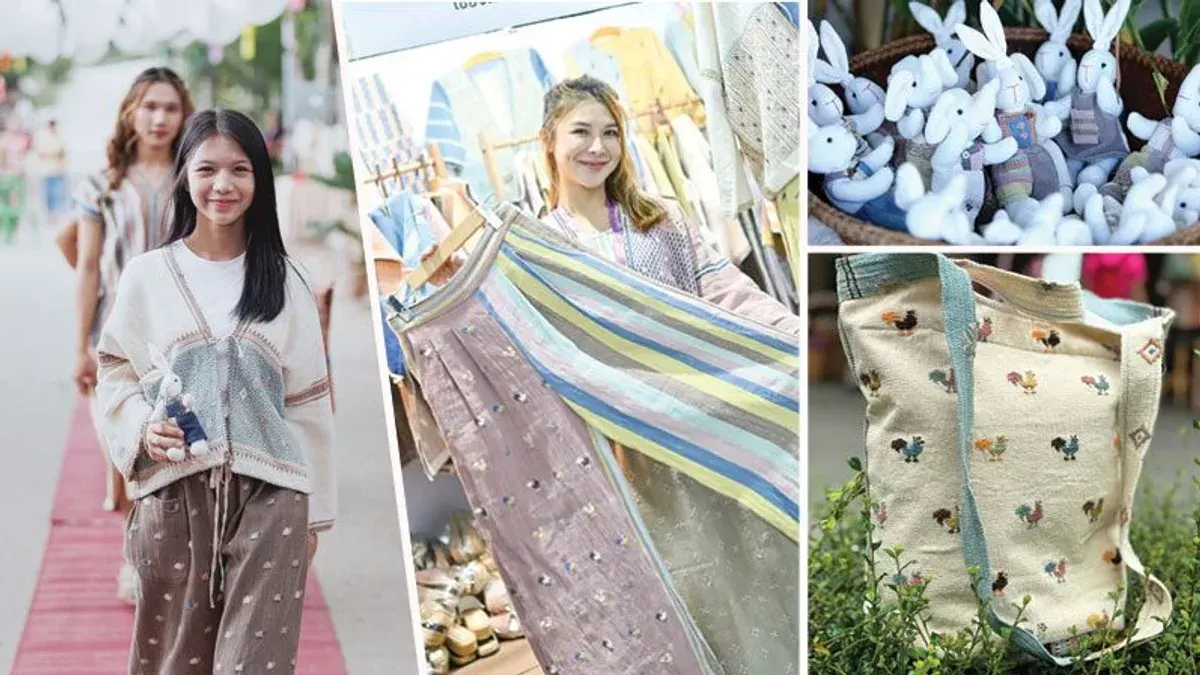
From a girl who learned weaving thread by thread at her mother's side, Chanyaphat Puphped—Ja Jia—is now a young innovator determined to introduce the world to her village's textile heritage. Born in Doi Tao district, Chiang Mai, she pursued higher education in textile design, building on childhood experience with formal training in design, creativity, fashion, and marketing. After graduation, she initially stepped away from home to explore her own path, but gradually realized what she sought was not far away—it lay in the very cloth she had known since childhood. She returned to take up the craft from her parents, advancing the signature weaving of the Ban Lai Kaew weavers through new designs and contemporary aesthetics, while preserving the established markets her parents had built over decades.
"People ask if we sell the traditional patterns. We do," Ja Jia explains. "But we want to add more value and reach more people. We want new markets beyond what my father created." Her words reflect the clear intention of her generation: she has not simply come home to inherit what exists, but to discover how the gifts of her ancestors can flourish in a new era. This startup phase has become her laboratory for creative innovation. Yet she does not walk alone. Her father Tuey (Jantham Puphped), a lifelong master of natural dyeing and weaving, serves as mentor, critic, and collaborator. Her mother, Laa (Kanyarat Puphped), a skilled dyer, weaver, and seamstress, provides steady encouragement as her daughter learns and grows.
Each woven cloth carries more than beauty—it holds stories, beliefs, customs, and community values. Ja Jia must learn deeply beyond mere design; she must understand what can be adapted, what must be preserved, and where the boundaries lie. She listens openly to weavers of all generations, welcoming both agreement and dissent. Where differences might have built walls, the community instead chooses dialogue, adjustment, and common ground, moving forward together. When older weavers see their traditional patterns transformed into dresses, trousers, and jackets, their view of cloth itself shifts—from a product made according to inherited patterns to a space of experimentation and imagination.
"We used to make only our traditional Karen patterns," Ja Jia recounts. "But I wanted them to feel more modern, to reach more people. So I came back and adapted them for everyday wear." Presenting new ideas to elders in the community sometimes requires patience and time for hearts to open—as with her ongoing effort to encourage her mother to experiment with patterned animal designs on cloth.