Future success depends on continuous learning rather than past achievements, with modern talent defined by adaptability in a rapidly changing world rather than traditional markers like degrees and job titles.
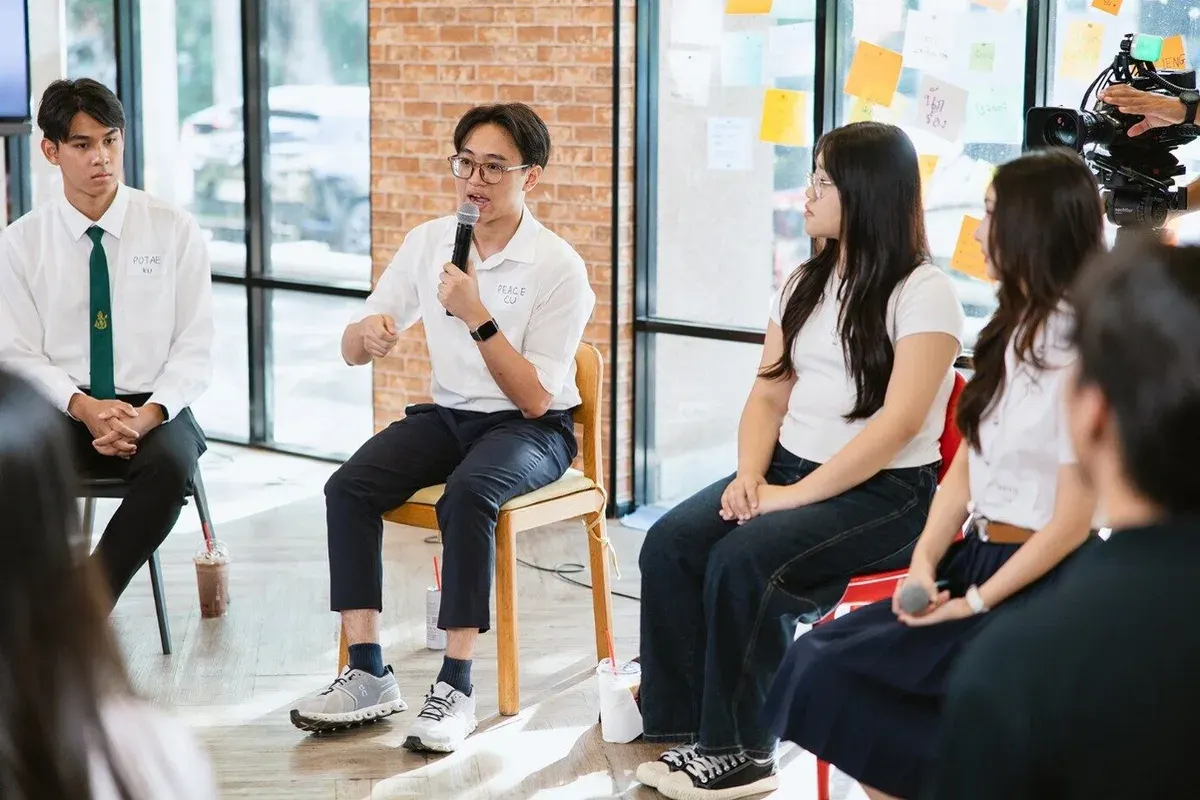
Several weeks ago, I had the opportunity to sit down with a group of young people from Kasetsart University who had joined the Hope Club, a forum for open dialogue between myself and the younger generation on topics ranging from change and opportunity to our near future.
I opened the discussion with a thought-provoking question: "Do you think you have the qualities of a 'talent'?" The room fell silent for a moment, and before anyone could answer, one participant raised their hand and posed a counter-question: "But what is your definition of 'talent'?"
That question shifted the entire conversation. Rather than me waiting for their answer, we began a shared reflection. It wasn't just about the true meaning of talent, but about recognizing how rapidly this very definition is being rewritten in a world that never stops moving. Their responses reinforced an important truth: the world is advancing into a new era of transformation, and it is already happening.
"I don't see myself as a talent or anything else," one student said. "I just see myself as someone here to learn, to meet my own needs, and to improve myself every single day. I think whenever I walk into a room and feel like I'm the best, that's a sign I'm in the wrong room. I see talent as someone who keeps filling their glass—not overflowing it."
Their answer was more than an explanation; it reflected a deeper truth about the value shift in modern society. In my youth, good grades, admission to a dream university, and a stable job were the societal markers of success. But today, these have become merely snapshots of the past—indicators of effort, determination, and intent at a particular moment. They no longer reveal what comes next.
These achievements are like photographs from a bygone era, telling us what you accomplished yesterday in a controlled environment. They tell us nothing about how you will face new challenges in the real, constantly changing, and difficult-to-control world we live in.
Over the past 30 years, leading organizations through shifting business landscapes has taught me one crucial lesson: the moment we believe we are skilled, that we have succeeded, and we stop learning—that is the most dangerous trap for any so-called talent. It is what I call the illusion of arrival, especially in this age where change happens faster than most people can adapt.
For True Corporation, we face this challenge head-on. We are strategically moving forward with a goal to become an "AI First" organization by 2028. But this mission is not about replacing people with AI; it is about equipping our people with new tools.
Our AI Practice Day program is one reflection of that commitment. It is about learning through hands-on experience, diving deep, and learning alongside colleagues—helping employees transition from mere "awareness" to real "capability." We emphasize not certificates, but practical tools that work.