Cabinet Extends Security Decree in Four Southern Provinces
Cabinet has approved a one‑year extension of the Internal Security Act in 19 districts across Narathiwat, Pattani, Yala, and Songkhla, valid until September 30, 2027. A survey shows over 70% of local residents oppose lifting the decree. The measure also includes provisions for suspected offenders to surrender and undergo rehabilitation instead of regular prosecution.
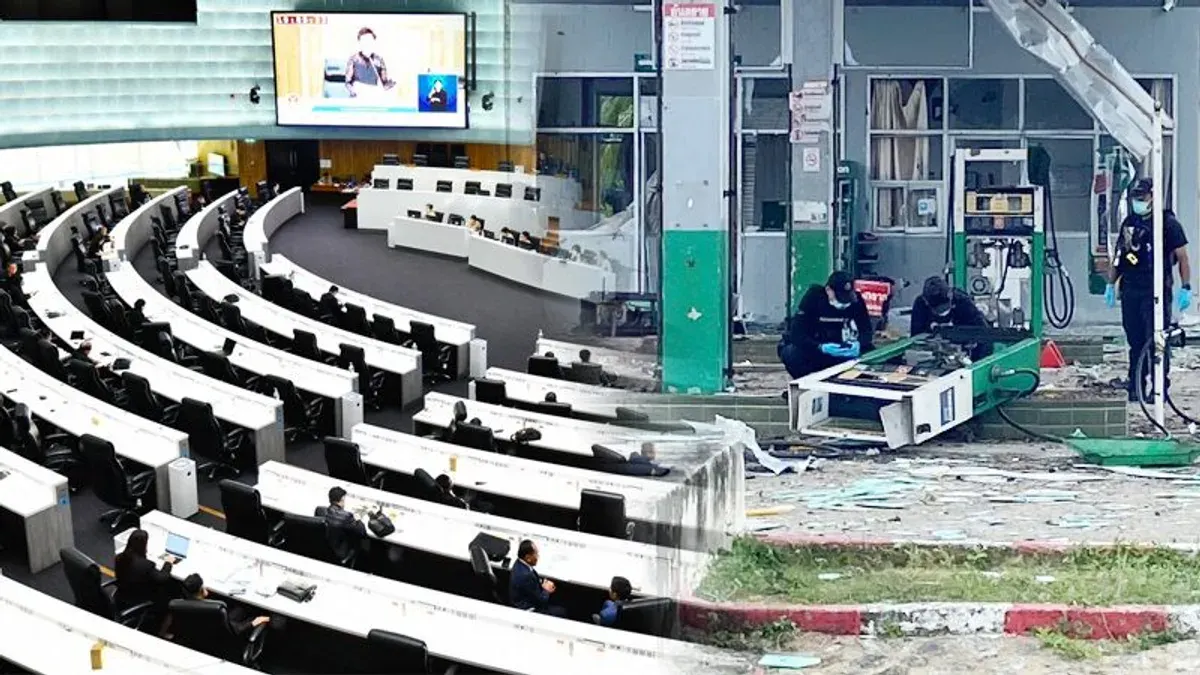
The Cabinet meeting acknowledged the situation assessment and approved extending the proclamation of areas affected by security incidents under the Internal Security Act 2008, covering 19 districts in four provinces: Narathiwat (three districts: Yi-ngo, Waeng, Sukhirin); Pattani (seven districts: Yaring, Panare, Mayo, Mai Kaen, Thung Yang Daeng, Kapho, Mae Lan); Yala (five districts: Betong, Yaha, Raman, Kabang, Kong Phinang); and Songkhla (four districts: Na Thawi, Chana, Thepa, Saba Yoi). The extension is for another year until September 30, 2027.
The government said a public opinion survey in the area found that 70.36 percent of residents do not want the security decree to be revoked, while 29.64 percent favor its cancellation.
The Cabinet also endorsed measures under Section 21 of the Internal Security Act that allow individuals who have committed offenses due to misunderstanding or inadvertence to voluntarily surrender, undergo court‑ordered training, and comply with conditions set by the court instead of facing regular criminal proceedings, thereby offering a chance to re‑integrate into society and support peace in the area.
The government stressed that public safety remains paramount and that legal measures will be used only as necessary and appropriate to the situation, with the aim of reducing security‑related measures and returning the areas to normal mechanisms when conditions permit.
Regarding the southern border situation, besides invoking the Internal Security Act, the government has also enacted the Emergency Decree on Public Administration in Emergency Situations BE 2548 and the Martial Law Act BE 2457. These three special laws were drafted to prevent, halt, and address threats to national security, giving authorities powers to search, arrest, set up checkpoints, and restrict people’s movement in and out of the areas. At the same time, they curtail basic rights such as freedom of travel, assembly, and livelihood because of spatial and temporal limitations.
The government and local agencies are urged to apply these laws cautiously, using them only when truly needed, while keeping public safety as the top priority as pledged.