Chiang Mai Plants 1,000 Trees to Restore Fire-Damaged Forest
Chiang Mai planted 1,000 trees at Ban Pang Khi Lek community forest in Mae Wang District to restore wildfire damage and develop a carbon credit source for the community.
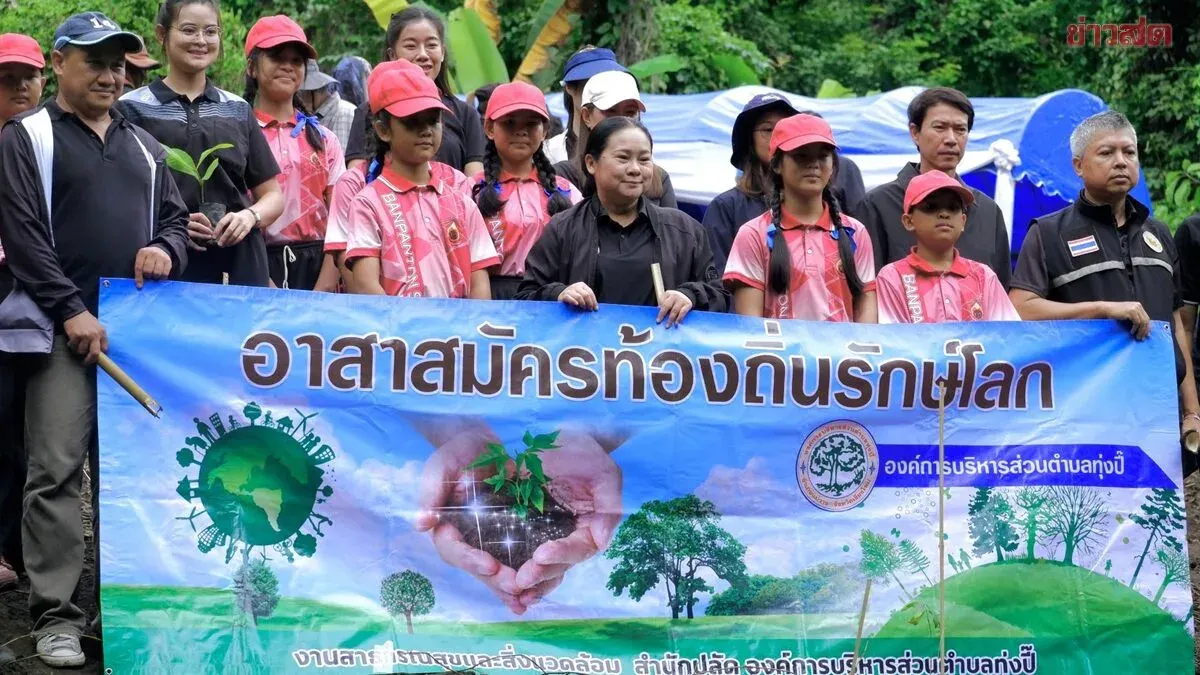
Chiang Mai is moving forward with a tree-planting initiative to restore the community forest at Ban Pang Khi Lek in Mae Wang District, aiming to revive the forest area damaged by wildfires and develop it into a community carbon credit source. On August 18, 2026, at the Ban Pang Khi Lek community forest area in Thung Pi Subdistrict, Mae Wang District, Chiang Mai Province, Sivakorn Buapong, Deputy Governor of Chiang Mai, presided over the opening ceremony of a "forest planting activity to restore forest areas affected by wildfires under the fiscal year 2026 program to address wildfire, haze, and fine particulate dust problems."
The event was attended by the Mae Wang District Officer, heads of government agencies, representatives from the Chiang Mai Natural Resources and Environment Office, the Chiang Mai Forest Resource Management Bureau Region 1, the Conservation Area Management Office Region 16, the Chiang Mai Disaster Prevention and Mitigation Office, the Thung Pi Subdistrict Administrative Organization, as well as community leaders and local residents.
The Deputy Governor noted that Chiang Mai has continuously faced problems with wildfires, haze, and PM2.5 fine particulate dust. Between January 1 and May 31, 2026, heat accumulation hotspots were detected predominantly in forest areas, affecting forest resources, ecosystems, biodiversity, water sources, and air quality and public health. To address this, Chiang Mai Province launched the wildfire, haze, and fine dust mitigation support program to accelerate restoration of damaged forest areas.
The activity involved planting a total of 1,000 trees. The Ban Pang Khi Lek community forest area is a key target for developing community forests as a carbon credit source, promoting forest conservation and restoration while enhancing the capacity to absorb and sequester greenhouse gases, creating long-term sustainable benefits and income for the community.