Chiang Rai Monitors Sai River Flood Risk After Heavy Myanmar Rains
Heavy rainfall in northern Myanmar caused the Sai River to rise above normal levels in Chiang Rai's Mae Sai District, with water breaching embankments in Tachileik across the border, though conditions are improving as levels recede.
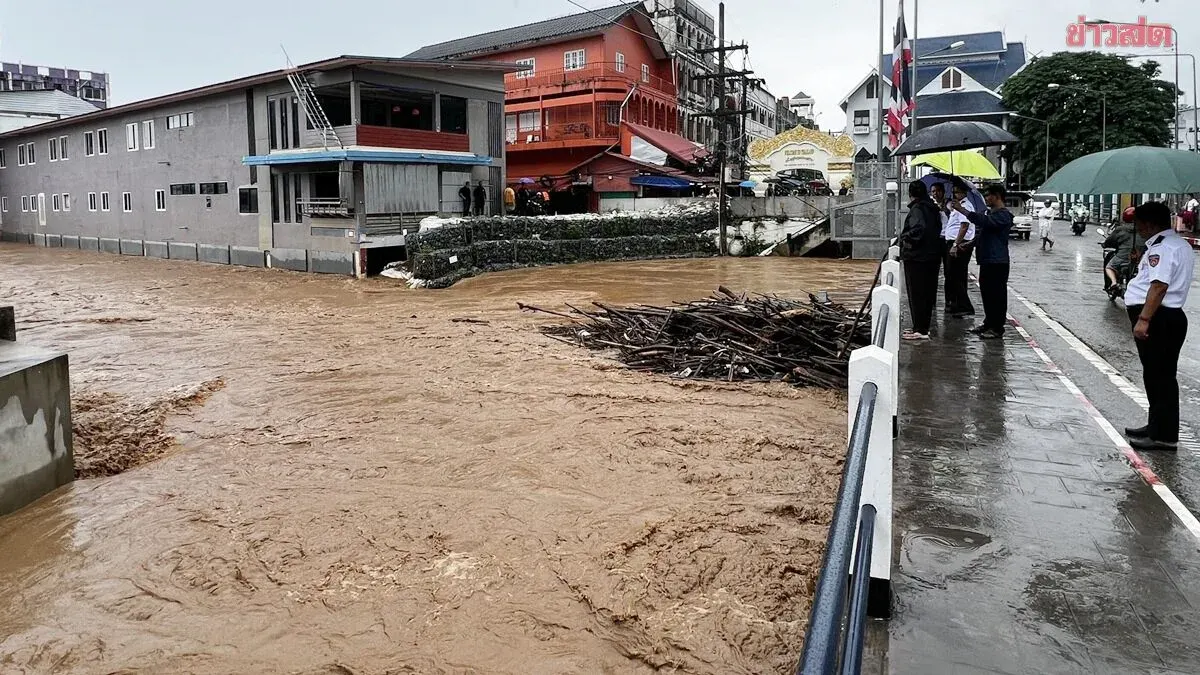
Chiang Rai officials are monitoring water levels on the Sai River following heavy rainfall in northern Myanmar that caused flooding in Tachileik and alarmed Mae Sai residents, though conditions are now showing improvement as water levels begin to recede.
On September 7, 2569, the Chiang Tao rain gauge recorded accumulated rainfall of 88.6 millimeters from intense downpours in Myanmar's north, causing the Sai River to rise rapidly. At the First Thai-Myanmar Friendship Bridge, water levels surged to 398.36 meters, about 0.77 meters above normal banks, prompting concern among local residents and surrounding communities.
Chiang Rai Governor Chucheep Pongchai coordinated closely with Tachileik Governor Tin Hwe Tang and relevant agencies to monitor border conditions and align water-level data and response strategies. The latest situation shows positive trends with receding water levels, though water remains within embankments with no reports of overflow affecting major economic zones or important communities in Mae Sai District.
On the Myanmar side in Tachileik opposite Mae Sai, water from the Sai River overflowed widely into surrounding areas, with depths reaching approximately 50 centimeters in many locations. A damaged river embankment contributed to water breaching through spillway channels.
The governor stated that officials conducted an on-site inspection alongside military representatives and Tachileik delegates, monitoring water conditions at the Thai-Myanmar Friendship Bridge after morning downpours from Muse and Tachileik. While the measured rainfall of 75 millimeters remained below critical thresholds, the drainage systems and big bag embankments supported by the army successfully contained the overflow. Water levels are now declining. The province has prepared a three-level early-warning system and contingency plans for patient evacuation, asset relocation, and vehicle transfers to temporary shelters for emergency situations.
For long-term solutions, the Treasurery Department has approved land use, currently moving through administrative procedures to the Budget Bureau via the Ministry of Interior. Once approved, funds will be directed to Chiang Rai's Public Works and Urban Planning Office to procure materials, remove obstacles, and construct semi-permanent temporary embankments, with completion of a permanent structure targeted after the flood season passes.