Chiang Rai Issues Ban on Mae Sai River Water Use
Chiang Rai has warned residents not to use water from the Mae Sai River after tests found arsenic levels 28 times and lead levels five times above safety standards. The provincial order bans direct consumption of the river water and calls for stricter tap‑water treatment and avoidance of locally caught aquatic animals. Authorities will continue monitoring the contamination and public health risks.
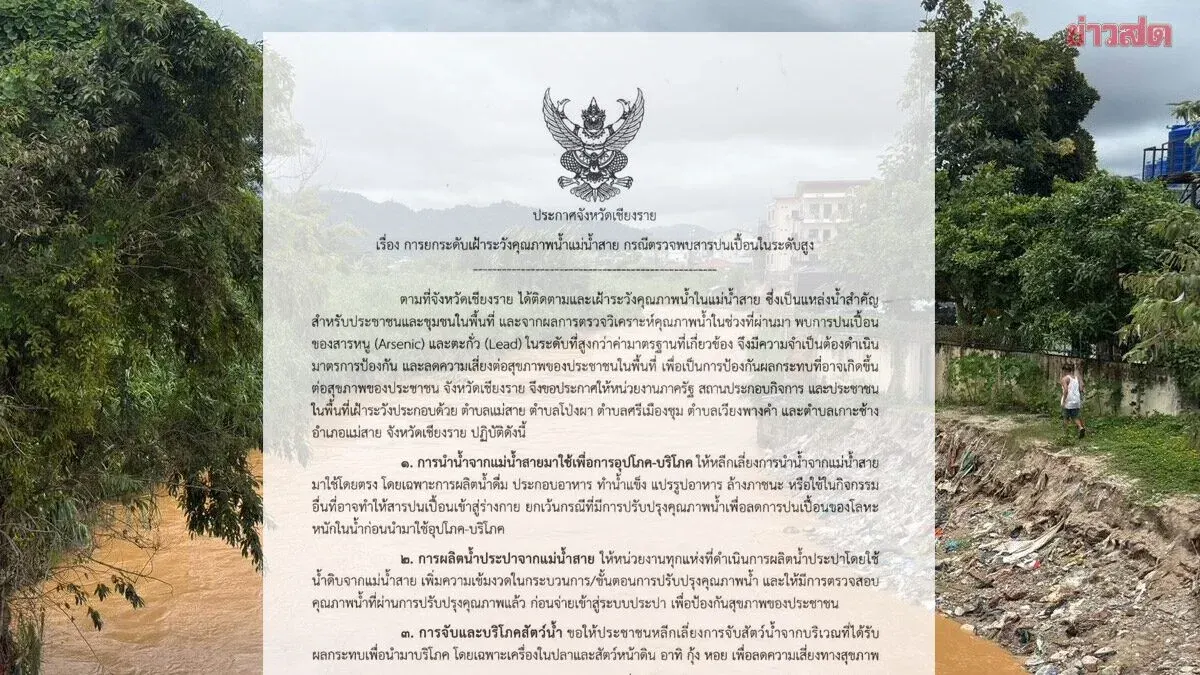
On September 25, Chiang Rai Governor Chuchiep Phongchai signed a provincial order raising surveillance of the Mae Sai River after the Pollution Control Department reported arsenic levels 28 times and lead levels five times above national standards. The order bans direct use of river water for drinking, cooking, ice making, food processing, washing utensils, or any activity that could ingest contaminants, unless the water is first treated to reduce heavy metals. All agencies producing tap water from the river must tighten treatment processes and test treated water before distribution. Residents are also advised not to catch and eat aquatic animals from affected areas, especially organ meats and bottom‑dwelling species such as shrimp and snails. If tap water is found to exceed arsenic limits, the public should follow health department guidelines. Chiang Rai and related agencies will continue monitoring heavy‑metal pollution and public health to assess the situation and adjust measures as needed. The governor stressed the action is a temporary preventive measure until water quality is confirmed safe or otherwise changed.