Chiang Rai Water Producer Assures Safety Using Groundwater, RO Filtration
A Chiang Rai bottled water producer has reassured the public that its products are safe, explaining that it uses groundwater rather than the contaminated Sai River as its source. The factory employs a multi-stage filtration system including reverse osmosis and conducts daily quality tests, with all results meeting national standards.
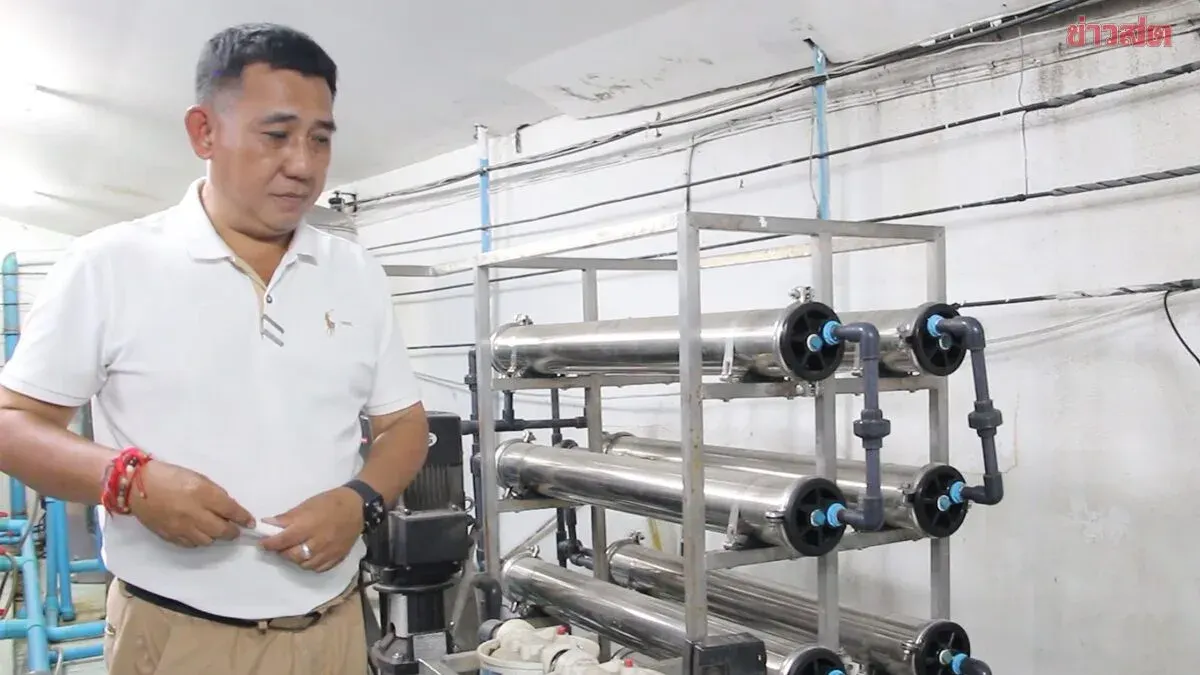
Chiang Rai drinking water producer insists on using groundwater as raw water source, passes through RO filtration, checks quality daily
November 19, 2026 – Amid concerns over "arsenic" and heavy metal contamination in the Sai River, an important raw water source for tap water production in Mae Sai District, Chiang Rai, local residents have lost confidence in the safety of water for consumption, including bottled drinking water purchased as a substitute for tap water. This has prompted local drinking water producers to clarify their production processes and quality control measures to restore consumer confidence.
Mr. Som Sak Rungjarunglapakul, manager of Jermsak Drinking Water, revealed that since the factory opened, it has chosen to use groundwater as its raw water source and does not take water from the Sai River or the tap water system for production. In the past, groundwater samples have been tested and no contaminants were found. In addition, there is a multi-stage filtration system starting with water conditioning through a softener before entering a 4-stage filtration process and a Reverse Osmosis (RO) system, which separates dissolved substances from the water before bottling and distribution.
Mr. Som Sak added that the factory checks water quality daily using a total dissolved solids meter. Current readings are around 0.08-0.09, while the drinking water standard requires total dissolved solids not to exceed 500 milligrams per liter. If values rise abnormally or exceed the set level, the RO filter elements are replaced immediately. Furthermore, machinery is cleaned and all four filter sets are inspected regularly to ensure production efficiency. For external verification, water samples are sent for analysis to the Department of Medical Sciences once a year, with test results kept as evidence. Public health officials also collect samples from the factory for testing several times a year, and past results have met standards with no issues found.