Delivery Rider Slammed For Attacking Buddhist Monk
A delivery rider faced backlash after publicly criticizing a Chiang Mai temple monk who requested food consecration before accepting a meal, a practice required by Buddhist monastic discipline that the rider dismissed as unreasonable.
An online controversy erupted when a delivery rider posted harsh criticism in a Mae Rim district Facebook group, using crude language to attack a prominent temple and its monks in Chiang Mai. After arriving to deliver food to the temple, the monk requested that the delivery rider perform food consecration (prakan) before handing over the meal, following strict Buddhist monastic discipline. Dissatisfied, the rider posted an attack questioning why he should perform the ritual, sarcastically claiming he was a delivery driver, not making merit, and criticizing the monk for not practicing almsgiving, eating at dawn, and living in a luxurious dwelling like a resort.
After the post circulated, many uninformed people commented attacking the monk and temple, damaging the temple's reputation. However, many others expressed concern that the claims were distorted and defamatory to both the monk and the temple. Upon investigation of Buddhist discipline, authorities confirmed that requesting food consecration before acceptance is strict adherence to monastic rules, as monks cannot receive or touch unconsecrated food. The request is not unreasonable but a practice of maintaining monastic discipline.
Buddhist discipline permits monks to eat until just before noon, so eating at dawn is within monastic rules, even if forest temple monks typically eat only once daily. Regarding the observation that the monk ordered food through an app, this could stem from various reasons, such as invited duties or temple obligations preventing normal almsgiving, or family members ordering through the app to offer to the monk, which doesn't necessarily mean the monk ordered it himself.
After the controversy, the temple offered for the rider to visit for discussion and reconciliation, but the rider never appeared and later deleted the original post. This incident highlights the importance of fact-checking before sharing information on social media, as inaccurate communication can damage individuals' and religious institutions' reputations, even after the truth emerges.
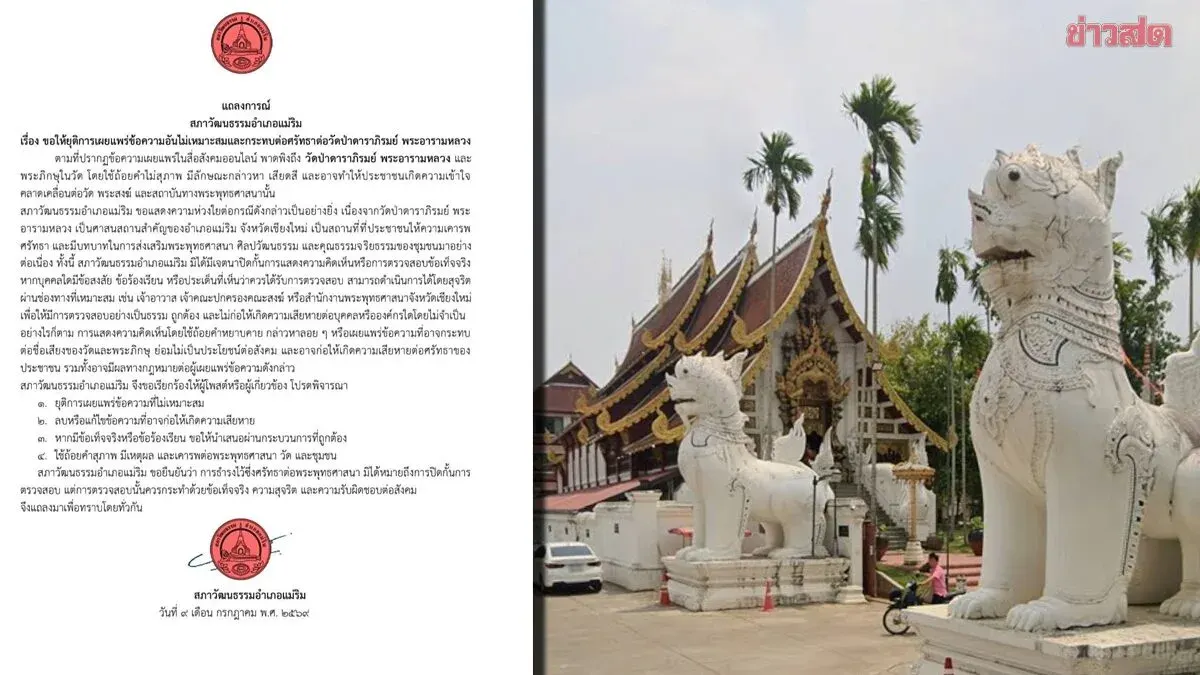
Recently, the Mae Rim Cultural Council issued a statement defending the temple on July 9, 2569, urging an end to distorted posts and crude language, fearing damage to both the monk and temple.