Deputy PM Pushes Rice Measures as Jasmine Hits 17,000 Baht/Ton
Deputy Prime Minister Supachai Sutthamphanth chaired a National Rice Policy Committee meeting to discuss measures for the 2027 production season as current rice prices reach satisfactory levels. Hom Mali paddy is fetching 16,500-17,000 baht per ton, with all major rice varieties seeing price increases over last year. The government aims to reduce production costs and boost yields to further improve farmer incomes.
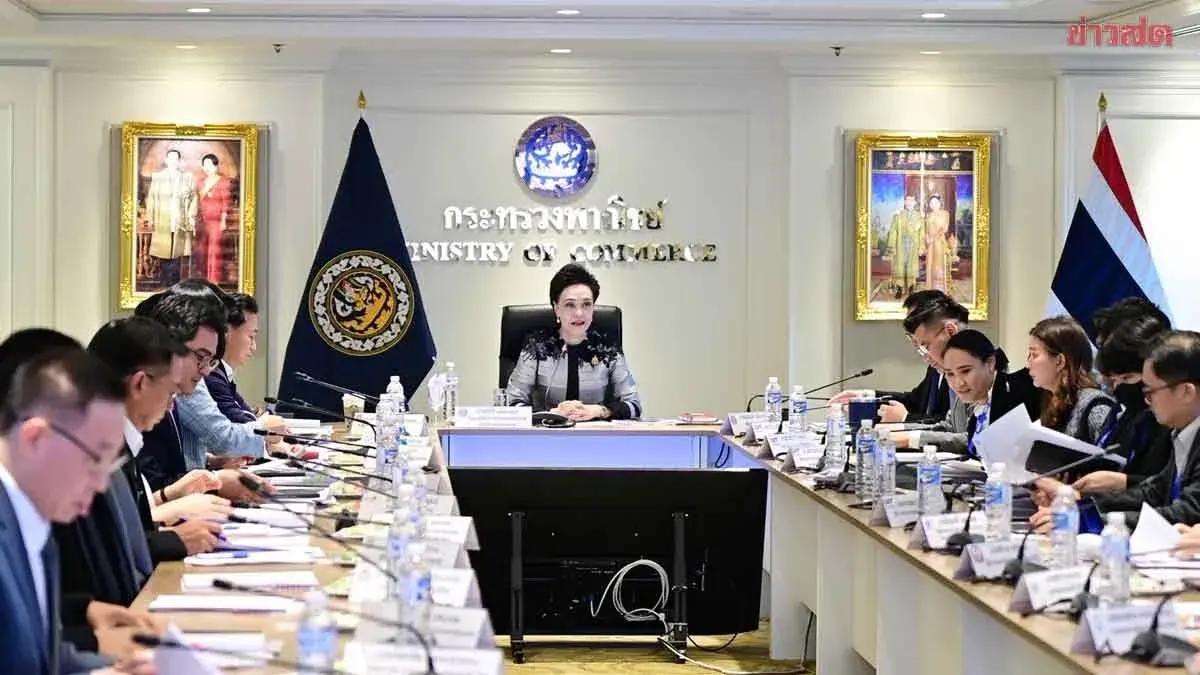
Deputy Prime Minister and Commerce Minister Supachai Sutthamphanth disclosed after chairing the first 2026 meeting of the National Rice Policy Committee's market subcommittee on November 13 that the session aimed to monitor rice price and export situations and measures to maintain price stability for all rice types. The meeting heard feedback from farmers and the private sector, who agreed that current rice prices have improved to satisfactory levels, while stressing balanced market oversight for the benefit of both farmers and consumers.
Discussions covered the overall rice market situation, prices, exports, and measures to support and prop up rice prices. Current prices are at good levels likely to satisfy farmers. Supachai highlighted that reducing production costs and increasing yields per rai are crucial for raising farmers' net income, assigning the Ministry of Agriculture and Cooperatives to address this. Meeting points will be forwarded to the full National Rice Policy Committee to determine next steps.
"On rice situation management, we must oversee the entire system. Today's discussion focused on the endpoint — selling and price oversight for consumers, millers, and farmers to ensure all parties earn optimal income. But we cannot overlook costs, which we've tasked the Agriculture Ministry to manage — seeds, yields per rai, quality, moisture, oil content, and fertilizers, especially the targeted fertilizer subsidy program, which we want expanded to reach more farmers. If we manage both prices and costs, farmers will have sufficient income for their livelihoods."
Supachai added that a full National Rice Policy Committee meeting will be convened as soon as possible, targeting late November or early December, to prepare continuous support measures for the 2027 production season.
Chaiwut Buangam, a National Farmers Council member, said current rice prices are satisfactory compared to production costs and selling prices, meaning farmers can still make a living. However, he urged the government to prioritize reducing production costs, especially by increasing yields per rai and developing quality rice seeds to lower costs and raise farmer income.
Bancha Tangjitwattanakul, President of the Thai Rice Millers Association, stated that 2026 is a good year for Thai farmers regarding rice prices. All paddy rice types have risen compared to last year. Fresh paddy at 25% moisture sells for 13,700-14,000 baht/ton; Hom Mali at 15% moisture fetches 16,500-17,000 baht/ton; white rice at 15% moisture goes for 10,000+ baht; white rice at 25% moisture around 9,000 baht; fresh glutinous rice at 9,000-9,500 baht; and dry glutinous rice at 12,000-12,500 baht. All three main rice categories are at very good price levels satisfactory to farmers, millers, and exporters.
Supporting factors include foreign markets driving higher global demand, combined with government support measures covering cost assistance, interest rate support, and market and export promotion, enabling farmers to sell at good prices.
Chokchai Setthiwaran, Vice President of the Thai Rice Exporters Association, commented further.