Drought Forces Buriram Farmers to Sell Buffaloes for Debt Repayment
A severe drought in Buriram province has devastated rice crops, cutting yields by nearly half and pushing farmers into debt. With rising production costs and insufficient income, many are resorting to informal loans, selling livestock, and using dried rice stalks as animal feed. One farming couple sold five of their 17 buffaloes to repay bank loans and avoid deeper financial trouble.
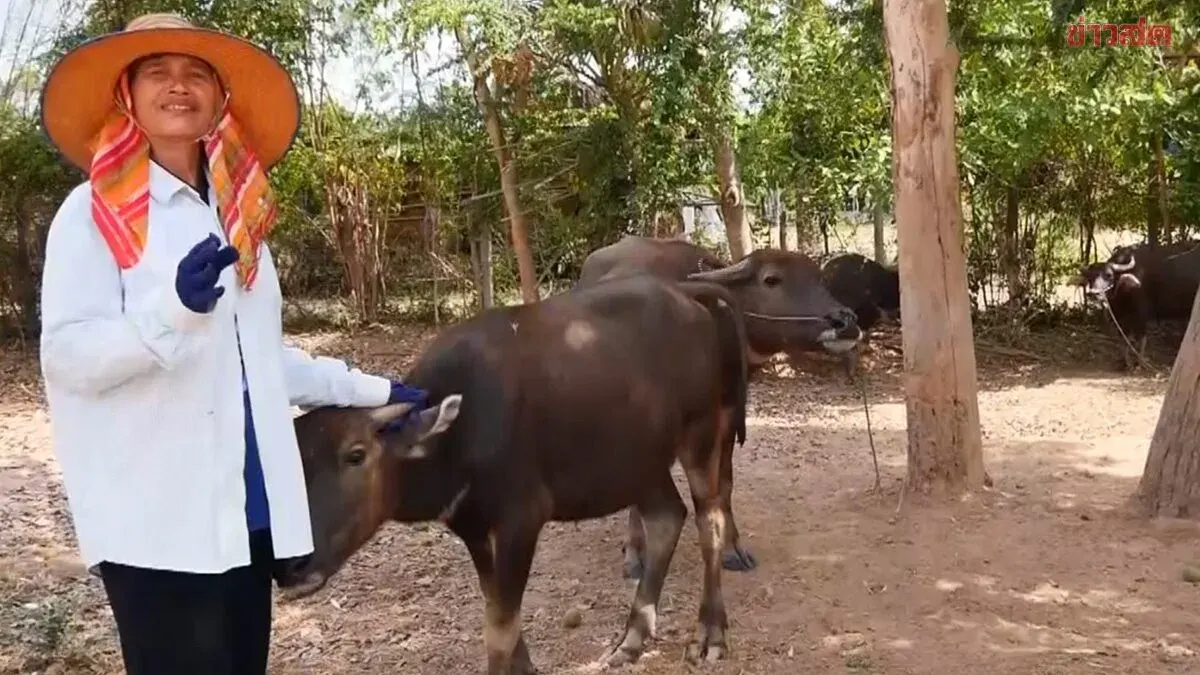
Buriram: A drought crisis is causing severe hardship for villagers. A farming couple sold five buffaloes to repay bank debts after rice crops withered and died from water shortages and intermittent rains, reducing yields by over half and leaving them burdened with debt and loan interest.
November 17, 2026 – Farmers across many areas of Buriram province are suffering from drought and intermittent rainfall. Although harvest season has arrived, large numbers of rice plants have withered and died standing due to lack of water, causing yields to drop nearly 50 percent compared to previous years. Even though rice prices are favorable this year, the reduced harvest combined with higher costs for fertilizer, fuel, and harvesting means income from rice sales barely covers expenses. Some families must set aside rice for household consumption before selling the remainder, yet still cannot repay their Bank for Agriculture and Agricultural Cooperatives (BAAC) debts. Some have resorted to informal loans just to pay interest. Others harvest dried rice stalks for cattle feed to reduce animal feed costs, while families with cattle and buffaloes are forced to sell them to repay debts.
A farmer from Ban Don Phrom in Tambon Lumpuk, Mueang Buriram District, revealed that three villages in Tambon Lumpuk — Ban Phai Noi, Ban Nong Sai, and Ban Bulao — have been hit by drought this year, causing rice plants to wither and die standing and cutting yields by nearly half. The harvested rice must be divided for family consumption, with the rest sold and also pledged under the government's rice-pledging scheme to obtain cash for BAAC debt repayment. However, even with better rice prices, the reduced yield is still insufficient to cover the debt burden.
He and his wife therefore decided to sell five of their 17 buffaloes to meet immediate debt deadlines. Though they regret selling animals the family raised and accumulated, the crop failure and unexpected income loss left them no choice but to sell to address the pressing problem, lest they fall into even heavier debt.