Lanta & News
No. 01 · ENDLESS
Police

Fleeing Officer Accused of Drug Use During Online Training

A Phatthalung police sergeant nicknamed Dab A disappeared six days after being filmed apparently using methamphetamine during an online training session attended by 259 officers on August 10. Authorities say they are pursuing the case throu

Fleeing Officer Accused of Drug Use During Online Training
2d ago Khaosod

A police officer nicknamed Dab A, who was filmed apparently using drugs during an online training session, has been missing for six days and remains unreachable. The Phatthalung Provincial Police commander says authorities have a plan of action and asks the public to have confidence.

The incident occurred during a professional development course hosted by Region 9 Provincial Police on August 10, with 259 officers from the region attending an online training session via Zoom or VTV.

During the training, a sergeant from Thalenoi Police Station in Phatthalung was observed on camera apparently using methamphetamine in plain view. Multiple officers attending the online meeting witnessed this and reported it to their commanders. The officer was later identified as Sergeant Virasak, nicknamed Dab A, who serves as head of crime prevention and suppression at Thalenoi Station and currently works as a radio operator there.

As of August 17, when reporters checked on progress with Phatthalung Provincial Police Commander Deputy Police General Chaowlit Liang Supong, police confirmed they were still pursuing the sergeant for questioning but had not located him. He has been absent from duty for six days.

The Thalenoi Police Station commander has been ordered to expedite the investigation and file a report at Khuan Khunun Police Station, where the incident occurred. The investigation is proceeding on two tracks: criminal charges and police disciplinary action.

When asked whether drug testing had been conducted after several days had passed, Deputy Police General Chaowlit stated that police have a course of action and asked the public to have confidence, saying that if wrongdoing is found, it will be prosecuted accordingly.

Thalenoi Police Station Commander Police Colonel Rangsi Manjit revealed that following the officer's disappearance, investigators checked his residence and questioned his mother. He has been missing since the incident became public and remains unreachable. A search of his home found no illegal items. The commander emphasized that this case has drawn public attention and police will not shield anyone who breaks the law, asking for public confidence in the process.


No. 01 of Read at source → Next
National

Thai Military Reshuffles Top Command Posts

Thailand's military is reshuffling top command posts, with the Defence Council meeting August 20 to finalize senior appointments across all services before royal endorsement by August 28.

Thai Military Reshuffles Top Command Posts
2d ago Khaosod

On August 17, reporters confirmed that the Defence Council will meet on August 20, chaired by Defence Minister General Adulya Boonthummaroj, with commanders from all services attending. Before the meeting, the general officer transfer board is expected to discuss senior appointment and transfers, finalizing the military reshuffle before submitting names to the Secretary-General of the Crown Property Bureau for verification. The Prime Minister will receive the approved list on August 28 for royal endorsement.

Key appointments under consideration include General Suran Petchananth, currently Deputy Defence Minister (Class 26), as the new Defence Ministry Permanent Secretary. For the Navy Commander position, there are three candidates: Admiral Naresh Wongtrakul, Deputy Navy Commander (Class 26); Admiral Thadawut Thatphitaksakul, Navy Chief of Staff (Class 27); and Admiral Korwit Chayaratchee, Commander of the Fleet (Class 26).

The Royal Thai Army is expected to promote General Nathapong Praengaew, currently Deputy Army Chief of Staff (Class 26), to Army Chief of Staff. General Chidchonok Nuchcaya, the current Army Chief of Staff (Class 26), will move up to Deputy Commander-in-Chief. Among army-level changes, General Nongrit Kampira, Deputy Army Commander (Class 26), will be promoted to Deputy Army Commander and is being considered for the 2027 Army Commander position.

Other officers under review for reassignment include General Amrit Bunsui (Class 27), Deputy Army Commander; General Chaiyapruek Duangpraphat, Army Chief of Staff (Class 26); General Worrayos Leungsuwan, First Army Region Commander (Class 28); General Saravut Chaisinith, Deputy Army Chief of Staff (Class 28); and General Theeranun Nanthkhwang, Chief of Army Information (Class 26).

For the Fourth Army Region, General Nortip Poynaork (Class 26) is expected to be promoted to General, with Brigadier General Chakrit Ujaratna, Deputy Fourth Army Region Commander (Special Forces Class 28), being promoted to replace him.

In the Royal Thai Air Force, General Praphat Sonjai, Deputy Air Commander, will retire and is expected to take a new position as director of the Thai-Cambodia Joint Information Center (JIC). General Rawin Thanansingha, Commander of the Air Operations Control and Execution Command (Class 26), is slated to take over the deputy commander role. Most recently, Thanansingha piloted an F-16 escorting the Prime Minister's aircraft during an inspection visit to Wing 1 in Nakhon Ratchasima province.

No. 02 of Read at source → Next
National

Thai Commercial Bank Launches Gold Marketplace on Mobile App

Thai Commercial Bank launched a gold trading marketplace on its SCB Easy app, partnering with three dealers to let over 17 million users buy and sell gold in fractional amounts starting from as little as 0.05 ounces.

Thai Commercial Bank Launches Gold Marketplace on Mobile App
2d ago Khaosod

Thai Commercial Bank has launched the SCB Gold Marketplace feature on its SCB Easy app in partnership with three major gold dealers: Hua Seng Heng, MTS Gold, and YLG. The platform connects the bank's expertise in gold markets with over 17 million SCB Easy users, allowing customers to buy and sell gold from all three dealers through a single interface while comparing prices and choosing their preferred provider.

The service supports 99.99% and 96.5% pure gold, tradable through e-FCD accounts in US dollars, starting from as little as 0.05 ounces (approximately 5,000 baht for 99.99% gold or 3,000 baht for 96.5% gold). Trading runs from 7 a.m. to 3 a.m. the following day. Customers can hold gold in digital form, pick it up at partner locations, or request home delivery depending on each provider's terms. The fractional-ounce feature allows new investors to start with modest amounts and build holdings gradually.

Sarathchat Rattanaprorn, Chief Executive Officer of Thai Commercial Bank, stated that the bank is advancing its role from financial service provider to trusted partner and wealth platform, leveraging digital technology to deliver seamless investment opportunities in transactions, asset management, and long-term wealth creation.

Patrick Poolja, Head of Financial Markets at Thai Commercial Bank, identified three key factors driving the platform's development: growing mobile investment adoption, rising interest in dollar-denominated assets, and demand for risk diversification amid global economic volatility. Thailand ranks first in gold trading volume among Southeast Asian nations and in the top 10 globally, with daily trading values exceeding 250 billion baht, reflecting the market's strength and investors' appetite for accessible investment channels. Trading gold through dollars also allows investors to separately manage currency exchange risk while keeping US dollar balances available for other dollar-denominated investments.

Thippa Nawawattanatorp, Chief Executive Officer of YLG Group, noted that gold investors are expanding into younger and working-age demographics. YLG data shows nearly 68% of customers using digital channels are aged 40 or under, reflecting how fractional and digital gold are making the asset more accessible to younger investors aligned with modern digital-first investing habits.

No. 03 of Read at source → Next
National

Activist Files Complaint Over Ineligible Candidate Nomination

An activist filed a complaint against Kla Tham Party leaders for nominating a candidate with a fraud conviction in a 1999 theft case, despite legal disqualifications barring him from running for parliament in Nakhon Si Thammarat.

Activist Files Complaint Over Ineligible Candidate Nomination
2d ago Khaosod

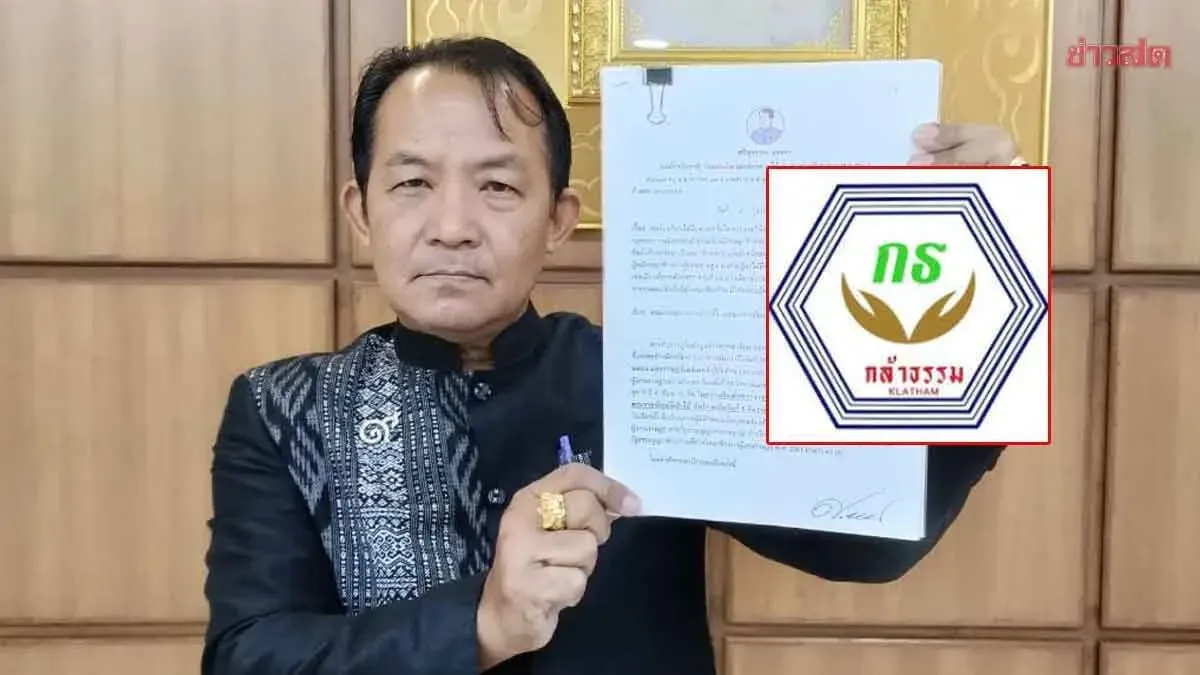
On August 17, 2025, at the Election Commission office, Srisuwan Janya, leader of the patriotic organization Love Thailand Love Nation, filed a complaint requesting investigation and prosecution of former Kla Tham Party leaders, the party nomination committee, and all party executives who approved Khong Kiat Ketusomsap, a candidate for Nakhon Si Thammarat parliament, despite his disqualification due to a previous fraud conviction.

Khong Kiat was sentenced by Surat Thani Provincial Court (case number 3747/2542, judgment dated December 16, 1999) for theft under the Criminal Code section 335(1). He was originally sentenced to one year imprisonment and a 3,000 baht fine. After confessing, the sentence was reduced to six months imprisonment and a 1,500 baht fine with a suspended sentence of two years. This conviction legally bars him from candidacy under constitutional and electoral law provisions.

Despite these disqualifications, the Kla Tham Party nominated Khong Kiat twice: once as a candidate in the April 27, 2024 by-election for Nakhon Si Thammarat constituency 8, which he won, and again in the February 8, 2025 general election for constituency 7. Although complaints were filed regarding his ineligibility, the Election Commission took considerable time investigating both candidacies. The commission ruled on the second nomination on January 30, 2025 (decision 257/2569) and only ruled on the first nomination on February 9, 2025 (decision 301/2569), disqualifying him in both cases.

Srisuwan argues that neither ruling appears to have triggered criminal proceedings against the former party leader, nomination committee, or party executives under political party law sections 56 and 120. Such violations carry penalties of up to five years imprisonment, a maximum fine of 100,000 baht, or both, plus a five-year electoral ban. Srisuwan urged the Election Commission to take action, warning that inaction could constitute negligence of duty under the constitution.

No. 04 of Read at source → Next
National

Thailand Positions Itself as Manufacturing Hub for U.S. Investment

Thailand aims to become a regional manufacturing and supply chain hub for U.S. investment, with Commerce Minister Supachee announcing at the Thailand-U.S. Trade Summit that both nations are advancing toward deeper economic cooperation inclu

Thailand Positions Itself as Manufacturing Hub for U.S. Investment
2d ago Khaosod

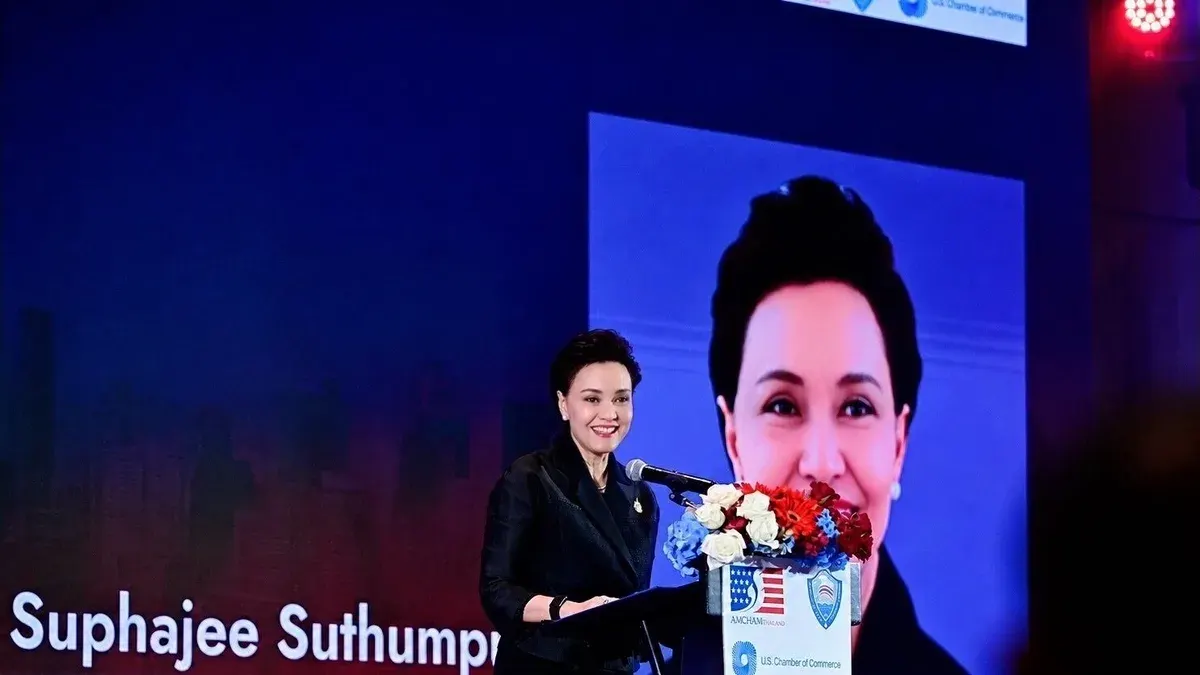
Deputy Prime Minister and Commerce Minister Supachee Sutthirphanphong announced at the Thailand–U.S. Trade and Investment Summit 2026: Building on a Longstanding Partnership at Hyatt Regency Bangkok that Thailand and the United States have a relationship spanning more than 200 years based on trust, mutual benefit, and continuous close economic cooperation.

Amid global trade system changes and geopolitical uncertainty, Thailand is ready to shift from simply managing change to becoming part of the solution by elevating itself into a flexible, safe, and reliable manufacturing and supply chain base for the region and global markets.

Supachee noted that the United States is one of Thailand's key trading partners and its number one export market, with hundreds of American companies operating in Thailand, having accumulated tens of billions of dollars in investment and creating hundreds of thousands of jobs. U.S. firms also play a major role in technology transfer, workforce development, and strengthening Thailand's competitiveness.

For future investment direction, Thailand is advancing toward a technology-driven, high-income economy based on innovation and sustainable growth. The government is promoting future industries including digital technology, artificial intelligence, robotics and automation, semiconductors, clean energy, biotechnology, and next-generation vehicles, welcoming U.S. investors to co-create Thailand's new growth phase.

"We want to develop our economic relationship with the United States on the basis of partnership and co-creation," Supachee said.

On trade, the Thai government is ready to work with the private sector to expand bilateral trade, particularly by increasing imports of U.S. goods that Thailand needs, such as energy, advanced machinery and equipment, and certain agricultural products, to support a balanced and mutually beneficial economic relationship.

Thailand is also advancing the Agreement on Reciprocal Trade (ART) framework between Thailand and the United States to achieve concrete, balanced, and mutually beneficial results. Supachee revealed she will travel to Washington, D.C. again—her third visit this year—to push negotiations toward conclusion.

"The key goal is balanced outcomes for both sides that create mutual benefit," she said.

Supachee also noted that investment relations between Thailand and the United States are not one-sided, with Thai companies having invested over 19 billion U.S. dollars in the United States and planning further expansion this year. Such investment creates tens of thousands of jobs, demonstrating that the two countries' economic relationship can generate opportunities, employment, and growth for people on both sides.

The Thai government is prepared to support investment through infrastructure development, workforce skills enhancement, innovation promotion, and creating a transparent, predictable, and competitive regulatory environment enabling sustained business growth in Thailand.

"Despite global economic uncertainty, we believe the relationship between Thailand and the United States—at government, business, and people-to-people levels—will remain strong and form an important foundation for future cooperation," Supachee concluded.

No. 05 of Read at source → Next
National

Khon Kaen Hospital Denies Staff Involvement in Patient Death Row

A 50-year-old woman died at Khon Kaen Hospital days after admission with fever and infection, developing fatal brain bleeding. The hospital denied that staff members posted harsh Facebook comments about the case and said it is reviewing its

Khon Kaen Hospital Denies Staff Involvement in Patient Death Row
2d ago Khaosod

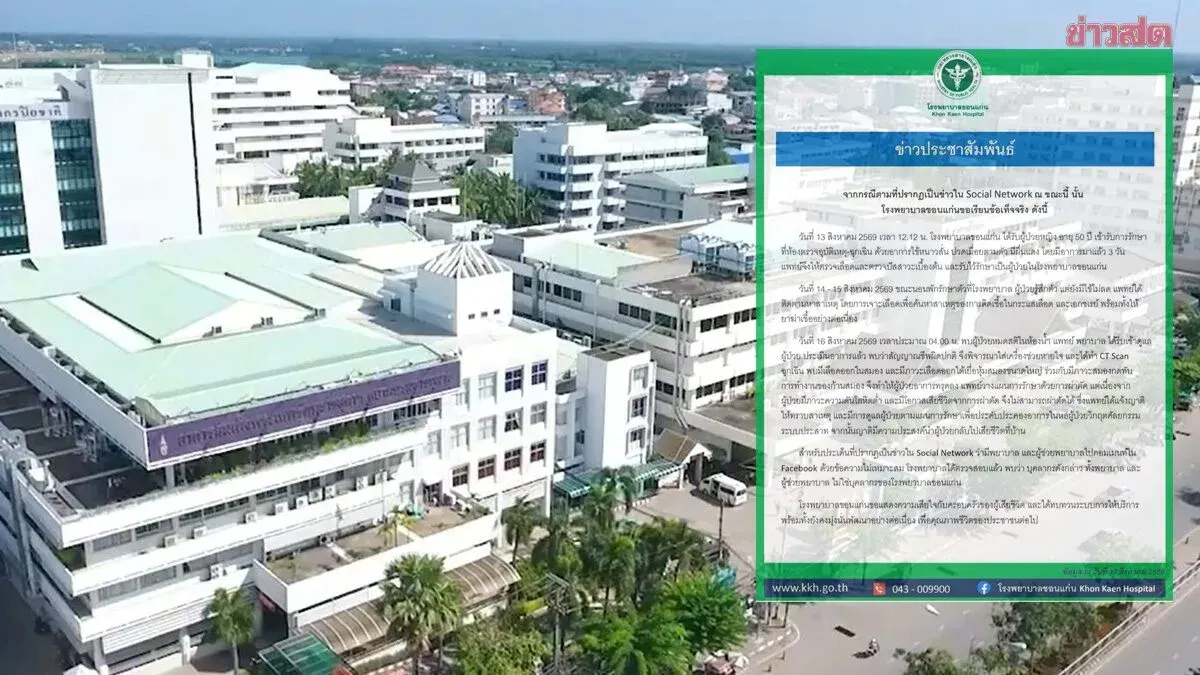
Khon Kaen Hospital has issued a statement clarifying the timeline of a female patient's death, stating that nurses and nursing assistants involved in harsh Facebook comments are not hospital staff. The hospital is reviewing its service systems.

On August 13, 2569, a 50-year-old woman was admitted to the emergency department with fever, chills, body aches, and a rash that had persisted for three days. Doctors ordered blood and urine tests and admitted her as an inpatient. On August 14-15, while resting in the hospital, the patient remained conscious but her fever did not subside. Doctors continued blood tests to investigate bloodstream infection and ordered X-rays and antibiotics.

On August 16 at approximately 4:00 a.m., staff found the patient unconscious in the bathroom. Medical teams assessed her condition and found abnormal vital signs. They intubated her and performed an emergency CT scan, which revealed bleeding in the brain and a large subdural hemorrhage causing brain compression and impaired brainstem function. Doctors planned surgical intervention but determined the patient had dangerously low blood pressure and high surgical risk, so surgery was not feasible. Medical staff informed the family of the situation and provided supportive care in the neurosurgery intensive care unit. The family later requested to take the patient home to die.

The hospital investigated claims that nurses and nursing assistants posted inappropriate comments on Facebook and confirmed those individuals are not Khon Kaen Hospital staff. The hospital expressed condolences to the deceased's family and stated it is reviewing service systems while continuing to improve patient care.

No. 06 of Read at source → Next
National

Thailand Plans to Raise Excise Tax on Imported Vehicles

Thailand's Finance Ministry plans to raise excise taxes on imported vehicles by September to level the playing field with domestically produced cars and prevent automakers from relocating operations abroad.

Thailand Plans to Raise Excise Tax on Imported Vehicles
2d ago Khaosod

Deputy Prime Minister and Finance Minister Ekniti Nitithanpraphat has instructed the Revenue Department to fast-track a restructuring of automotive taxes by September following complaints from manufacturers who have invested production facilities in Thailand. The automakers cited unfair tax structures, particularly differing tariff rates for countries with free trade agreements that allow imported vehicles to pay lower taxes than domestically produced ones, raising concerns that some producers may relocate operations to Indonesia.

Ekniti said the Finance Ministry has been monitoring this structural tax problem as global competition and trade barriers shift rapidly. Thailand's multiple free trade agreements prevent it from setting uniform tariff rates like countries without such agreements, and Thailand cannot raise import taxes in the same manner as the United States. The Finance Ministry is therefore preparing to use excise tax as an additional tool to restructure automotive taxation. Ekniti met with the Director-General of the Revenue Department and Finance Ministry Permanent Secretary, and ordered them to accelerate review and produce conclusions by September.

"We now have another tool in excise tax," Ekniti said. "Even if import duty is zero, we can adjust excise tax to support domestic production and employment."

Ekniti said the manufacturers' demands align with the Finance Ministry's vision, as Thailand has attracted both existing and new automakers to invest, expand factories, and produce hybrid vehicles, plug-in hybrids, and electric vehicles, with some EV producers already manufacturing and exporting from Thailand. Creating fairness between imported and domestically produced vehicles is therefore necessary.

While the original automotive tax structure remains, rates for certain vehicle types may be adjusted to suit changing global conditions. Without market protection measures in one country while another focuses on exports, large import volumes could harm domestic producers. The excise tax restructuring will proceed through ministerial regulations under the Excise Tax Act, which would help balance the automotive market and potentially increase state revenue, as consumers choosing imported vehicles would face higher tax burdens while domestically produced cars retain favorable tax costs.

Ekniti cited the Customs Department's example of collecting import taxes from the first baht early this year to help SMEs affected by Chinese imports, a measure that generated over 3 billion baht in state revenue. "We can kill several birds with one stone," Ekniti said. "The key is supporting domestic production, employment, and supply chains."

No. 07 of Read at source → Next
National

Routes to Roots Wins Award for Data-Driven Tourism Strategy

Routes to Roots, a data-driven tourism project combining mobile phone mobility data with research, won Thailand's Creative Data Award for uncovering real travel patterns and identifying new tourism opportunities across the country.

Routes to Roots Wins Award for Data-Driven Tourism Strategy
2d ago Khaosod

Bangkok, August 17, 2026 — As Thailand's tourism landscape shifts, Ministry of Tourism and Sports data shows visitor arrivals down 3.05% year-on-year. The challenge for Thailand may not simply be attracting more tourists, but ensuring each journey—by Thai and foreign travelers alike—creates greater value, drives equitable tourism that spreads economic opportunity to communities, and builds sustainable local growth.

The key question is: do we understand today's actual travel patterns? This is where Routes to Roots begins: a collaborative project that combines True Corporation's anonymized mobility data from mobile phone usage with research and creative thinking to uncover real tourist travel patterns and transform that data into new opportunities for Thai tourism. Routes to Roots has just won the Creative Data Award at the Creative Excellence Awards 2026, organized by the Creative Economy Agency.

From Networks That Connect People to Insights That Help Us Understand Them

For decades, the primary role of the telecommunications industry has been connecting people through voice and internet. In the digital age, another high-potential asset emerging on networks is mobility data—information about how people move—which, when used responsibly alongside research, can become insight to address economic, social, and urban challenges. This represents another step: from networks that connect people to insights that help us understand them, and using that understanding to create value for society.

Arouma Wattanasuuk, Head of GCEO Strategic Agenda and Employee Communication at True Corporation, said: "The role of the telecommunications industry today doesn't stop at creating the best networks to deliver the best customer experience. It also includes leveraging the potential of mobility data—a unique data asset of our industry—for public benefit. True aims to open collaborative space for business, researchers, government, the creative sector, and communities to bring data and knowledge together, transforming data into understanding and understanding into new opportunities, advancing policy design, agenda-setting, and decision-making that create value for people, communities, and the nation."

Associate Professor Nathapong Pantnoi, Deputy Director of the Center for Social Design Excellence and Assistant Dean at the Faculty of Architecture, Chulalongkorn University, said: "The real challenge is not having more data, but using data to view tourism from a new angle—from provincial boundaries to actual travel systems and connections between cities. Analyzing over 500 million trips in mobility data, we discovered 21 potential tourism clusters and developed 6 pilot clusters that blend data with the identity, culture, and resources of each area. This is evidence-based tourism development that transforms real data into tourism development proposals, leading to policies aligned with each area's potential and helping distribute tourists, investment, and income to cities and communities more equitably and sustainably."

No. 08 of Read at source → Next
National

Thailand's Q2 Growth Lags ASEAN Peers at 1.9%

Thailand's economy expanded just 1.9% in Q2 2026, the slowest growth among major ASEAN peers, as private consumption and government spending weakened despite strong export growth in electronics and high-tech products.

Thailand's Q2 Growth Lags ASEAN Peers at 1.9%
2d ago Khaosod

Thailand's economy grew just 1.9% year-on-year in the second quarter of 2026, the slowest growth among six major ASEAN economies compared by the National Economic and Social Development Council (NESDC).

NESDC Secretary-General Danucha Pichayanan announced the figures on Monday, saying growth slowed sharply from 2.8% in the first quarter. After seasonal adjustment, GDP contracted 0.2% from the previous quarter.

Vietnam posted the strongest growth at 8.4%, followed by Malaysia at 6%, Singapore at 5.9%, Indonesia at 5.29% and the Philippines at 2.3%.

The figures underline Thailand's continued struggle to keep pace with its regional peers. The Thai economy grew 2.4% in 2025, the lowest among the same group. In the first quarter of 2026, Thailand was tied with the Philippines for the lowest growth rate at 2.8%.

Danucha said the second-quarter slowdown was driven by weaker private consumption, a sharp slowdown in government consumption and a contraction in public investment.

Private consumption grew 1.9%, down from 3.3% in the previous quarter, as consumer confidence fell to 50.3, its lowest level in 14 quarters.

Government consumption grew just 0.2%, down from 3.4%, while public investment contracted 1.6%, compared with 9.4% growth in the first quarter.

Several production sectors also slowed. Manufacturing grew just 0.1%, down from 1%, while agriculture expanded 1.5%, accommodation and food services 1.5%, and transport and storage 2.6%. Construction growth almost stalled at 0.1%, sharply down from 6.2% in the previous quarter.

However, private investment provided a major boost, surging 13.4% from 10.1% in the first quarter. NESDC said this was the strongest growth in 54 quarters, or since the fourth quarter of 2012.

Goods exports also remained strong, growing 17.6%, driven largely by electronics and high-tech products. Telecommunications equipment exports jumped 129%, while computer parts and equipment rose 65.5%.

Despite the weak second-quarter performance, NESDC raised its forecast for Thailand's full-year 2026 growth to 2.0%-2.5%, with a midpoint of 2.2%, up from its previous forecast of 1.5%-2.5%.

The revision was mainly based on stronger export prospects, higher expected spending by foreign tourists, stronger private investment and a slight improvement in private consumption.

NESDC now expects exports to grow 15.1%, compared with its previous estimate of 9.6%. Revenue from foreign tourists is projected at 1.65 trillion baht, up from an earlier forecast of 1.49 trillion baht.

Private investment is now expected to expand 9.6%, sharply higher than the previous 3.7% forecast, while private consumption growth was revised up to 2.6% from 2.4%.

Danucha, however, warned that the outlook remains subject to risks, including uncertainty over the global economy and trade, a potential slowdown in global demand, El Niño risks affecting agriculture in the second half of the year, high household debt and continued credit risks among small and medium-sized businesses.

No. 09 of Read at source → Next
Police

Call Center Gang Scams University Student Out of 2.6 Million Baht

A university student lost 2.6 million baht after call center scammers tricked her into deceiving her parents with a fake scholarship scheme, with criminals even collecting cash in person at her condominium.

Call Center Gang Scams University Student Out of 2.6 Million Baht
2d ago Khaosod

On August 17, Chaicha Detdetcho, a deputy leader of the Democratic Party and advisor to the Parliamentary Police Committee, revealed complaints from the parents of a first-year student at a prestigious university who fell victim to a call center scam and lost approximately 2.6 million baht.

Chaicha explained that the incident occurred on August 16, with two victims filing complaints. One was a first-year female student who was initially deceived by telephone scammers using a standard tactic, claiming her bank account was linked to drug trafficking and that she faced legal charges and arrest warrants. This created fear and made the victim believe the story. The call center gang then forced the student to deceive her parents by changing the scammers' Line account to display a professor's name and photo. They lied to the parents that their daughter had received a scholarship to study abroad, claiming funds were needed for visa processing and as financial security. They even impersonated a consul to build credibility, leading the parents to transfer approximately 2.6 million baht.

"This incident reflects the growing sophistication of call center fraud schemes," Chaicha said. "What used to target victims directly has now evolved into forcing victims to deceive their own family members, making parents more likely to believe and hand over money."

Chaicha highlighted several important investigative points, including how the student's personal information reached the scammers, and whether government awareness campaigns about call center scams and new fraud methods are effectively reaching the public, youth, and students.

Most alarmingly, Chaicha noted that the scammers' method of receiving money was not limited to bank transfers. They instructed victims to withdraw large amounts of cash—up to 2 million baht on multiple occasions—which the criminals then collected in person at the student's condominium. This demonstrates that despite Thailand's enforcement of anti-call center laws, the criminals show no fear of legal consequences, openly traveling to pick up cash at victims' residences.

"I urge the Prime Minister and the Technology Crime Suppression Division to urgently and seriously crackdown on this criminal network and follow up on this case thoroughly, including efforts to recover the victim's money," Chaicha said.

Chaicha also noted that according to the parents, the family was forced to borrow money from friends and colleagues, believing their daughter had received a scholarship to study in Germany and needed funds for visa procedures and financial documentation.

No. 10 of Read at source → Next
Police

Police Investigate 30 Drug Packages Found at Khon Kaen Prison Construction Site

Police discovered 30 packages of drugs buried at a Khon Kaen prison construction site on August 17 when a backhoe uncovered them during soil preparation. Investigators are determining whether the drugs were deliberately planted or mixed int

Police Investigate 30 Drug Packages Found at Khon Kaen Prison Construction Site
2d ago Khaosod

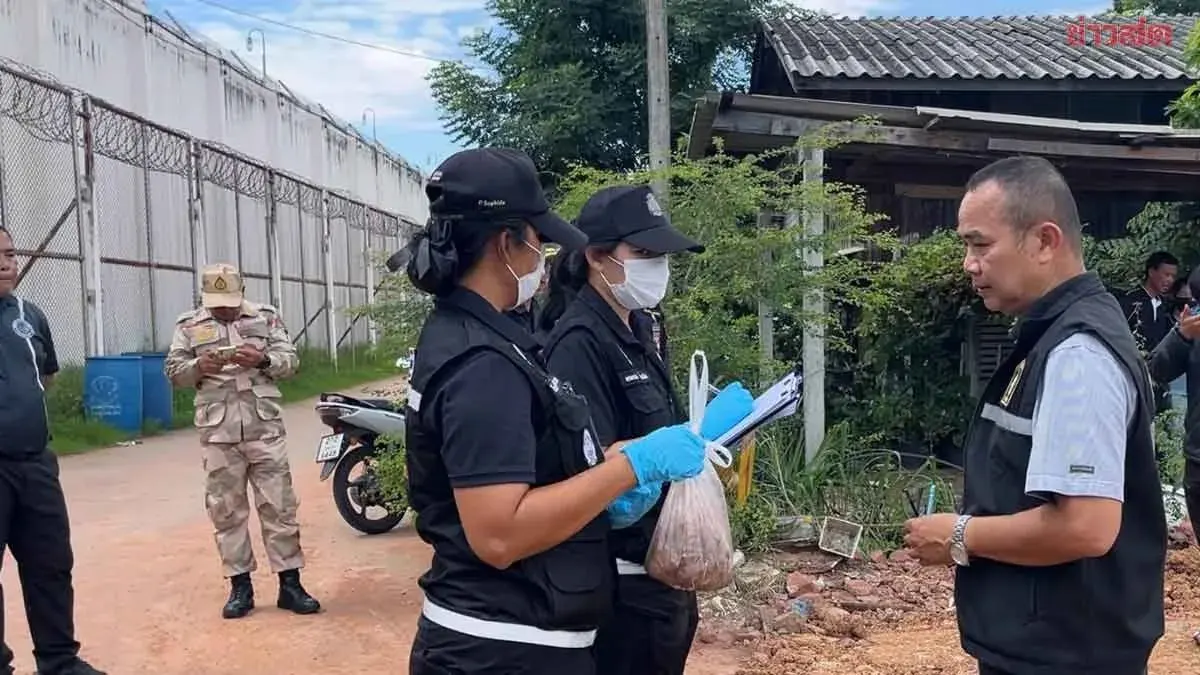
At 11:00 on August 17, Prairat Khamintkul (director of Khon Kaen Central Prison), Police Lieutenant Colonel Yosawat Kaewsubthanynich (deputy superintendent of Muang Khon Kaen Police Station), Decha Sophajit (district administrator of Muang Khon Kaen), and Arthapol Thiphdara (assistant district administrator for security) led investigators from Muang Khon Kaen Police Station, the Region 4 Forensic Center, prison staff, and local administrative officials to examine the discovery site within the construction area for a new staff dormitory building located south of the prison. Construction workers notified authorities after a backhoe uncovered 30 opaque plastic bags—24 blue and 6 pink—buried underground while preparing the land.

Police have cordoned off the discovery zone and surrounding areas, including the fence perimeter where the initial bags were found and a spot approximately 50 meters away where the backhoe dragged additional packages. Investigators questioned construction workers, the equipment operator, prison guards on duty, and project supervisors.

Deputy Superintendent Yosawat stated that the site lies near the construction perimeter, roughly 10 meters from the prison's inmate detention wall. The area was previously overgrown and littered; the backhoe was leveling and compacting soil when the drugs were discovered. "We must verify whether these drugs are old or new stock, accelerate witness interviews, and review CCTV footage," he said. "The location sits opposite a prison camera, but the angle points away from the site. Two main theories are emerging: either criminal groups deliberately planted the drugs for some purpose, or they became mixed with fill soil brought to this area. Further forensic and investigative procedures will determine which." Prison Director Prairat confirmed that the private contractor has been coordinating with authorities since the prison handed over the construction area in February; work began in July on a four-story dormitory with 32 rooms. The construction zone is now completely sealed off to prevent contact between workers and inmates performing community service, with strict controls on all personnel entry and exit. Surveillance patrols monitor the perimeter around the clock from guard towers, and the prison conducts intensive weekly searches coupled with random urine tests for drug use.

No. 11 of Read at source → Next
Loading more…
Endless reading Scroll to read. When you reach the bottom, keep scrolling. A bar fills, and the next story slides in when it's full. ↑ ↓ or Space Or use the arrows at the bottom of the screen.