Thailand Plans to Raise Excise Tax on Imported Vehicles
Thailand's Finance Ministry plans to raise excise taxes on imported vehicles by September to level the playing field with domestically produced cars and prevent automakers from relocating operations abroad.
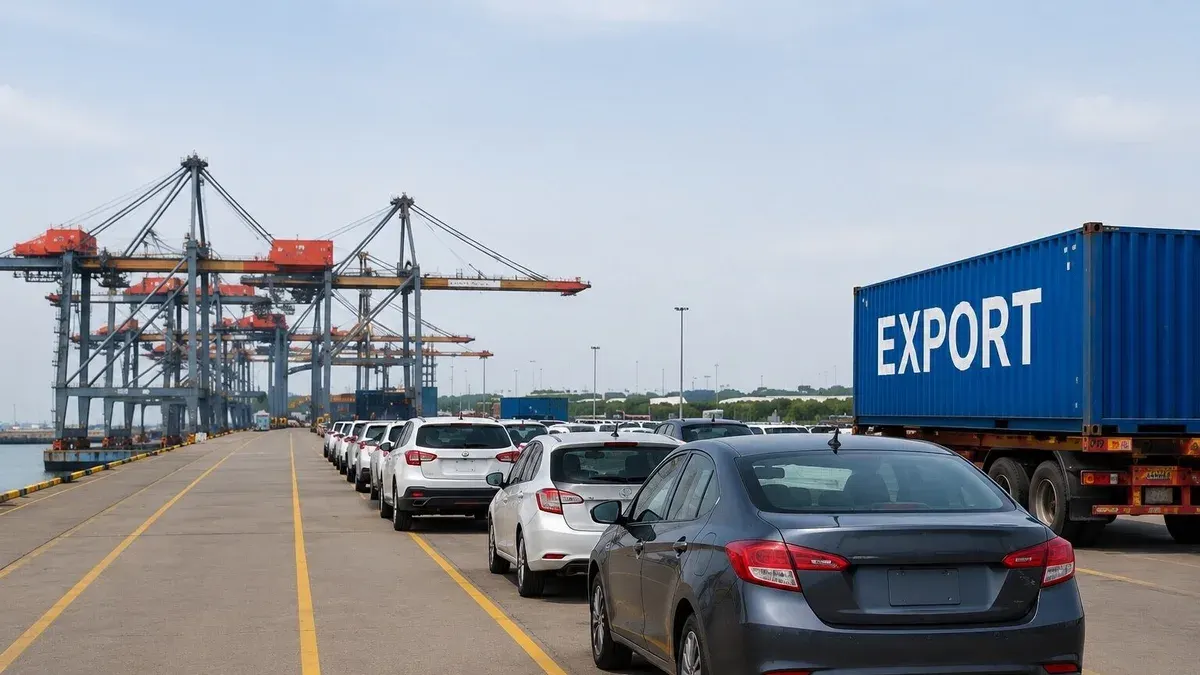
Deputy Prime Minister and Finance Minister Ekniti Nitithanpraphat has instructed the Revenue Department to fast-track a restructuring of automotive taxes by September following complaints from manufacturers who have invested production facilities in Thailand. The automakers cited unfair tax structures, particularly differing tariff rates for countries with free trade agreements that allow imported vehicles to pay lower taxes than domestically produced ones, raising concerns that some producers may relocate operations to Indonesia.
Ekniti said the Finance Ministry has been monitoring this structural tax problem as global competition and trade barriers shift rapidly. Thailand's multiple free trade agreements prevent it from setting uniform tariff rates like countries without such agreements, and Thailand cannot raise import taxes in the same manner as the United States. The Finance Ministry is therefore preparing to use excise tax as an additional tool to restructure automotive taxation. Ekniti met with the Director-General of the Revenue Department and Finance Ministry Permanent Secretary, and ordered them to accelerate review and produce conclusions by September.
"We now have another tool in excise tax," Ekniti said. "Even if import duty is zero, we can adjust excise tax to support domestic production and employment."
Ekniti said the manufacturers' demands align with the Finance Ministry's vision, as Thailand has attracted both existing and new automakers to invest, expand factories, and produce hybrid vehicles, plug-in hybrids, and electric vehicles, with some EV producers already manufacturing and exporting from Thailand. Creating fairness between imported and domestically produced vehicles is therefore necessary.
While the original automotive tax structure remains, rates for certain vehicle types may be adjusted to suit changing global conditions. Without market protection measures in one country while another focuses on exports, large import volumes could harm domestic producers. The excise tax restructuring will proceed through ministerial regulations under the Excise Tax Act, which would help balance the automotive market and potentially increase state revenue, as consumers choosing imported vehicles would face higher tax burdens while domestically produced cars retain favorable tax costs.
Ekniti cited the Customs Department's example of collecting import taxes from the first baht early this year to help SMEs affected by Chinese imports, a measure that generated over 3 billion baht in state revenue. "We can kill several birds with one stone," Ekniti said. "The key is supporting domestic production, employment, and supply chains."