FutureBuild Asia 2026 Positions Thailand as ASEAN Construction Hub
FutureBuild Asia 2026 aims to position Thailand as a regional hub for the ASEAN construction industry by showcasing green building technology and fostering cross-border collaboration. Organizers and industry leaders stress the need to shift from price-based competition to quality and sustainability, addressing challenges like rising costs and labor shortages through innovation and supply-chain cooperation.
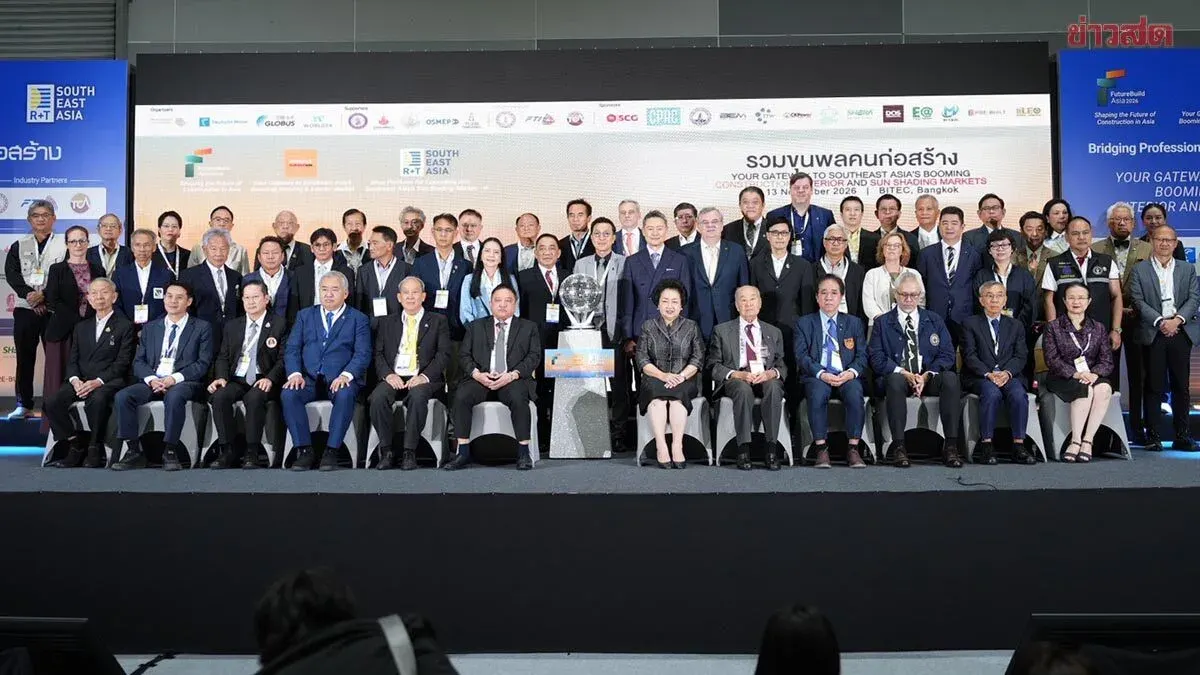
FutureBuild Asia 2026 anchors Thailand as a central link for the ASEAN construction industry, bringing together technology, innovation, and regional business networks to drive the sector toward green and sustainable construction. The private sector highlights challenges such as soaring costs and labor shortages, urging government support while pushing Thai entrepreneurs to adopt technology for greater efficiency and competitiveness.
Edwin Tan, CEO of Globus and organizer of FutureBuild Asia 2026, revealed that Thailand's selection as host reflects its potential to become a Southeast Asian construction hub, backed by strong infrastructure, engineering expertise, a robust industrial base, and a strategic location connecting key ASEAN markets.
The event aims to be more than a product showcase, creating a regional platform connecting entrepreneurs, developers, architects, engineers, contractors, and technology providers to exchange knowledge, foster business cooperation, and give entrepreneurs access to practical innovations — particularly green building technology, eco-friendly construction materials, flooring innovations, shading systems, and energy-efficiency solutions that are shaping global construction trends.
Edwin added that organizers plan to continuously develop and expand the event's scope to cover the entire construction supply chain, elevating Thailand as a key destination for business networking, technology transfer, and cross-border collaboration among ASEAN entrepreneurs.
The event invites construction, real estate, design, and architecture professionals to gain new perspectives on technology and innovation while exploring business development and regional partnership opportunities.
Niwat Thanyapitinun, Chairman of the Future Build Asia Advisory Board, emphasized that the industry's challenges go beyond technology development to include building understanding and cooperation among stakeholders across the supply chain — from material manufacturers and designers to architects, engineers, project owners, contractors, and specialists. He noted that each segment has faced distinct limitations, and creating a common space for dialogue and joint problem-solving is a crucial mechanism for raising overall industry efficiency and competitiveness.
Thailand's construction industry must shift from competing on lowest price to competing on quality, standards, efficiency, and value creation, with fair returns for entrepreneurs and workers to incentivize skill development and attract capable talent long-term. FutureBuild Asia serves as a vital opportunity to connect knowledge, technology, and sectoral needs, driving the Thai construction industry to adapt and grow sustainably.