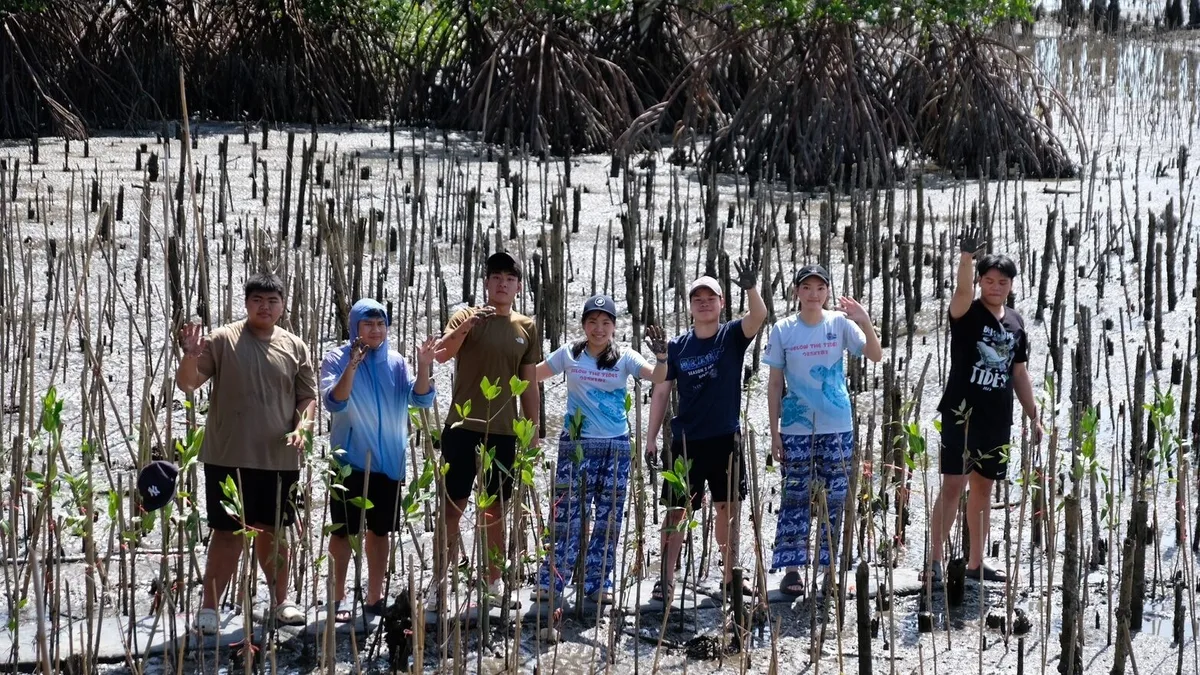
Below the Tides has launched Season 4 of its mangrove restoration project in Samut Songkhram, bringing together students and volunteers to plant trees and protect coastal ecosystems alongside local communities.
Below the Tides is partnering with local communities and young people to advance environmental protection through sustainable mangrove planting as part of the Mangroves Protect the Land Season 4 project at the Mangrove Forest School in Samut Songkhram province. Founded by environmental activists and siblings Arinchaya and Arisa Thongtaeng, Below the Tides continues driving change on the ground.
Most recently, the project returned to the Mangrove Forest School for Season 4 activities, bringing together student groups from local schools and working professionals as volunteers to plant mangroves and restore coastal ecosystems. Despite intense heat, volunteers remained committed to the cause.
This year's event marks the fourth consecutive year of Below the Tides' conservation work. The effort was graced by Phu Yai Daeng (Wisut Navamsiri), a former village headman and key figure in transforming eroded coastal land into the Mangrove Forest School. He also pioneered fish sauce production known locally as "mangrove rescue fish sauce." Community leaders welcomed the volunteers and updated them on environmental conditions.
Phu Yai Daeng expressed gratitude for the program's consistency, noting: "Though mangrove seedling survival rates may not reach one hundred percent, what truly matters is the 'heart' and 'dedication' of everyone returning year after year. This is the community's genuine driving force."
Mangrove forests represent nature's strongest yet most fragile defenses. Restoring fishing areas and coastlines enhances carbon sequestration, protects communities from erosion, and nurtures aquatic biodiversity. For Below the Tides, this annual event transcends tree planting—it creates lasting bonds between people and land, inspiring future generations to protect the environment.
Below the Tides thanks all students, working professionals, and community members who participated this season. The project continues advancing toward a greener, more sustainable future—one tree, one step at a time.