IMF Warns Global Buffers Thin, Growth to Slow to 3.1%
IMF chief Kristalina Georgieva warned that the world’s capacity to absorb economic shocks is waning as energy and fiscal buffers shrink, forecasting global growth of 3.1% in 2026, down from 3.4% the previous year. She noted that while AI‑linked investment aids expansion, benefits are uneven, with Thailand and other Asian economies poised to gain, but many low‑income and conflict‑affected nations facing stronger headwinds.
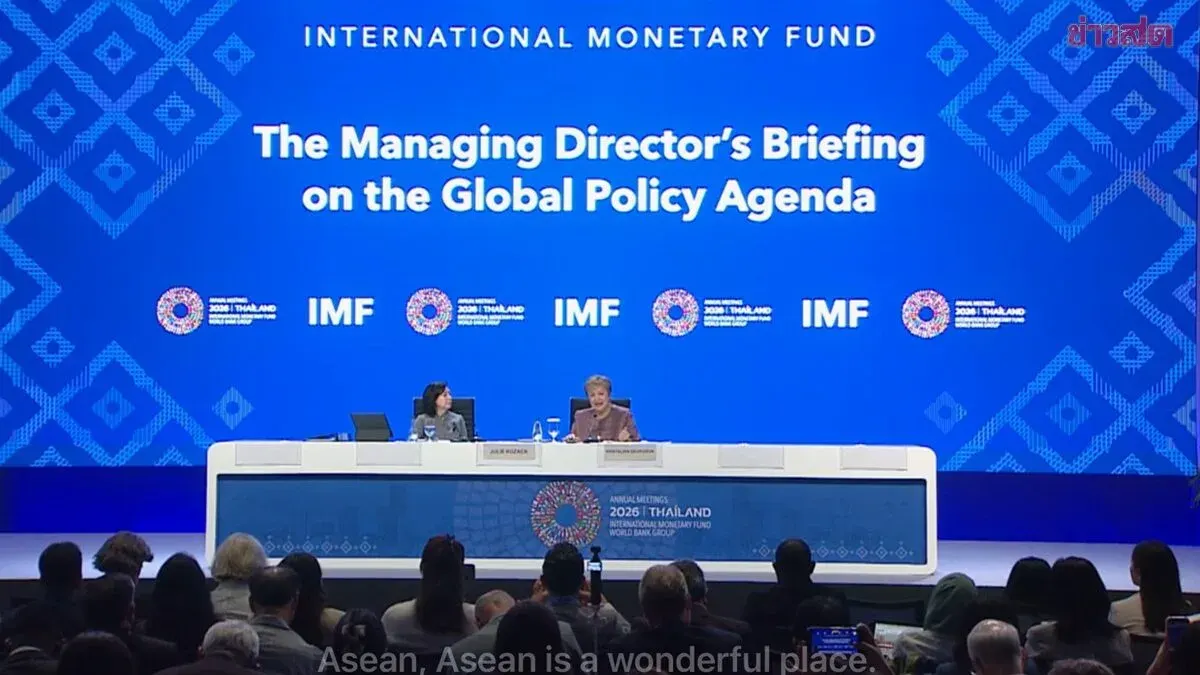
Kristalina Georgieva, Managing Director of the International Monetary Fund (IMF), said the global economy has shown resilience amid repeated crises and uncertainties, but its capacity to absorb shocks is approaching its limit after energy and fiscal buffers have eroded, while inflation in many countries remains high, pressuring interest rates and increasing debt service burdens.
The IMF projects world output will expand about 3.1% in 2026, unchanged from its April forecast but slower than the 3.4% recorded in 2025, reflecting conflicting forces: the war in the Middle East disrupting energy supplies, while investment and demand linked to artificial intelligence (AI) provide a growth boost. However, the gains are not evenly shared. Economies closely integrated into the AI supply chain — Thailand, Malaysia, South Korea and Singapore — are expected to perform better, whereas low‑income countries, including fragile and conflict‑affected states, particularly energy importers or those with limited access to technology, are under greater strain.
Another significant risk is the surge in bond yields in advanced economies to multi‑decade highs, driven by persistent inflation, rising investment demand, AI‑related growth expectations and weak fiscal positions. Many countries missed the chance to rebuild fiscal buffers after COVID‑19, and each new shock has pushed debt higher, leaving advanced economies as the most problematic group. The pressure spills over to emerging markets and low‑income nations through higher borrowing costs and debt burdens, compounded by expensive oil and food, shrinking development aid and sluggish investment in high‑risk countries.
Georgieva urged governments to repair their fiscal positions before problems worsen by raising revenues, improving spending efficiency and strengthening public‑finance management. She stressed that when energy and food prices rise, authorities should “help people, not freeze prices,” offering temporary, targeted assistance to the vulnerable instead of distorting market price signals.
On monetary policy, the IMF advises central banks to stay focused on price stability; countries where inflation remains above target and economic activity is high may need to tighten policy cautiously to curb inflationary pressures.
For Thailand and ASEAN, linkage to the AI supply chain presents an important opportunity, but maintaining economic stability and enhancing resilience to volatility remain urgent tasks. ASEAN also has scope to expand intraregional trade, which currently accounts for only 22% of total trade compared with 60% in the European Union, to foster stronger home‑grown growth.