Authorities arrested 14 suspects and filed 60 criminal cases targeting foreign nationals operating illegal businesses through Thai nominees on Koh Samui, uncovering a network controlling 59 companies with assets valued at 1.2 billion baht.
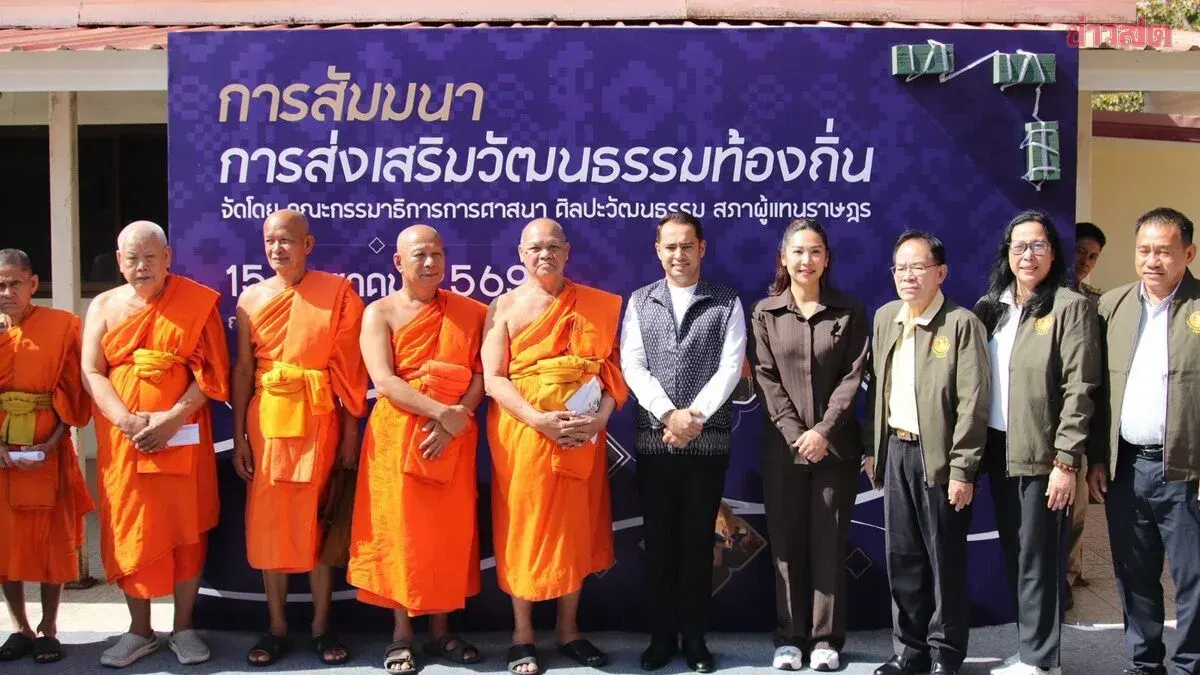
On August 15, 2026, Deputy Interior Minister Palpeer Suwanachui, accompanied by Deputy Police Commander Samran Nualma, Assistant National Police Chief Surpong Thamnojit, the Surat Thani provincial governor, the Department of Business Development, and Department of Special Investigation officers, launched "Phase 7 of the Foreign Nominee Network Dismantling" operation in Koh Samui, Surat Thani. The operation, involving over 300 personnel, targeted foreign nationals conducting illegal businesses while using Thai nationals as nominee shareholders or asset owners, following the "Koh Phangan Model" framework.
Authorities examined all 12,906 registered businesses in Koh Samui, discovering 8,254 with foreign shareholders and 875 displaying characteristics of nominee structures. After deeper screening, investigators identified 59 suspect companies controlling land and structures across 37 plots, covering 31 rai 2 ngan 36.3 square wah, valued at approximately 1.2 billion baht. This led to 60 criminal cases involving 88 suspects: 26 Thai nationals and 62 foreigners. The Koh Samui Provincial Court approved 37 search warrants, resulting in the arrest of 14 suspects including nationals from China, the United Kingdom (4 each), Italy, France, the Netherlands, Austria, the Philippines, and the United States (1 each).
The operation focused on five key business networks:
An Israeli-connected network of 19 companies using multilayered corporate structures and Thai nominees, operating unlicensed nurseries (early childhood care facilities) and buying, developing, selling, and renting luxury villas to foreign customers.
A German-connected network of 4 companies engaged in real estate and luxury villa construction on steep terrain potentially exceeding legal limits, risking unlicensed building permits. They sold villas by transferring nominee company shareholdings to avoid property transfer taxes and corporate income tax reporting.
Twenty-seven companies where Thai nationals helped establish businesses for foreigners seeking work permits or business visas—long-term one-year visas—with conflicting registration data and actual investment.
Sixteen companies initially established entirely by Thai nationals to avoid document disclosure requirements, then bringing foreign individuals into the shareholding structure to secure work permits and business visas without conducting any genuine business operations.
Two companies originating from leads provided by the French Embassy in Thailand, involving a French national accused of defrauding investors in a cannabis farm operation causing 21 million baht in losses. Surat Thani Provincial Police investigation revealed the defrauded money came from French victims who had set up these companies. Thai nominees held shares to purchase land and construct a luxury hotel with swimming pool and tennis court, operating a hotel management company through concealed rental agreements advertised as daily accommodations on websites at 11,000–17,000 baht per night, without any hotel business license.
Deputy Police Commander Samran revealed this operation was part of ongoing efforts to dismantle nominee networks in major tourist destinations, following six previous phases that examined 238 companies.