Land Agency Says Only 3 Khao Kradong Cases, Cannot Revoke All Titles
The Department of Land says it can only revoke titles in three court-decided cases and cannot invalidate all deeds for the disputed Khao Kradong land in Buriram, claiming each plot's ownership must be separately litigated.
The Department of Land issued a statement on July 25, 2569, responding to reports that Abhisit Vejjajiva, the Democratic Party leader and list-system MP, called for a review of the Khao Kradong land dispute. The party is preparing to petition the Interior Minister, arguing the government has not complied with an administrative court ruling that found the disputed land belongs to the State Railway of Thailand (SRT), and vowing to monitor the situation closely.
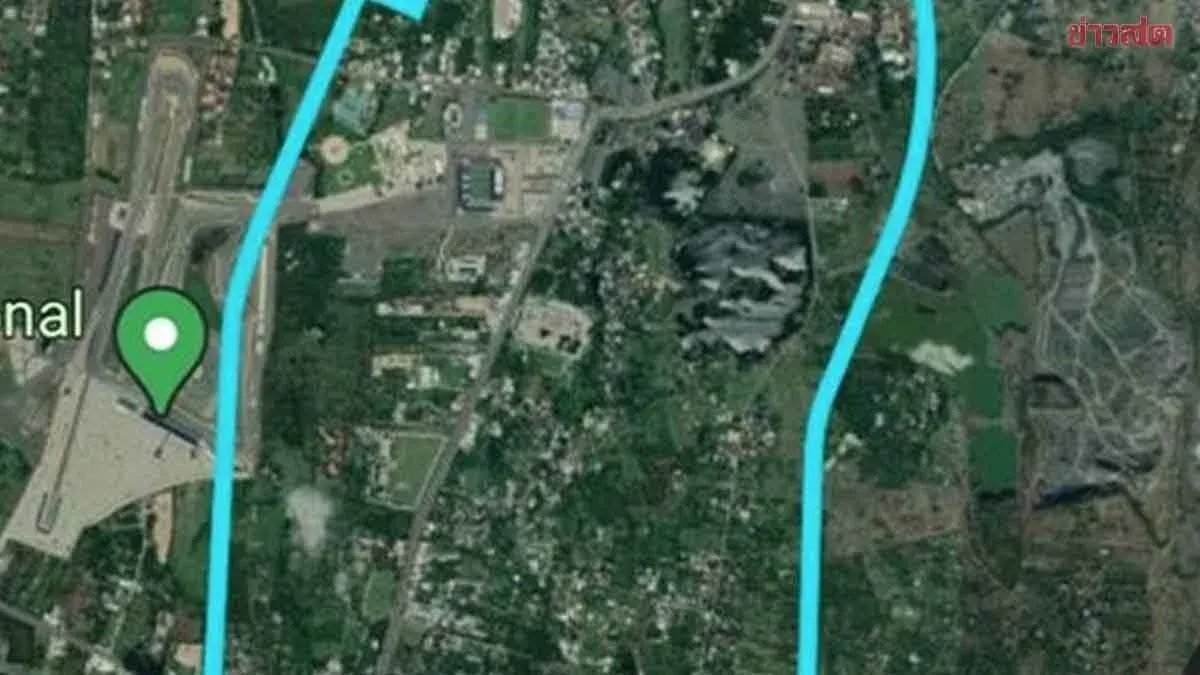
The Khao Kradong land dispute in Semet and Isaan subdistricts, Mueang Buriram district, Buriram province, has attracted sustained public and media attention, with various viewpoints raised about the Department of Land's handling. The Department has repeatedly clarified the facts, legal points, procedures, and outcomes, and says it has strictly followed all applicable laws, court verdicts and orders, and relevant administrative review processes while protecting both state and public rights and ensuring fairness to all stakeholders. However, because misleading information continues to circulate about the facts, the Department's jurisdiction, and its actions, the agency released a detailed summary:
1. Regarding cases in which the Department of Land and its director are bound by Supreme Court, Court of Appeals Region 3, and Central Administrative Court rulings that the disputed land belongs to the SRT:
1.1 Three civil cases—Supreme Court verdicts 842–876/2560, 8027/2561, and Court of Appeals Region 3 verdict 1112/2563—involve disputes over rights under the Civil and Commercial Code between plaintiffs and defendants. The Supreme Court and Court of Appeals Region 3 verdicts are binding only on the specific plots that villagers and the SRT litigated in those three cases alone. The Department of Land has fully implemented these verdicts, but cannot revoke title deeds for other plots because, although the verdicts show ownership under Section 145 Paragraph 2 of the Code of Civil Procedure and bind outsiders, they are only an initial presumption. Ordinary persons outside the case may defend their rights in civil litigation, so people must be given the chance to litigate and prove their superior rights. These verdicts cannot bind outsiders without new litigation against the relevant parties under Section 145 Paragraph 2 of the Code of Civil Procedure. The Supreme and Appeals courts did not rule on the entire 5,083-rai area, so claiming the verdict confirms ownership of all the land exceeds the verdict's scope. The SRT cannot apply the results of the three cases to other plots because each plot's acquisition history differs; villagers as owners must have a chance to defend their rights. The SRT's claim that the Department must revoke title deeds for the entire disputed area is therefore legally unfounded.