Lawmaker Urges Election Commission to Probe Orange Group Directly
A Thai lawmaker urged the Election Commission to use its legal authority to directly investigate the Orange Group without waiting for a formal complaint, citing Article 41 of the 2017 Election Commission Act that requires probes when there'

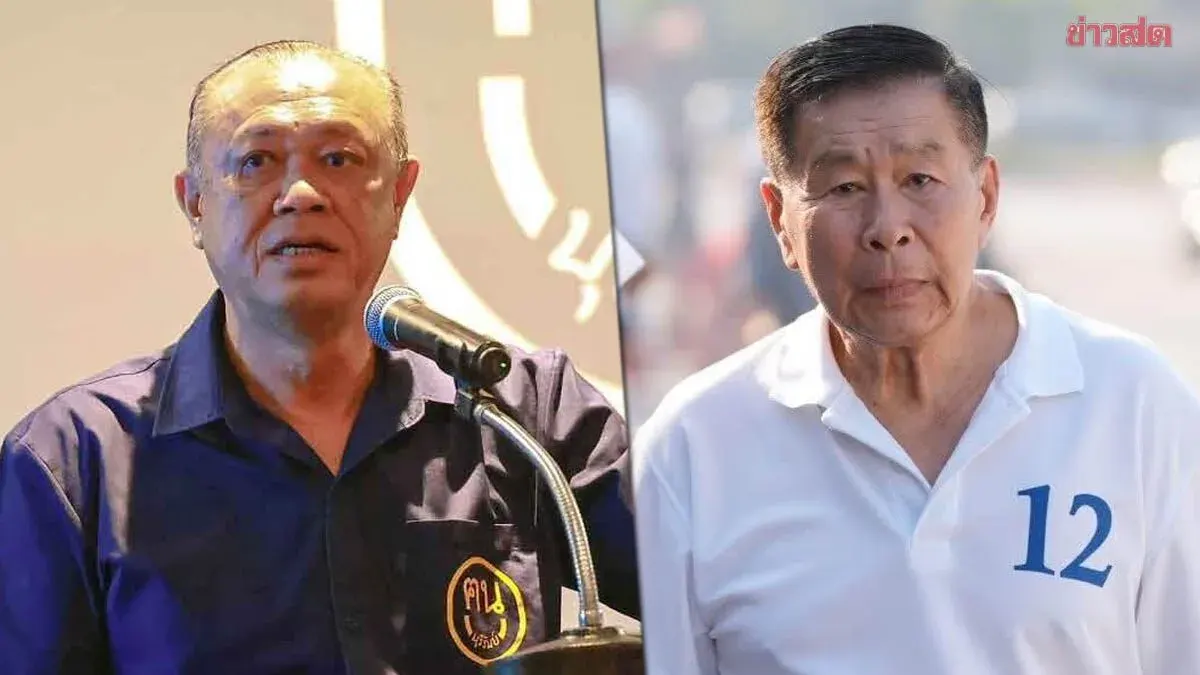
On July 29, 2025, Suphachai Jaisamut, a list-based MP from Palang Pracharath Party, posted on Facebook responding to an academic's challenge regarding the 'Orange Group.' He clarified that the Election Commission has the legal power to initiate investigations on its own, even without a complaint, if there are reasonable grounds for suspicion or evidence that an election may not be conducted fairly and honestly.
He cited Article 41 of the 2017 Organic Act on the Election Commission, which states that "when there is reasonable suspicion or evidence apparent to the Commission in any manner, whether or not there is an informant or complainant… the Commission is required to conduct an investigation or examination to ascertain facts and evidence promptly."
According to Suphachai, this article contains two key principles: (1) no complainant is necessary—the EC may learn of violations through news, media, state agencies, official reports, or any other information, and if there are reasonable grounds and sufficient data, it must initiate an investigation; and (2) it is a duty, not discretion—the law uses the language "is required to conduct," meaning the EC cannot ignore reasonable suspicion.
Suphachai explained that "ex officio power" is a Latin legal term meaning "by virtue of office" or "by right of one's position," referring to authority granted by law to an organization or official to act on its own without requiring a complaint, accuser, or victim to file a request first.
If the EC observes a gathering organized by the "Prachaachon Group" or "Orange Group," it has the legal authority to investigate whether the 300 candidates who attended had their meals, meeting room rentals, travel costs, flights, and accommodations paid by others, and who funded them. The EC can also investigate whether the selection of those senators at all levels—from district to national—involved vote-buying or fraud.
Suphachai urged the EC to act quickly under Article 41 and offered to file a formal complaint himself, stating he has evidence ready.