Luang Pho Sai, a respected Buddhist monk at Wat Tha Khanu in Kanchanaburi, became the temple's permanent abbot in 1954 after arriving on a pilgrimage from Nakhon Sawan and earning the devotion of local villagers who supported his restoratio
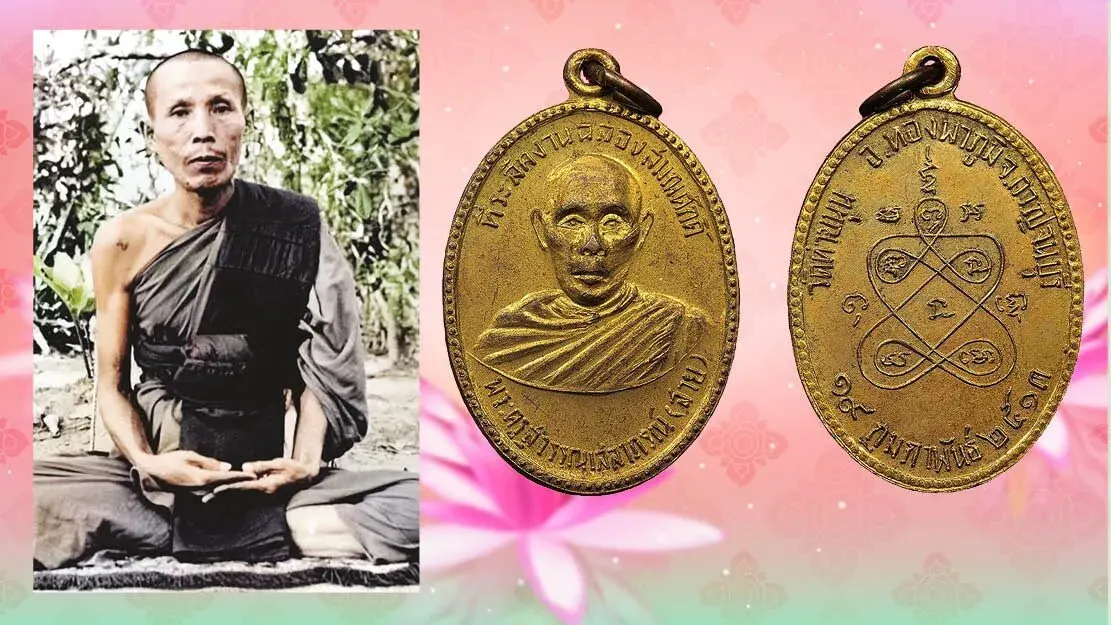
Phra Kru Suwan Selaphon, known as Luang Pho Sai Akkhavanso, is a highly respected Buddhist monk at Wat Tha Khanu in Thong Pha Phum district, Kanchanaburi province, and a devoted disciple of Luang Pho Doem of Wat Nong Po in Nakhon Sawan. Originally named Sai Kiawatsit, he was born on Sunday, October 18, 1914, in the Nang Loeng area of Bangkok, to parents named Perm and Chan Kiawatsit. In his youth, his parents sent him to school through eighth grade before he entered railway service. Around 1957, while working as a railway official, he contracted a serious neck infection that resisted treatment from both traditional healers and modern physicians. He then became a disciple of Phra Kru Niwas Thamkhan (Luang Pho Doem Putsaro), abbot of Wat Nong Poi in Takhli district, Nakhon Sawan, who healed him completely. This miraculous recovery inspired his faith in Buddhism, and he requested to be ordained as a Buddhist monk, receiving his upasampada ordination on July 18, 1945, at Wat Khao Thong in Phayuhakiri district, Nakhon Sawan, where he was given the monastic name Akkhavanso.
After his ordination, he studied under Luang Pho Doem at Wat Nong Bua for five years until his teacher's death in 1951, after which he began his tudong pilgrimage. Wat Tha Khanu had been established by Luang Pu Puk Uttamapalo, a Mon-born monk from Photharam district in Ratchaburi, who served as its first abbot until his death in 1929. His successor, Luang Pu Te Neng Obhaso, a Burmese-born monk, oversaw the temple until 1951 before returning to Myanmar permanently. With no permanent leader, the temple fell into disrepair despite monks occasionally sent from Kanchanaburi city.
On December 26, 1952, Luang Pho Sai arrived from Nakhon Sawan on tudong and established himself at Wat Tha Khanu. Impressed by his disciplined practice, the local people provided excellent support, and in February 1953, he continued his pilgrimage into Myanmar. He returned on July 25, 1953, spent the rainy season at the temple until November 6, 1953, and was formally invited by villager Boon Tham Nok Lek to remain as abbot.
After the 1954 retreat, Boon Tham traveled to Nakhon Sawan with the villagers to request that Luang Pu Sai become the permanent abbot. Upon receiving permission, he returned with the faithful community on November 17, 1954, and immediately began restoring the temple. He was officially appointed abbot of Wat Tha Khanu through a letter of appointment signed on January 1, 1955, by Phra Wisutthirangsi (Di Buddhachoti) of Wat Nuea, the provincial sangha leader for Kanchanaburi. Subsequently, he was appointed as a ceremonial chair-bearer in 1955, an upajjhaya (preceptor) in 1960, assistant tambon sangha leader in 1968, and ampher sangha leader of Thong Pha Phum in 1971. In 1968, he received the monastic title Phra Kru Suwan Selaphon from the royal bestowment.
Working alongside devoted villagers, Luang Pho Sai led the restoration of Wat Tha Khanu until it became fully developed once again, earning the award for model temple development in 1973.