Lamyai Farmers Adopt New Techniques to Battle Super El Niño
Lamphun longan farmers are adopting advanced irrigation systems with misting technology to protect crops from extreme heat and drought expected during "Super El Niño," as climate change has already slashed premium-grade production from 80 p
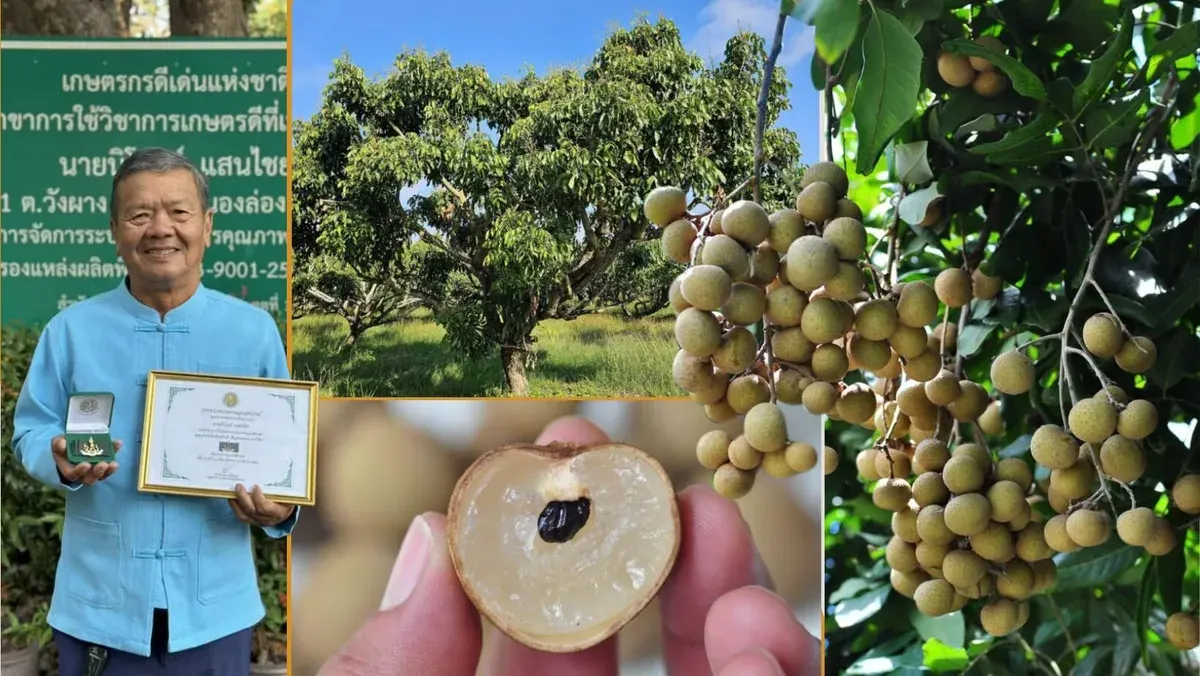
Longan is an important cash crop that provides income and employment for many farmers, especially in northern Thailand's growing regions. Late July marks the peak harvest season when longan trees naturally produce their highest yields. Lamphun Province is a major longan-growing hub in the north.
Nirot Sancharai, 76, owner of Sancharai Orchard and chairman of the Agricultural Productivity Learning Center in Wiangnonlong District, Lamphun, says that previous market oversupply, price crashes, and sluggish exports forced many farmers to abandon their orchards. This has reduced supply entering the market this July, suggesting prices may improve this year.
However, Sancharai's main concern is preparing for "Super El Niño," which threatens intense heat waves, erratic rainfall, and potential water shortages. While countries like the USA and France face severe El Niño impacts, Thailand's exposure remains unclear.
Climate change signals are already visible in Lamphun: premium-grade AA longan production has plummeted from 80 percent to just 20 percent due to declining rainfall, directly affecting crop quality and quantity. This year, experts warn temperatures could reach 45°C. In such conditions, even people struggle to cope, and Sancharai worries about whether longan trees can withstand such extreme heat. Fortunately, Sancharai Orchard benefits from its location on a flood plain near Ping River with two water sources: the Ping River with a dam and shallow groundwater wells.
The orchard has invested in climate adaptation: installing two additional water pumps and upgrading to mini-sprinkler heads that disperse water in 360-degree patterns or misting nozzles to create fine droplets covering the entire canopy. Mini-sprinklers are mounted 2 meters above the treetops to simulate rainfall, raising relative humidity, lowering temperatures, and preventing sunburn on leaves and fruit. The system operates during peak heat hours, with daily watering schedules adjusted to match changing climate conditions.
Sancharai began farming in 1982 after studying agriculture and fruit cultivation in Israel, initially applying that knowledge to mangoes through pruning and irrigation techniques, but the technology and market were too limited at the time. He then replaced all mango trees with longan on 86 rai, selecting the hardy Ido variety, which resists diseases and pests well and bears fruit faster than other varieties. His continuous innovation earned him Thailand's Outstanding Farmer Award in 2020 for excellence in transforming traditional agriculture into modern farming. His key contributions include:
1. Being the first to use potassium chlorate (KClO3) for off-season longan cultivation, allowing sales at higher prices than seasonal fruit. 2. Inventing compact, high-density longan cultivation on 6-by-6-meter spacing to address harvest challenges posed by 20-year-old trees with thick trunks.