Legendary Monk Luang Por Heng and His Famous Tiger Ivory Amulets
This article profiles Luang Por Heng (1859-1942), the revered abbot of Wat Khao Din in Nakhon Sawan and creator of the highly sought-after "Suea Nga Kae" amulets. It details his monastic education, pilgrimage travels, and the remarkable 1906 surprise visit by King Rama V, who found the temple inexplicably prepared for his arrival. Luang Por Heng developed both Wat Khao Din and Wat Maha Phot Tai into flourishing sister temples before his death at age 83.
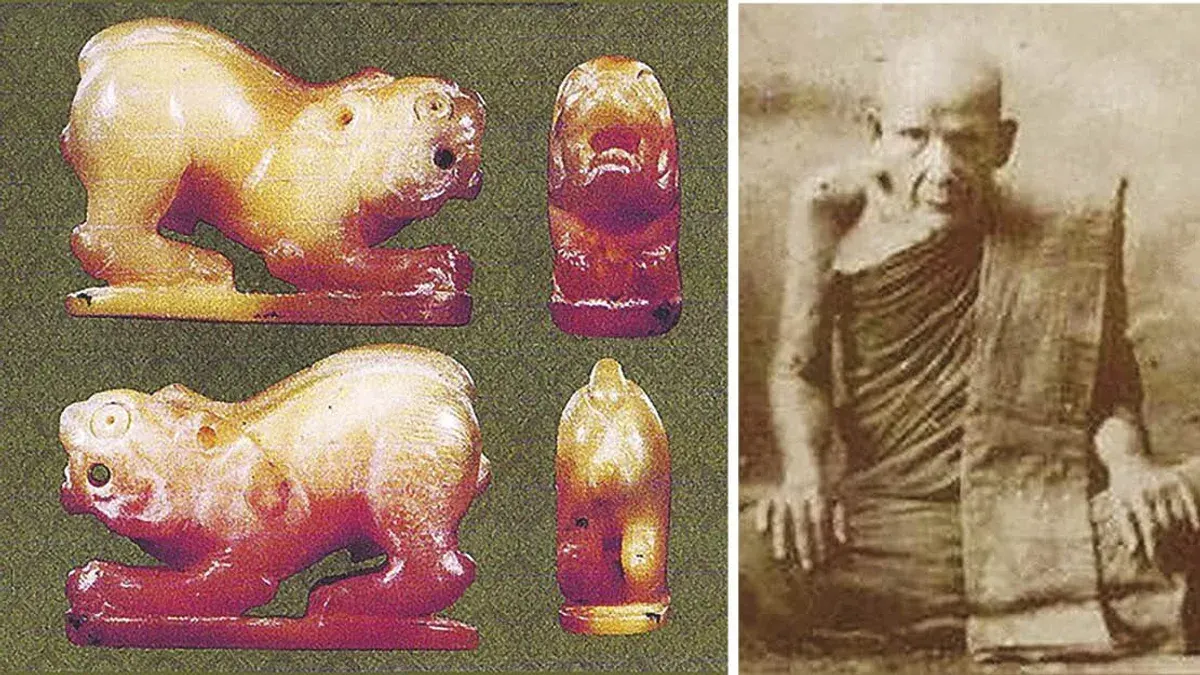
Luang Por Heng later went on pilgrimage through forests in Burma, Cambodia, and Laos multiple times. Upon returning, he was appointed abbot of Wat Maha Phot Tai. In 1906, he became abbot of two temples — Wat Maha Phot Tai and Wat Khao Din — situated on opposite banks of the Ping River. A remarkable event occurred when King Chulalongkorn (Rama V) unexpectedly visited Wat Khao Din on August 28, 1906, while traveling to Kamphaeng Phet. The royal chronicles record the King's surprise at finding the temple beautifully prepared with music and chanting, though no official visit had been announced. The King noted Luang Por Heng's dignified bearing and reputation as a meditation master. Impressed, the King donated 100 baht for a pavilion. Luang Por Heng developed both temples until they flourished, with locals considering them sister temples. He passed away in December 1942 at age 83 with 63 years in the monkhood. During his lifetime, he encountered rare male elephants with special ivory during his meditation pilgrimages, which became associated with his famous amulets.