Legendary Poster Artist and National Film Director Dies at 93
Piak Poster, Thailand's legendary film poster artist and director who created over 1,000 iconic posters and pioneered storyboarding in Thai cinema, died at 93 in Chiang Mai after a career spanning multiple generations of filmmaking.
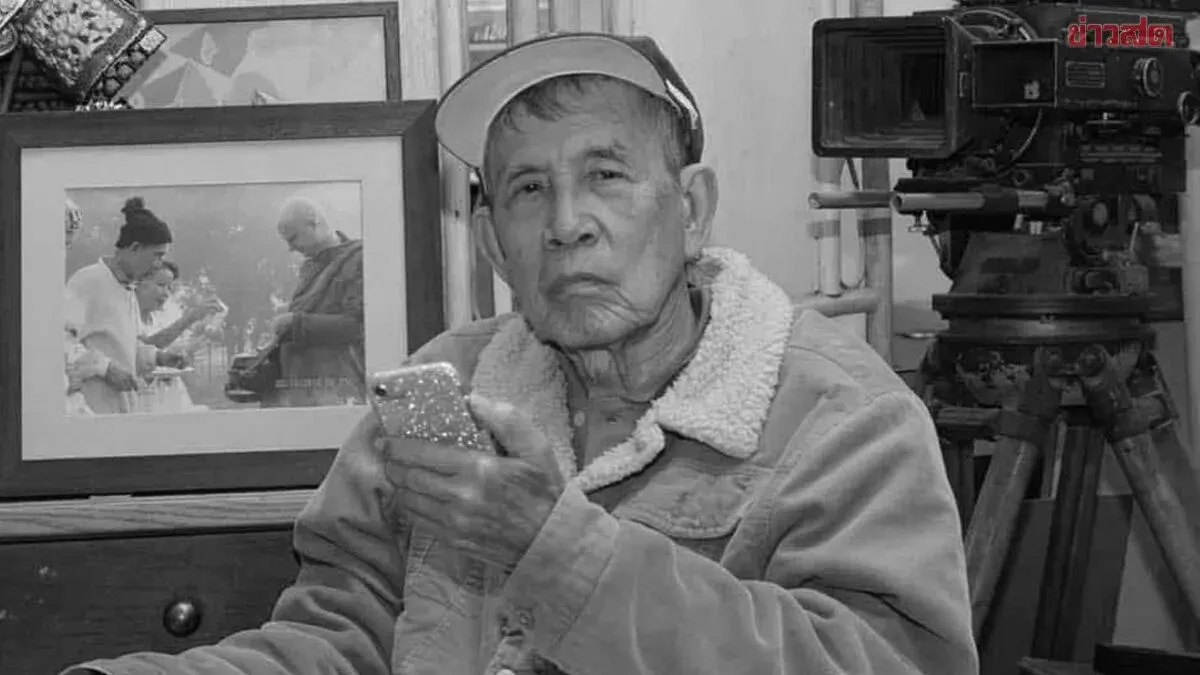
Thai cinema has lost a towering figure with the death of Piak Poster, the celebrated film poster artist and director whose career spanned multiple generations of Thai filmmaking. Born October 18, 1932, in Chiang Mai, Piak Poster—whose real name was Somboon Suk Niyom Sirinai—passed away peacefully on September 24, 2026, at 1:15 p.m., just 24 days shy of his 94th birthday. Recognized as a National Artist in the field of performing arts (film and television drama) in 2015, he left behind an extraordinary legacy in Thai cinema.
After completing his education at Paothawng School, Piak Poster began his artistic career creating advertising signs, magazine covers, and film posters, with "Older Brother" among his earliest works. His distinctive signature style using poster paint eventually gave him the enduring name by which he became known throughout the industry: Piak Poster. Over his lifetime, he created more than 1,000 film posters and became recognized as one of Thailand's most important poster artists.
Beyond poster design, Piak Poster contributed significantly to Thai film culture through writing and publishing, including columns in film magazines and his work on the publication "Star Image." In 1970, he fully transitioned to directing, launching his career as a filmmaker with "Ton," a highly successful film that became a landmark in Thai cinema. He went on to direct numerous acclaimed films including "Duang," "Choo," "Youth in Bloom," "Behind the Picture," "Crashing Flight," and "Saphan Rak Sarnsin," the latter earning the prestigious Suparnnhong National Film Award.
Drawing from his background as a visual artist, Piak Poster revolutionized Thai filmmaking by championing systematic use of storyboarding in film production. Throughout his decades-long career in art and cinema, his name represented far more than a poster artist or director—he was a cultural bridge across multiple eras of Thai cinema, from paper-based art to print media to film production to cultural preservation.
Though Piak Poster has now laid down his brush, the film posters he created, the films he directed, and the cinematic heritage he helped preserve will continue to tell his story to future generations.