Supalai Cuts Construction Waste 39% With Living Lab Innovation
Supalai slashed construction waste by 39% through its Living Lab innovation, which uses real building sites to test and refine sustainable practices like material reuse and design optimization. The developer's pilot project at Supalai Park
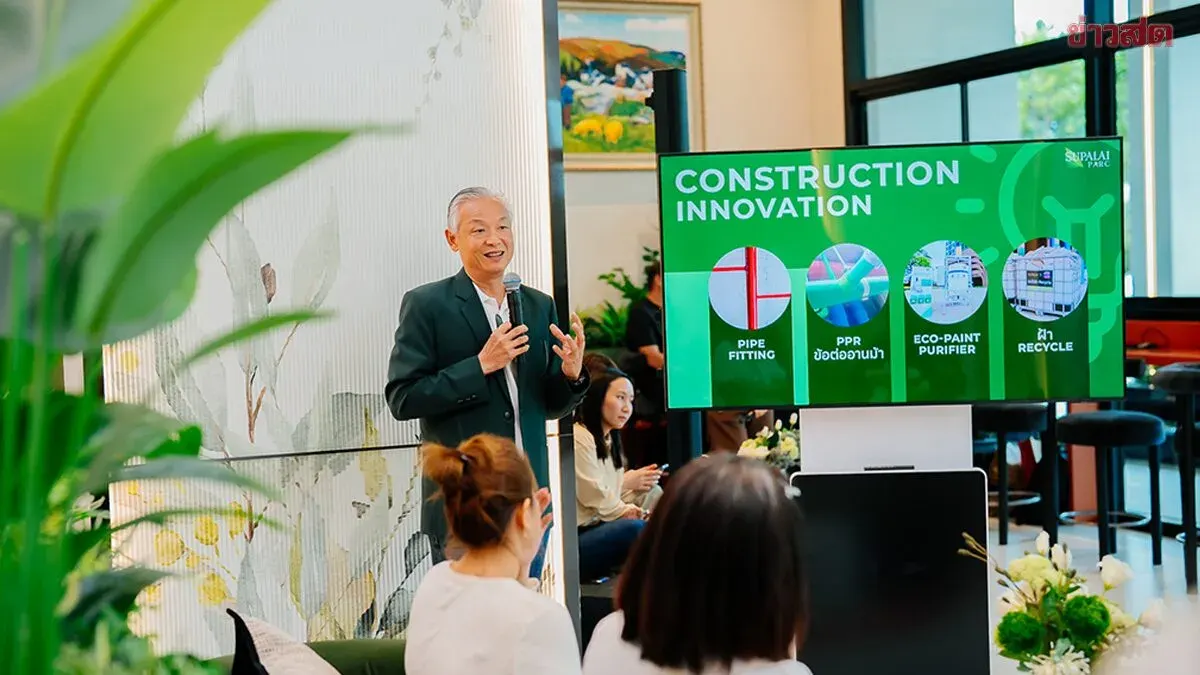
Supalai Public Company Limited has elevated its construction standards by opening 'The Living Lab,' which uses actual construction sites as experimental spaces to gather data, measure results, and continuously improve processes. Construction waste requiring disposal has been reduced from a target of 3,300 tons to approximately 2,000 tons, or 39% below target, while maintaining quality and safety standards.
The real estate industry now faces new challenges beyond building quality and safety, including efficient resource use, waste reduction, and environmental impact minimization. Supalai's Living Lab approach transforms construction sites into learning spaces where data is collected, analyzed, and results are applied to continuously refine work methods. The pilot project at Supalai Park Ekkamai–Pattanakarn will be followed by expansion across all company projects.
One key strategy involves reusing and repurposing construction waste, such as converting over 1,200 tons of pile-cutting scraps into retaining walls and recycling concrete scraps into landscaping materials. The company has also optimized design and construction methods to minimize waste—reducing fire suppression pipe seams by 67%, cutting PPR pipe joints by 67%, and decreasing ceiling panel trim waste by 30%.
Beyond recycling, Supalai has developed Circular Materials concepts to extend material lifespans, including reusing PVC pipe scraps, employing reusable anchorage plugs, and rotating plastic pallets instead of wooden ones. Recycled drywall scraps have produced over 1,200 new drywall sheets, saving approximately 2.4 tons of raw materials and reducing greenhouse gas emissions by about 3,000 tCO₂e.