Thailand Showcases Circular Economy in Construction at 2026 Expo
Thailand is promoting circular economy practices in construction through a new 2026 expo showcasing recycled materials like m-sand and solar panel glass to reduce waste and create economic value while modernizing the sector with digital tec
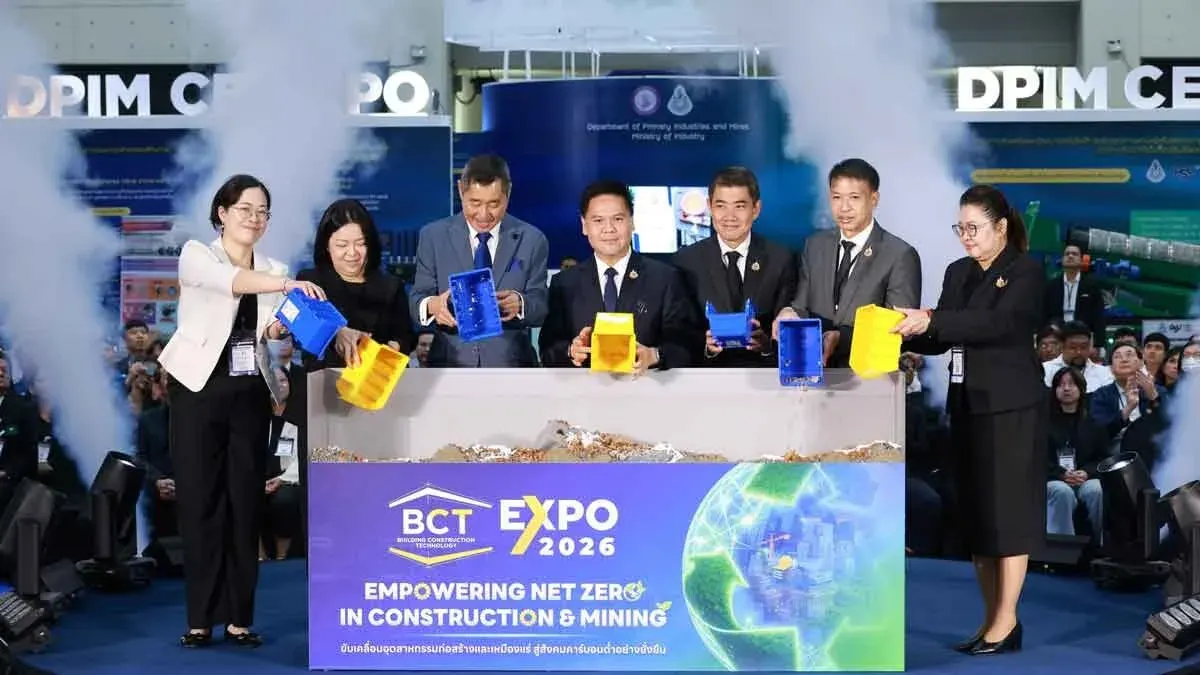
Industry Minister Verawuth Silpaarchcha inaugurated the Building Construction Technology Expo 2026 and DPIM Circular Economy Expo 2026, emphasizing that the construction sector plays a critical role in the economy, investment, employment, and quality of life. Digital technology, artificial intelligence, automation, smart construction, and building information modeling are rapidly transforming industry operations, requiring Thailand to upgrade its construction sector through technology, innovation, workforce development, and collaboration between government, private sector, educational institutions, and international partners.
The strategy focuses on high-quality construction materials, smart factories, energy efficiency, greenhouse gas reduction, and resource optimization while applying circular economy principles to minimize waste and promote material recycling as raw material substitutes. The DPIM Circular Economy Expo, held alongside the BCT Expo, represents a major step in connecting raw material and recycling innovations with construction and related industries to create environmentally friendly business opportunities and enhance national competitiveness sustainably.
The Department of Primary Industries and Mines is showcasing over 40 circular economy prototypes developed in fiscal year 2026, including m-sand, recycled solar panel glass, and materials linked to construction and related industries. Key innovations include m-sand—manufactured from stone dust produced during limestone crushing processes in Southern Thailand—which reduces natural sand consumption and waste, potentially creating over 2 billion baht in annual added value. Recycled solar panel glass, recovered from degraded panels, addresses growing waste concerns and could generate at least 20 million baht annually. Additional prototypes include concrete using recycled stone dust, fiber cement from wastewater treatment sludge, and technologies to reduce aluminum smelter emissions and improve overall production efficiency.