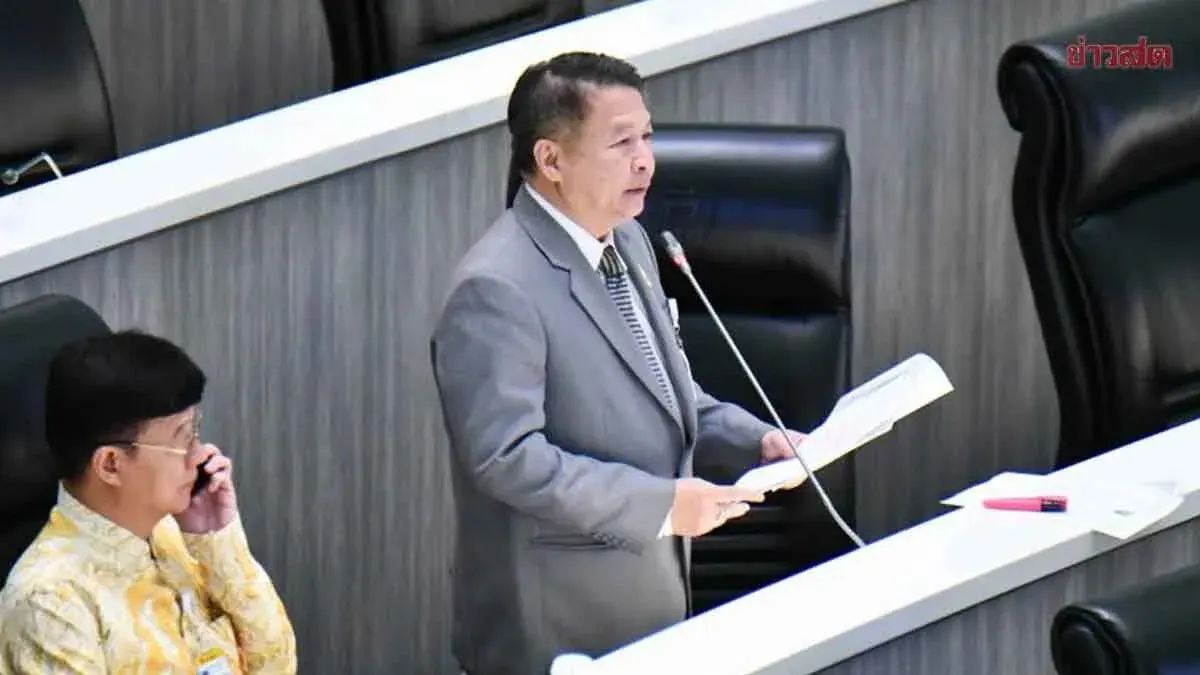
MP Thawi Links Toxic Waste Crisis to Structural Corruption
Prachachat Party leader and MP Pol. Lt. Col. Thawi Sodsong has blamed structural corruption and financial loopholes for Thailand's worsening toxic waste crisis. Citing cases in Prachinburi, Chonburi, and other provinces, he detailed how regulatory failures and nominee systems allow hazardous waste dumping, chemical contamination, and smuggling to persist. Thawi called for legal reforms to return litigation rights to affected communities and criticized a new Ministry of Commerce regulation that further shields intra-group corporate transactions from scrutiny.
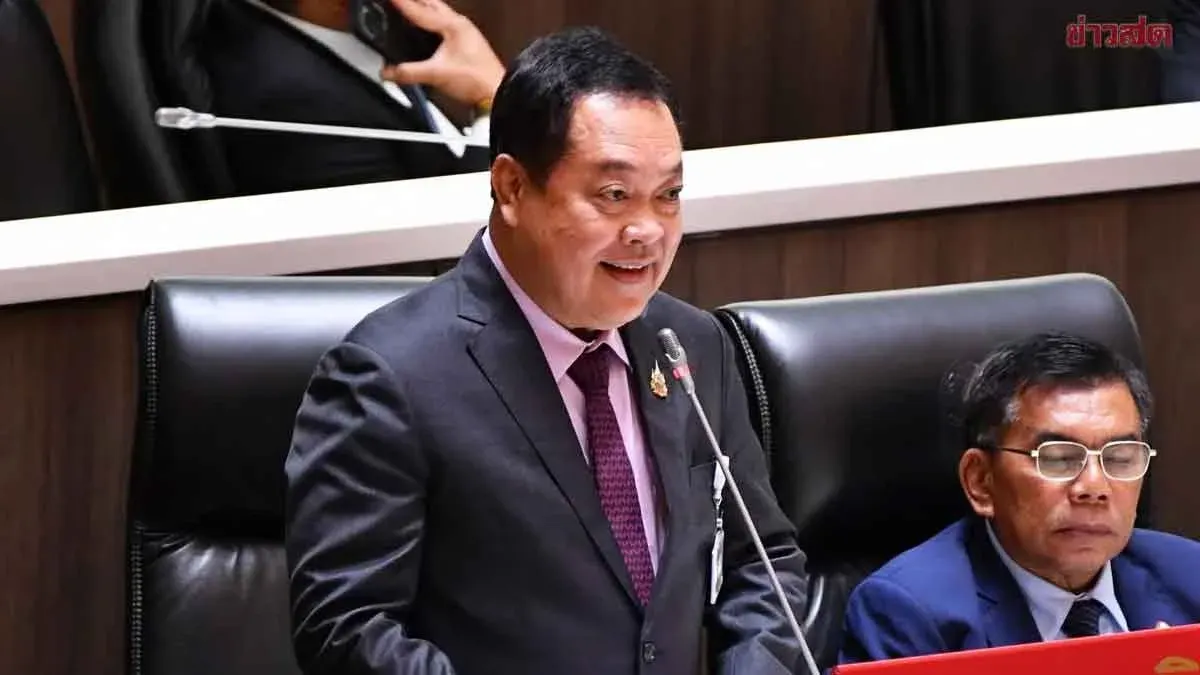
Thailand is not the world's dumping ground! Pol. Lt. Col. Thawi demands action on toxic waste, pointing to structural corruption and financial loopholes benefiting capitalists, and proposes a radical way forward.
On November 3, 2026, Pol. Lt. Col. Thawi Sodsong, a party-list MP and leader of the Prachachat Party, posted on Facebook stating that "toxic waste" is the result of structural corruption and financial loopholes. He called for returning litigation power to affected communities, arguing that true justice is measured not by capitalist profits or GDP gained through destruction, but by the right to survival and quality of life of ordinary citizens.
Past private-sector surveys on state agency opacity were often met with deflection or threats of lawsuits. But today's toxic waste crisis serves as "witness evidence" because the agencies flagged as risky — overseeing water pollution, urban planning, forests, factories, customs, and law enforcement — have all failed in their duties. The problem lies not only in the letter of the law but in "structural corruption" exploiting legal loopholes, allowing some officials to turn a blind eye and become protectors for environmental criminals with impunity.
Images of floodwaters washing chemicals and toxic residues through Prachinburi Province, forcing villagers to hold signs reading "We Don't Want Cancer," represent the final straw of despair. Evidence from the House Committee on Industry's 26th legislature report reveals:
- Toxic waste ponds as high as a 7-story building: An industrial waste pond in Prachinburi expanded over 350 rai, dug only 10 meters above groundwater. Undeclared chemicals from the EEC were secretly dumped, causing fires releasing toxic fumes, while mountains of acidic gypsum waste in Si Maha Phot District were washed by rain into water sources. - Urban planning favoring capitalists: Soil dumping blocked waterways in Si Maha Phot; when floods came, chemicals and heavy metals flowed into the Prachinburi River, destroying public water supplies. - Nominees holding licenses: Foreign capital uses nominees to hold shares and licenses for rubber processing, while secretly melting chemicals and recycling hazardous waste — such as a Chonburi factory with 17 violations still operating and discharging wastewater into the ground. - 15,000 tonnes of cadmium waste: Transported from Tak Province and buried in Samut Sakhon and Chonburi. The accounting question: how did thousands of tonnes of waste disappear from the system when every transport trip requires paperwork? - Customs loophole flagged by foreign warning: 816 tonnes of electric arc furnace dust (about 100 containers) from Albania nearly entered Thailand, caught only because an international watchdog warned in advance — showing Thailand's import screening remains vulnerable, while e-waste continues to be smuggled in. - Cases tossed between agencies: The case of Reservoir 16 in Chachoengsao, contaminated with heavy metals, saw local police, the Industrial Works Department, and the DSI passing the buck. As a former Justice Minister, I acknowledge this cannot be fixed by executive orders alone; it requires legal reform. - New loophole: Companies in the same group guarantee each other. Villagers win lawsuits but may never receive compensation.
While the government announces a crackdown on nominees, the Ministry of Commerce issued a regulation exempting intra-group services — management, IT, and debt guarantees — from foreign business licensing. Published in the Royal Gazette on August 28, 2026, this "hands holding phones, mouths holding precepts" rule lets the state see less of the money trails in foreign networks.
Imagine this scenario: Factory A runs a hazardous waste business with land and machinery. The parent company sweeps up the cash.