Pathum Thani Uses EM Balls to Fix Black Canal Water
PATHUM THANI — 8 October 2026, Local officials in Pathum Thani have begun using EM balls and aeration machines to tackle deteriorating water quality in an irrigation canal as floodwater drainage causes the water to turn black and develop a foul smell. Dr. Wirasak Hadda, president of Khlong Sam Subdistrict Administrative Organisation (SAO), joined the […]
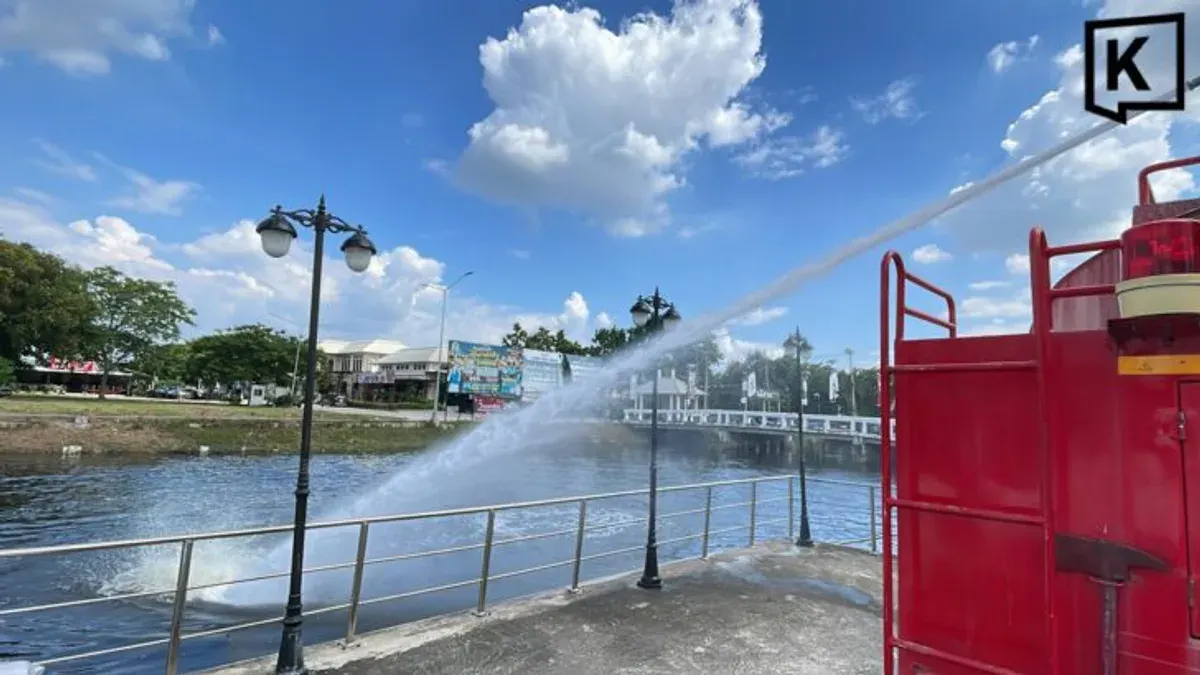
Pathum Thani — 8 October 2026, local officials in Pathum Thani began using EM balls and aeration machines to tackle deteriorating water quality in an irrigation canal as floodwater drainage caused the water to turn black and develop a foul smell. Dr. Wirasak Hadda, president of Khlong Sam Subdistrict Administrative Organisation, joined the Public Health and Environment Division, community leaders, and local environmental volunteers in throwing EM balls into Irrigation Canal 3 opposite Wat Kerd Kaeo Udom in Khlong Sam, Khlong Luang district. The EM balls are being used to prevent and treat wastewater in areas where water has turned black and smells unpleasant. Officials plan to distribute EM balls throughout Khlong Sam in all areas where water quality has started to deteriorate. Aeration machines are also being installed and operated to increase oxygen levels in the water. Dr. Wirasak said the water situation worsened after Khlong Sam SAO pumped water from Khlong Sam into Khlong Rapi Phat and then into Khlong Rangsit, causing the canals to turn black and smell of sewage. He noted that part of the problem is believed to be untreated wastewater discharged from residential communities. While residents need to drain water quickly to deal with flooding, such drainage can worsen canal water quality. As an initial measure, Khlong Sam SAO has brought in EM balls to improve water quality and installed aeration machines to increase oxygen levels, aiming to reduce wastewater problems and allow aquatic life to survive. Dr. Wirasak said the water had only recently begun to deteriorate, so prompt action could help control the situation before it becomes more serious. Regarding government compensation for flood-affected residents, Dr. Wirasak said he instructed the Welfare Division and relevant officials to visit every community to collect evidence of residents’ losses, including photographs, house registration documents, and identity cards. The local authority is also gathering information from residents who have registered directly through government channels. He said that once residents register through the government system and their applications are approved, compensation should be allocated as quickly as possible, without requiring residents to repeatedly prepare documents or submit the same information to local authorities, although Khlong Sam SAO is ready to collect and prepare any additional evidence needed. Dr. Wirasak also proposed that the government establish a direct channel for residents to report problems or obstacles with compensation applications, so that issues can be resolved within the government system, reducing the need to send cases back and forth between central government agencies and local authorities.