Power Plant BLCP Balances Energy Security With Environmental Sustainability
Thailand's BLCP power plant exceeds national emission standards for sulfur dioxide, nitrogen oxides, and particulate matter while using advanced pollution-capture technologies and closed-loop cooling systems to balance energy security with
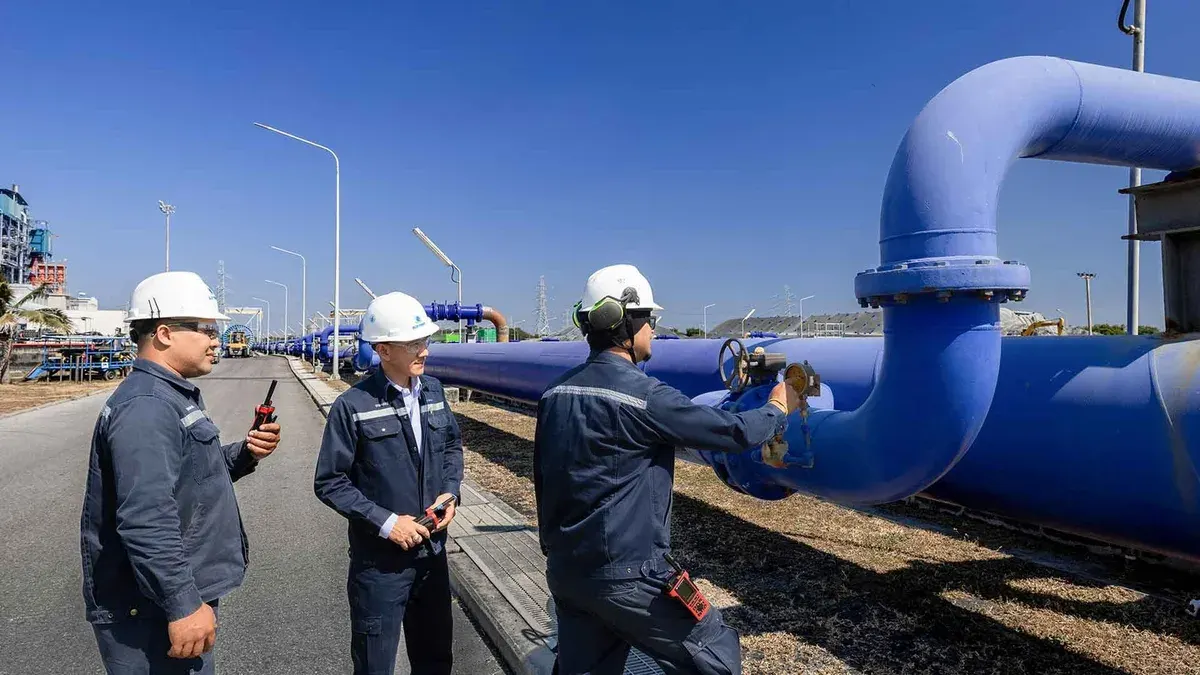
BLCP power plant addresses the challenge of maintaining Thailand's energy stability while advancing sustainable environmental practices amid global climate warnings. Data from Copernicus Marine Service shows that average global sea surface temperatures in June reached historic highs, with marine heat waves covering over 82% of oceans, and 2025 is projected to rank among the four hottest years on record. The ocean heat crisis impacts not only coastal ecosystems and coral bleaching but also raises critical questions for the energy industry: how to balance reliable electricity production with sustainable environmental protection.
BLCP, a major independent power producer operating continuously as a baseload power plant for over 20 years, has demonstrated success in meeting this global challenge by converting its mission into a tangible sustainability equation.
Stricter standards than the law requires BLCP's recognition in the industry stems from its philosophy of "prevention is better than cure." It has set air pollutant emission standards in its Environmental Impact Assessment that exceed Thailand's standards across all parameters:
– Sulfur Dioxide (SO2): BLCP limits emissions to 262 ppm, stricter than Thailand's 320 ppm standard – Nitrogen Oxides (NOx): BLCP limits emissions to 241 ppm, compared to Thailand's 350 ppm standard – Particulate Matter: BLCP limits emissions to 43 mg/m³, nearly three times stricter than Thailand's 120 mg/m³ standard
These rigorous standards reflect BLCP's concrete commitment to environmental and air quality protection.
Three key technologies capture pollution at the source To achieve its goals, BLCP integrates three international technologies into its production process:
– Low NOx Burner: Controls combustion and air flow to prevent nitrogen oxide formation at the start – ESP (Electrostatic Precipitator): Uses static electricity to capture particulate matter with up to 99.7% efficiency – FGD (Flue Gas Desulfurization): Uses seawater to capture sulfur dioxide gas
All pollutants are monitored continuously 24 hours through an automated system (CEMS) from a 200-meter stack, with data sent directly to government agencies. Additionally, four air quality monitoring stations (AQMS) around the plant provide real-time surveillance and transparent data sharing via signboards, website, and social media.
Three-tier cooling water system protects marine ecosystems In response to concerns about rising sea temperatures, BLCP uses a closed-loop cooling system, an international standard, where seawater undergoes multiple filtration stages before being returned to the marine ecosystem.