Small Modular Reactors: Clean Power with Big Potential
Small Modular Reactors represent a promising clean energy solution for Thailand, offering 24/7 carbon-free power generation in compact, factory-built units that require minimal land and can be deployed in just 3–4 years to meet growing nigh
Global warming is no longer a distant warning. Extreme weather and rising global temperatures are consequences of greenhouse gas emissions across sectors, while geopolitical tensions and conflict are accelerating energy security crises. Finding stable, sustainable, and environmentally friendly energy solutions has become an urgent priority Thailand must address.
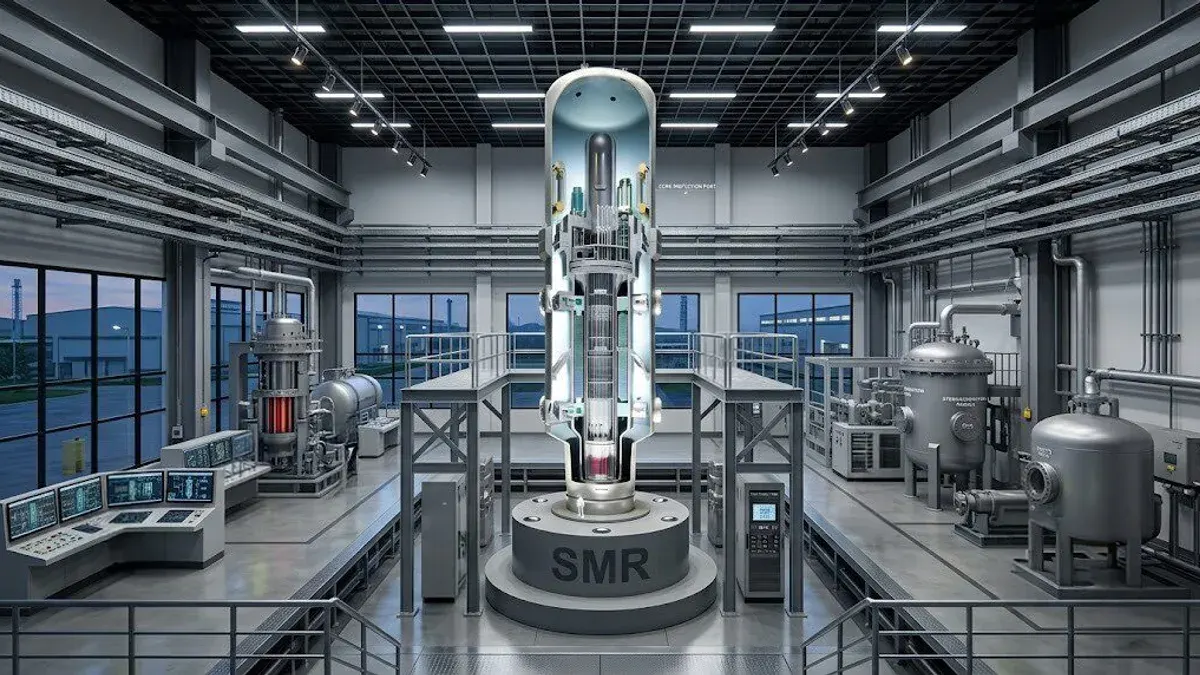
Small Modular Reactors (SMR) are a new form of nuclear power technology gaining worldwide attention. SMR stands for Small Modular Reactor—modular units that generate clean electricity continuously 24 hours a day. The key advantage lies in the letter M: modular design means reactors are built smaller and packaged as modules. Quality control and safety testing are completed at the factory, then the modules are transported by rail or truck for assembly at the power plant site. This cuts construction time to just 3–4 years.
SMRs produce about 300 megawatts and require only 100 rai of land, down from 1,000 rai for conventional nuclear plants—a tenfold reduction while maintaining excellent output. Investment flexibility is another strength: operators can build one module at a time and add more as electricity demand grows, avoiding massive upfront capital costs.
SMR technology works like a closed-system boiler: intense heat from nuclear fission boils water into high-pressure steam that drives turbines to generate electricity. Because there is no combustion, no carbon dioxide or PM 2.5 is released—making it clean and environmentally friendly.
Core to SMR design is enhanced safety. Simplified systems with critical components integrated into modules reduce pumps, pipes, and joints, minimizing accidents. Passive Safety systems rely on natural laws without electricity, pumps, or human command. In severe emergencies like earthquakes or blackouts, control rods automatically drop into the reactor core via gravity, stopping the chain reaction completely. Multiple radiation shielding layers provide additional protection.
Thailand's electricity consumption patterns are shifting. Energy regulators report peak demand on April 22, 2025, at 8:50 p.m., reflecting changing behavior. Over the past decade, peak load has moved to nighttime—when solar generation stops and electric vehicles charge—forcing the main grid (mostly natural-gas-powered) to bear heavy nighttime demand spikes.