Rare Buddhist Amulets: Luang Pu Pha Medal from 1967
Rare Buddhist amulets from the 1960s-1930s, including medals from revered abbots Luang Pu Pha and Luang Pu Sonthie Khemyo, are increasingly sought after by collectors as their market prices continue to rise.
Meditation requires subtlety and touches the mind, revealing all things that can be seen within one's consciousness," according to Luang Pho Cha Subhadto of Nong Pa Phong Temple, Ubon Ratchathani.
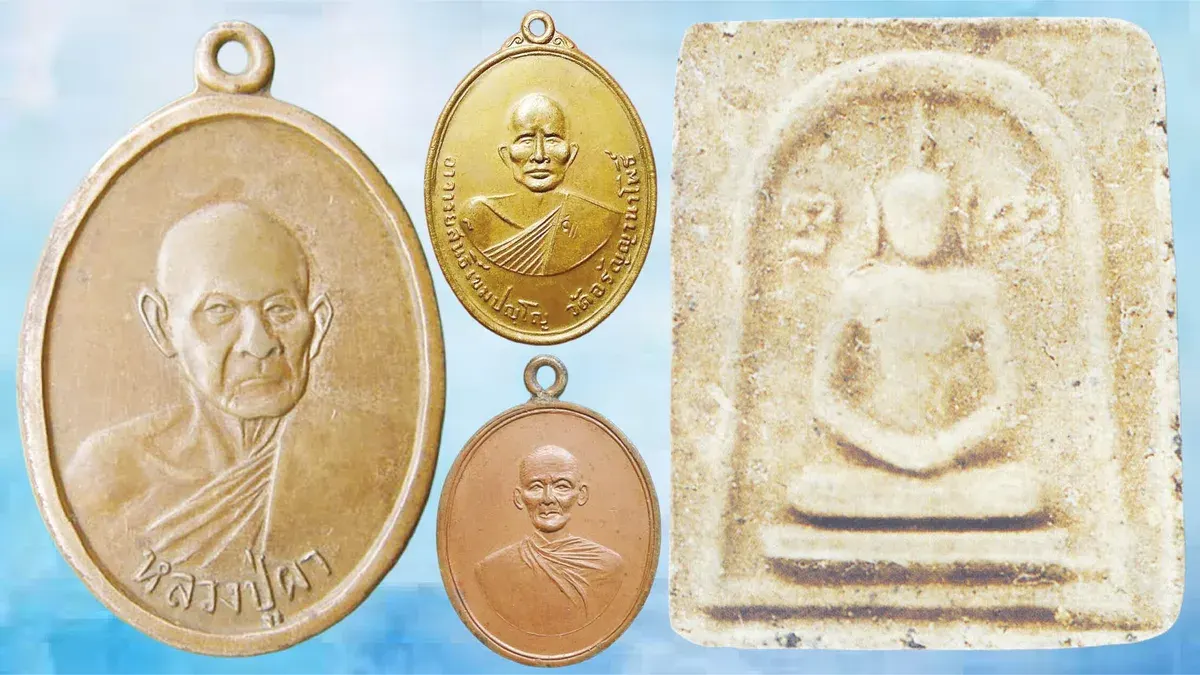
The Luang Pu Pha medal from 1967, cast by the renowned abbot of Nohn Sai Temple in Kaseetsomboon District, Chaiyaphum Province, has an oval shape with a loop bail. The obverse shows a half-length portrait of Luang Pu Pha facing forward, with the name "Luang Pu Pha" inscribed to the lower right. The reverse bears two lines of text: "2510" on the first line and "Nohn Sai Temple" on the second. These amulets are now increasingly rare, and their market prices continue to rise.
Luang Pu Sonthie Khemyo, the former abbot of Aranyanabodhee Temple in Nakhon Phanom Province and a renowned sage across five northeastern provinces, had his first-edition medal cast in 1967. Luang Pho Suwang Chantachooto, abbot of Saphan Kham Temple in Sakon Nakhon Province, requested permission to produce the "First Edition Luang Pu Sonthie Medal" in copper with a fire-treated finish, made in limited quantities.
This medal is oval and features a loop bail. The obverse is bordered by two raised ridges, with a half-length portrait of Luang Pu in the center and an inscription reading "Ajahn Sonthie Khemyo, Aranyanabodhee Temple" from left to right. The reverse has a thick raised border with Pali characters below the loop bail reading "Asangi," "Sulopu," and "Saphubha," followed by "2510, Edition 1" indicating the Buddhist era and edition number. The first edition exists in two blocks: the first without stamps, and the second with the stamp "Sakon" on the obverse robe, signifying "disciples of Sakon Nakhon created this." A defect appears on the reverse with a scratch mark near the tail of the Thai numeral "6." Many editions of this medal were made with block errors, with the nickname mistakenly inscribed as "Khempanya" instead of the correct "Khemyo," making this version popular among collectors.
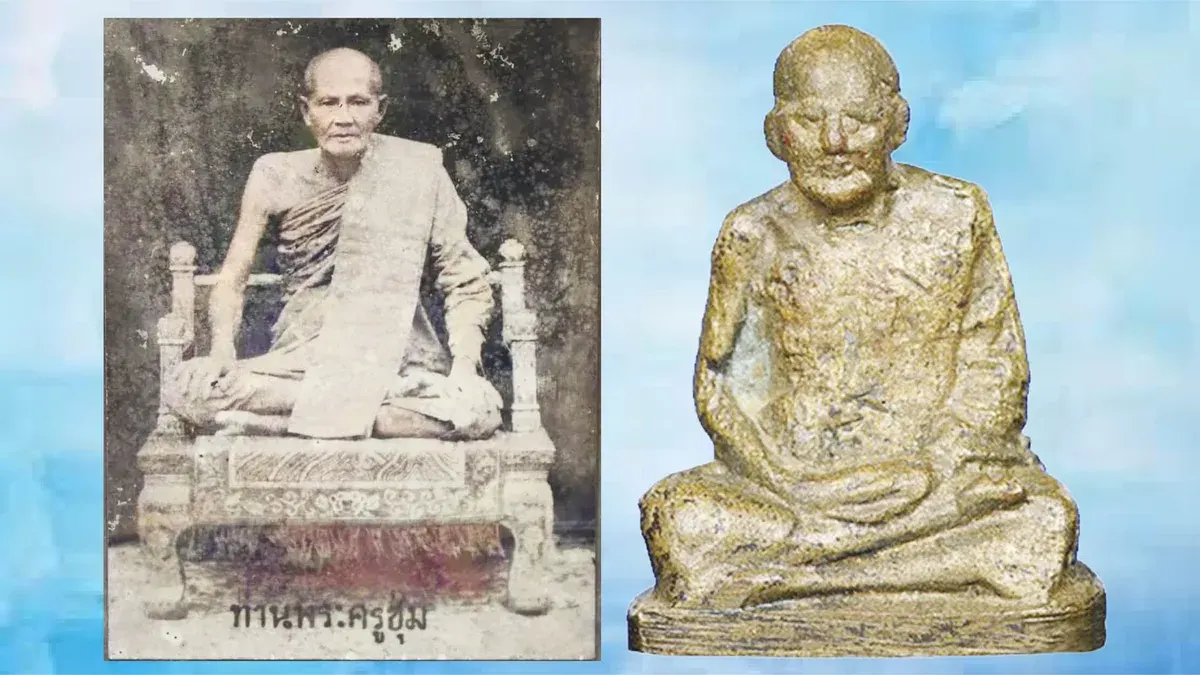
Luang Pho Poom Chantachooto, also known as Phra Kru Rattanarangsi of Bang Kolaen Nok Temple, Bangkok, had his first-edition copper medal become highly popular. Following the request of Phra Kru Vinayathorn Sawatsdi, the literary foundation of Somdej Phra Wan Rat (Heng Khemjari) of Mahathat Yuvaraj Rangsrit Temple, the medal was commissioned in 1934 to commemorate the 77th anniversary. The medal is oval, cast in copper, produced in an edition of 1,000 pieces. The obverse bears a half-length portrait of Luang Pho Poom, notable for deeply carved, sharp eyes, a small bead at the mouth, and thread lines within the robe. The reverse has two versions: one with a yantra touching the edge and one without. When the yantra touches, its tip aligns with the upper edge of the medal, and the "U" character differs from the non-touching version. These medals are now rare and command high prices.
Luang Pho Un Sukkamo, the former abbot of Talkong Temple in Phetchaburi Province, was a renowned teacher who once cast square-form amulets. Amulet collectors and enthusiasts affectionately call these "Somdej Hem" or "Somdej Khot Khanae" amulets, of which approximately 84,000 were produced.
Somdej Hem amulets are categorized as follows: approximately 4,000 with a clear rear yantra and "W.T.K." (Wat Talkong) abbreviation; approximately 30,000 with an unclear rear yantra and abbreviation due to wax paper marks; and approximately 50,000 with an unclear rear yantra due to mold wear. Among those with clear rear yantra inscriptions, approximately 500 are in reddish-brown test castings, and approximately 2,500 are in dark, oil-infused material. All amulets were consecrated in ceremonies beginning in 1954 and continuing until 1961, spanning eight years of continuous consecration before distribution to the monastic community.