Rare Shellfish Swarm Brings Windfall to Satun Beach
Hundreds of rare angel wing shells washed ashore at Pak Bara beach in Satun, creating a harvesting windfall with daily earnings exceeding 200,000 baht as residents collect the unusually large and shallow-buried shellfish.
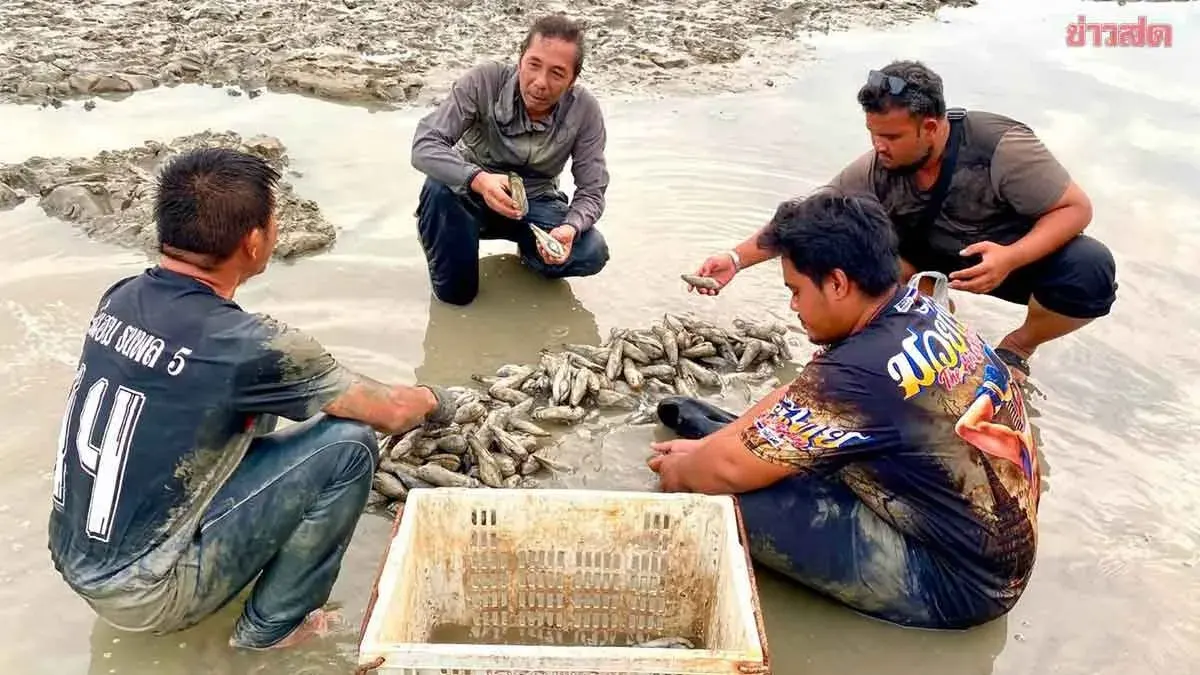
A remarkable natural phenomenon has unfolded at Pak Bara beach in Satun province, where angel wing shells—locally known as "hoy karang" or "hoy phim"—have washed ashore in unprecedented numbers. Hundreds of residents have flocked to the beach to harvest the shells, with some collecting dozens of kilograms each. The shells are unusually large, at 6–7 per kilogram, and normally buried up to 2 feet deep in mud, but this year they appeared much shallower due to exceptional conditions. Daily earnings from beachside sales are estimated at no less than 200,000 baht.
Local resident Bangmud expressed surprise at the phenomenon, noting that such abundance is unprecedented. The shells typically live buried deep in coastal mud and cannot normally be dislodged by ordinary waves. The economic value of the harvest is significant: fresh shells sell for 60 baht per kilogram at the beach and 80 baht per kilogram retail. Traders buy them directly to process into sun-dried versions, which command premium prices up to 1,000 baht per kilogram. Residents typically use fresh shells in stir-fries, curries, and soups, where they offer a distinctive sweet, tender flavor.
Angel wing shells are sensitive indicators of ecosystem health, particularly the health of mangrove forests and coastal balance. Their presence in large numbers signals ecological abundance and a stable natural environment. The shells are found along the Andaman coast in Satun, Trang, Krabi, Phuket, Phang Nga, and Ranong. Their sensitivity to toxins and soil changes makes them valuable markers of environmental conditions in coastal areas.