Sansiri Partners Open Coffee Learning Center to Restore Watershed Forests
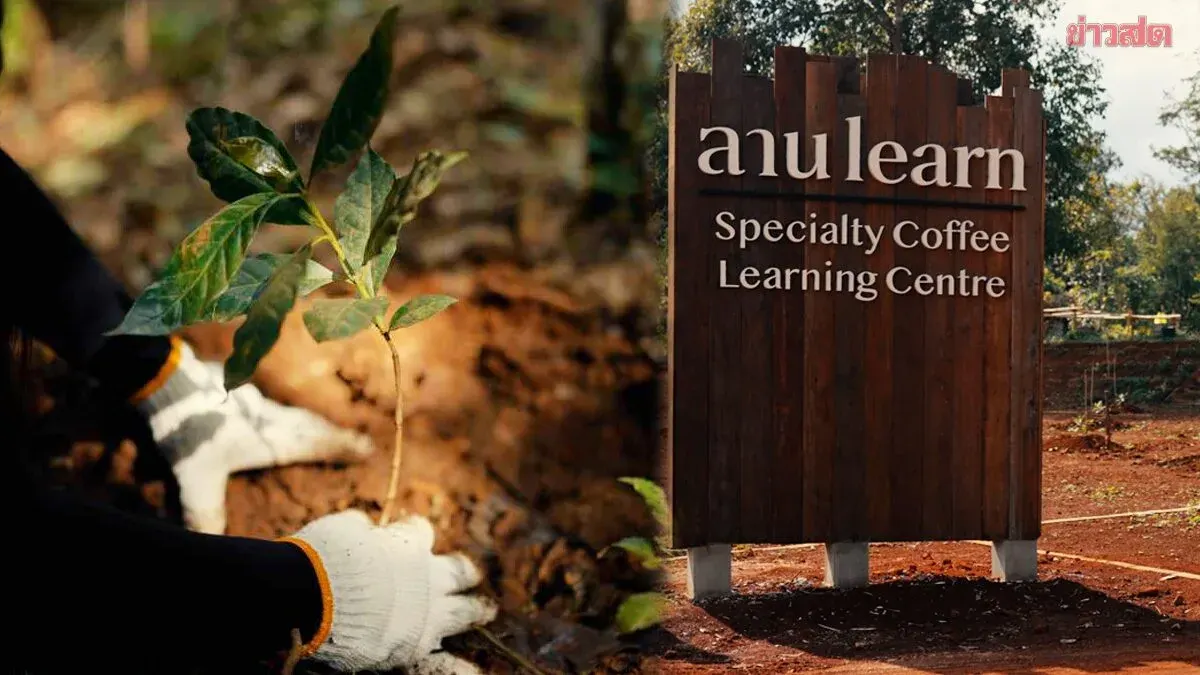
Sansiri PLC has partnered with Beans and Saenchai Estate to launch the "Learn Plaza" specialty coffee learning center in Chiang Mai's Kalayanawat district. The 21-rai facility aims to restore watershed forests, develop sustainable coffee farming, and elevate farmer incomes by producing high-value specialty coffee beans. The project targets 50-100 farming households and 500-1,000 rai of shade-grown coffee to combat burning and PM2.5 pollution while building a distinct Kalaya coffee brand.
A small cup of coffee leading to ecosystem preservation, job creation, and drawing the new generation back home — how is this possible? Because sustainability isn't about helping just one person survive; it's about building a system where nature, people, communities, and the coffee business all survive together.
Thailand's coffee business has grown at a high rate over the past several years, yet the country still imports up to 90% of its coffee beans. At the same time, the specialty coffee sector is growing rapidly, proven by the launch of many major and foreign brands in Thailand, reflecting consumers' desire for a different drinking experience.
Naturally, high-quality beans and unique varieties command higher prices. The Kalayanawat district is the next target area where farmers are being encouraged to grow coffee with knowledge, and private agencies are stepping in to promote production — a purpose-driven push.
The fourth "Sawasdee Kalaya Coffee" event was held at "Learn Plaza," a 21-rai specialty coffee learning center in Chiang Mai. It brings together three forces: 1) Farmers, led by model farmer Saenchai Ju-po from Saenchai Estate; 2) Sansiri PLC, the company behind the first community enterprise — the specialty coffee learning center in Kalayanawat district, Chiang Mai — restoring watershed forests and developing communities for the long term, announcing full commitment to a sustainable development roadmap; 3) Partnerships like BEANS & SCATH, bringing real market challenges from new-generation consumers and linking with leading institutions such as Maejo University, Chiang Mai University, and SCATH for soil testing, variety development, and knowledge elevation from upstream to downstream.
Growing coffee is seen as an extension of solving environmental problems alongside community economic development. As a shade-loving plant, coffee reduces burning and forest destruction because it requires big-tree shade and doesn't need slash-and-burn rotation. Every part of the coffee plant can be used beneficially, and the beans themselves can create high value with proper planting and planned production techniques.
Model farmer representative Saenchai Ju-po said the Kalayanawat area is the largest pine forest in Asia, offering great potential for high-quality coffee. He wants Kalaya coffee to grow in the direction of the Kenya model — giving Kalaya coffee a distinct identity that people seek out. The focus will be on Progeny 88 and Syrina varieties, which Kenya has cultivated for 13 years: disease-resistant, high-yielding, and delicious. The long-term goal is for farmers to take pride in having their own brand.
"At 'Learn Plaza,' we aim to expand the network of specialty coffee farmers in the area to at least 50–100 households. New farmers are continuously joining training, while restoring watershed forests through shade-grown coffee systems on no less than 500–1,000 rai to sustainably reduce burning and solve PM2.5 dust problems.
Crucially, we aim to elevate coffee value from a traditional crop to specialty coffee commanding 3–5 times higher prices — from ordinary beans at 70 baht per kilogram to specialty grades at 210–350 baht/kg, guaranteed by cupping scores of 85+."
Somchai Promsiri, Chief of Staff at Sansiri PLC, said Sansiri emphasizes creating equity in all dimensions, believing large organizations must extend a hand to support.