Six Nations Warn: Upgrade Steel Standards Against Earthquake Risk
Six ASEAN nations are urging governments to tighten construction steel standards due to safety concerns over induction furnace steel, which may pose earthquake risks despite meeting outdated regulations.
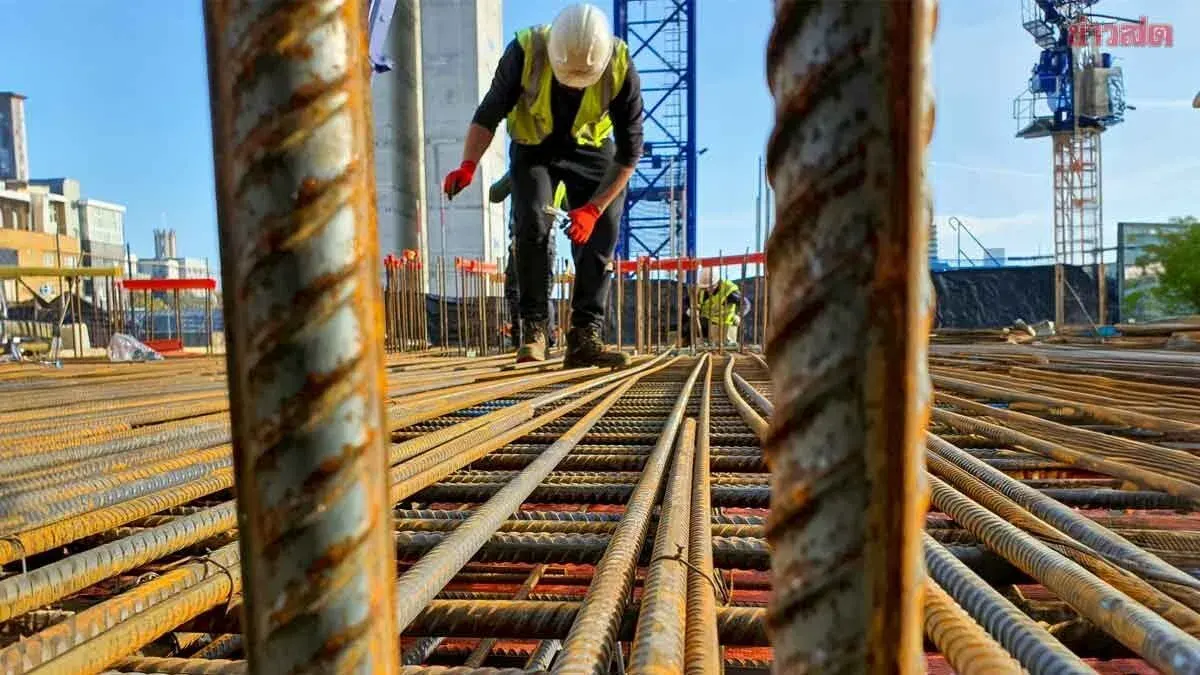
The ASEAN Iron and Steel Council (AISC) has released a joint statement warning ASEAN member governments to urgently review regulations governing the production and use of construction steel made from induction furnaces (IF). A technical study raised concerns about steel quality and structural safety, especially as the region faces increasing risks from natural disasters and earthquakes.
The statement reflects the shared position of steel organizations from six member countries: Thailand, Indonesia, the Philippines, Vietnam, Singapore, and Myanmar. They agree that construction steel standards in many countries still reference criteria developed decades ago, which may not keep pace with current steel production technology, particularly the expansion of IF steel production, which has limitations in removing impurities from the metal.
The study found that while some IF steel can meet current product standards, passing these tests does not guarantee the same safety properties as steel from mainstream global production processes. Production methods directly affect the microstructure and internal quality of steel. A key weakness of IF steel is its limited ability to remove impurities and contaminants compared to modern production processes, resulting in reduced toughness, impact resistance, and fatigue resistance—critical factors for the structural integrity of buildings, bridges, and infrastructure exposed to vibrations or repeated stresses over time.
Research also revealed that IF steel has an inclusion index (K4) approximately 4-5 times higher than steel from international standard processes, even when meeting current product standards. This suggests existing standards may not adequately assess internal steel quality, particularly cleanliness, which affects long-term safety.
"Many countries worldwide have begun tightening controls on IF steel production," the statement noted. "China has banned the production of construction rebar from IF furnaces, and many Asian and ASEAN nations are reviewing their standards and quality requirements to address potential future risks."
To enhance construction safety across the region, the council has proposed four urgent measures for ASEAN member governments: reviewing the suitability of IF steel in construction projects, upgrading product standards and testing methods to match current production technology, increasing requirements for internal steel quality and impurity inspection, and establishing guidelines to reduce or eliminate IF furnace use for construction steel production long-term.
The key issue is not merely whether steel passes standards, but ensuring those standards are modern and accurately reflect the true quality of construction steel. This will ensure ASEAN's future urban development, buildings, and infrastructure projects are built on the foundation of maximum public and economic safety.