World Bank Urges Tax Reform to Boost Small AI Jobs
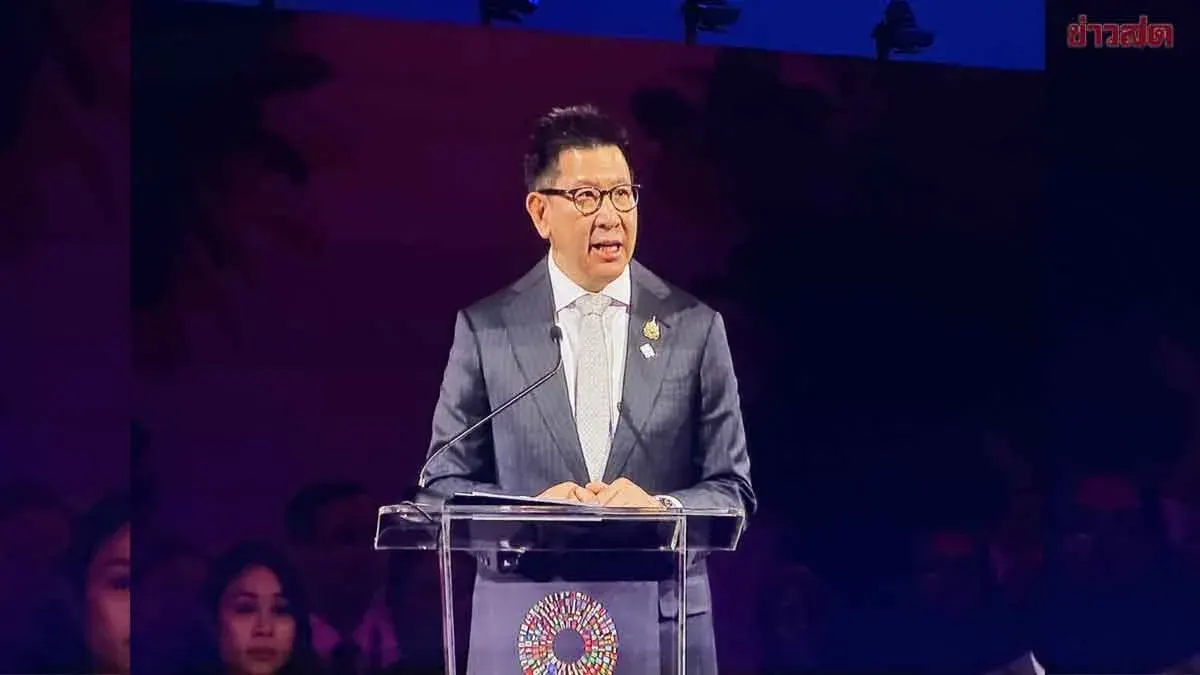
At the IMF‑World Bank Annual Meetings 2026, World Bank President Ajay Banga promoted 'Small AI' as a way to create jobs in emerging markets and urged governments to reform taxes to cope with AI‑driven labor displacement. He highlighted examples from Indonesia, India and Singapore where low‑cost AI tools are improving health, agriculture and public services, while warning that growth alone won’t secure quality jobs without supportive policies. IMF chief Kristalina Georgieva noted that while big AI investments are led by the US, China and India, Asian nations including Thailand are focusing on building the infrastructure to support AI’s growth.

World Bank champions 'Small AI' to create new jobs, urges government to overhaul taxes to address labor displacement 12 Oct - Ajay Banga, President of the World Bank Group, spoke at a World Bank Group panel under the theme 'Small AI, More and Better Jobs' during the IMF-World Bank Annual Meetings 2026. He said job creation is an urgent task, noting that in the next 15 years 1.2 billion young people will turn 18. Having a job means more than income; it gives people effective participation in society, hope, and dignity. Creating jobs requires strong foundations: physical infrastructure, human resource development, and appropriate government policies, alongside risk reduction to attract private investment, which supplies 75–85% of employment in each country. For emerging markets, the opportunity from artificial intelligence lies not only in competing to develop large language models but in deploying Small AI—low‑cost, accessible tools designed for real‑world use—to boost productivity in agriculture, education and public health. Ajaya cited five sectors with job‑creation potential: infrastructure and construction, small‑scale agriculture, primary health care, tourism, and manufacturing/value‑added processing, giving examples of technology that answers people’s needs in developing countries. In Indonesia, primary health workers such as nurses and midwives can use smartphones to photograph patients’ symptoms and send them to AI tools for preliminary assessment before arranging a specialist appointment. In India, a partnership with Google has produced an AI platform that helps smallholder farmers upload pictures of diseased leaves to receive management advice and purchase related inputs through a digital system more easily. Singapore President Tharman Shanmugaratnam warned that economic growth alone does not guarantee quality jobs if supportive policies are lacking; the gap between growth and employment could widen as AI reshapes labor markets, especially for mid‑level workers and new graduates who may lose entry‑level positions. He urged developing countries to seize opportunities in four areas: competitive manufacturing based on low‑cost labor, clean energy that enhances energy security and creates jobs, AI‑enabled health systems that boost worker capacity, and solo‑entrepreneur businesses that can access technology and markets cheaply. He called for public‑private incentives to hire youth, prevent skill loss, and expand work‑integrated learning and applied skills training. Meanwhile, Kristalina Georgieva, Managing Director of the International Monetary Fund, said AI development is unfolding in two waves: the first wave involves large investments in data centers and AI model development, led by the United States, China and India; while Asian countries, including Thailand, are contributing by building the infrastructure needed to support AI expansion.