Solar Power Brings Light and Hope to Three Remote Thai Communities
Gulf Development Company installed solar power systems in three remote Thai communities, including a highland coffee village at 1,400 meters elevation in Chiang Mai where electricity access now enables coffee processing and internet connect
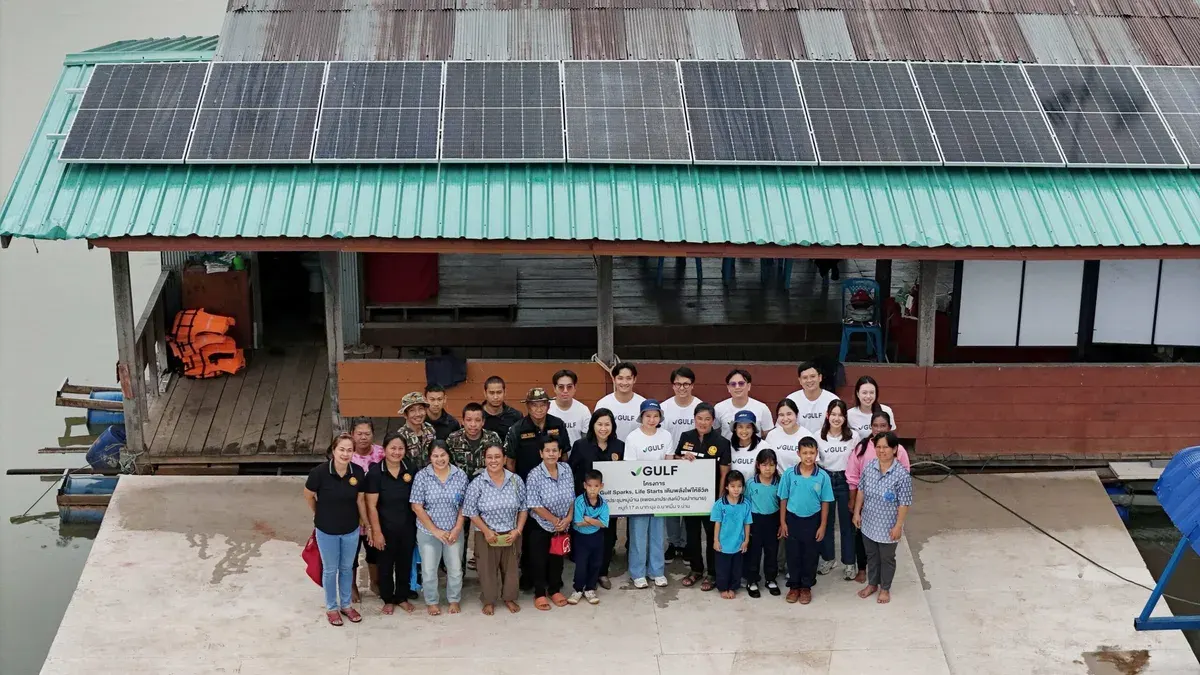
Imagine highland villages at 1,400 meters elevation where cool air enables quality coffee cultivation, or fishing communities living on lake platforms above dams teeming with aquatic life. Yet these naturally abundant areas remain trapped in darkness because they lack electricity or have only intermittent supply, cutting residents off from essential healthcare, education, and communication services. This is why Gulf Development Company has been deploying solar power systems to remote electrified communities across 20 locations nationwide for over five years, including highland areas, islands, and border regions, believing that electricity access creates jobs, generates income, and sustainably improves people's lives.
Ban Doi Wiang in Chai Prakan District, Chiang Mai, sits at 1,400 meters in Doi Wiang Pha National Park as a Lahu hillside community of roughly 100 households and 400 people living harmoniously with the forest. About 80 percent grow coffee as their primary livelihood, cultivating it under shade trees in a sustainable cycle that protects the upstream forest. The altitude and soil create distinctive, high-quality coffee. However, the community relied on unstable hydropower electricity available only 3 to 4 hours per day, and during dry season when water runs low, the entire village had no electricity around the clock. Villagers could only sell fresh coffee cherries at 25 to 30 baht per kilogram to middlemen, unable to process the crop into higher-value products, leaving income unreliable and vulnerable to market fluctuations.
When Gulf installed solar power systems at the Mae Fa Luang Highland Thai Learning Center at Ban Doi Wiang, light sparked real change. Electricity enabled satellite internet and phone signal, giving children and youth access to new knowledge and global learning opportunities equal to urban students. Gulf also supported construction of a coffee processing shed and donated a solar-powered coffee roaster to the community. Village headman and coffee farmer representative Uela Cahued reflected: "Before, we could only sell fresh coffee cherries. Some years prices fell so low it barely covered our effort, even though our coffee is excellent quality. When Gulf brought in solar power and support,"