Student Network Demands Senate Fraud Charges, Court Halt to Duties
A student coalition demands the Election Commission prosecute 229 people, including 138 sitting senators, implicated in fraud during Thailand's 2567 senate election, where less than 0.1% of voters participated in selection.
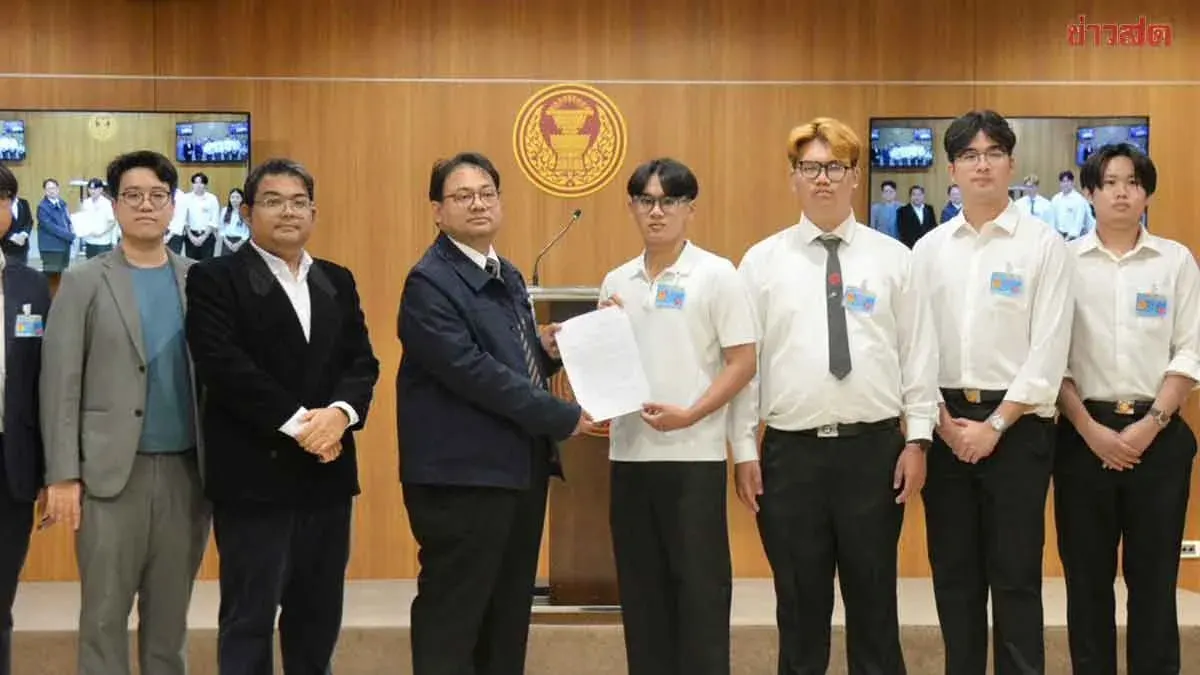
On 10 September, a network of students and civil society groups submitted a letter to parliament's committee on judicial affairs, autonomous bodies, public prosecutors' office, state enterprises, public organizations, and funds, requesting an investigation into the Election Commission's lack of transparency and seeking recommendations on senate system reform. The coalition expressed serious concern about the current senate selection mechanism, in which only 48,117 out of over 52 million eligible nationwide voters had voting rights—representing just 0.09 percent—demonstrating that the majority of the public lacks participation in choosing those who exercise state power and set the country's direction. The senate selection system is structured around occupational groups and self-selection, lacking any genuine connection to the public. Currently, 229 people face corruption allegations related to the 2567 senate election, of whom 138 are sitting senators, constituting more than two-thirds of the chamber.
Phandit Nuamjerm, a Bangkok MP from the Thai Citizens Party and committee member, called on the Election Commission to take three specific actions. First, by 14 September, the commission must vote to prosecute those involved in the senate election fraud, based on investigative committee findings, and allow the Supreme Court to decide the cases, preventing conflicts of interest between the senate and commission. Second, when filing charges against senators and related individuals, the commission must request the court to suspend those senators from office, given the current senate's significant political power, including its ability to delay laws, amend the constitution, and approve independent agencies and senior officials. If delegitimized senators continue exercising power, it will undermine overall political legitimacy. Third, after the commission decides whether to prosecute, it must publicly detail its reasoning so the public and media can scrutinize the decision. Should the commission fail to prosecute all responsible parties, the committee will propose amending the constitutional organic law on senate selection to allow private citizens to directly petition the Supreme Court for corruption cases.