Swine Farmers Oppose US Pork Imports Under ART Deal
The National Swine Raisers Association opposes U.S. pork imports under the new ART trade deal, arguing domestic supply is sufficient and imports would devastate farmers already facing a fourth year of losses. The group also warns that the agreement could expose Thai consumers to ractopamine, a feed additive banned in Thailand but permitted under international Codex standards.
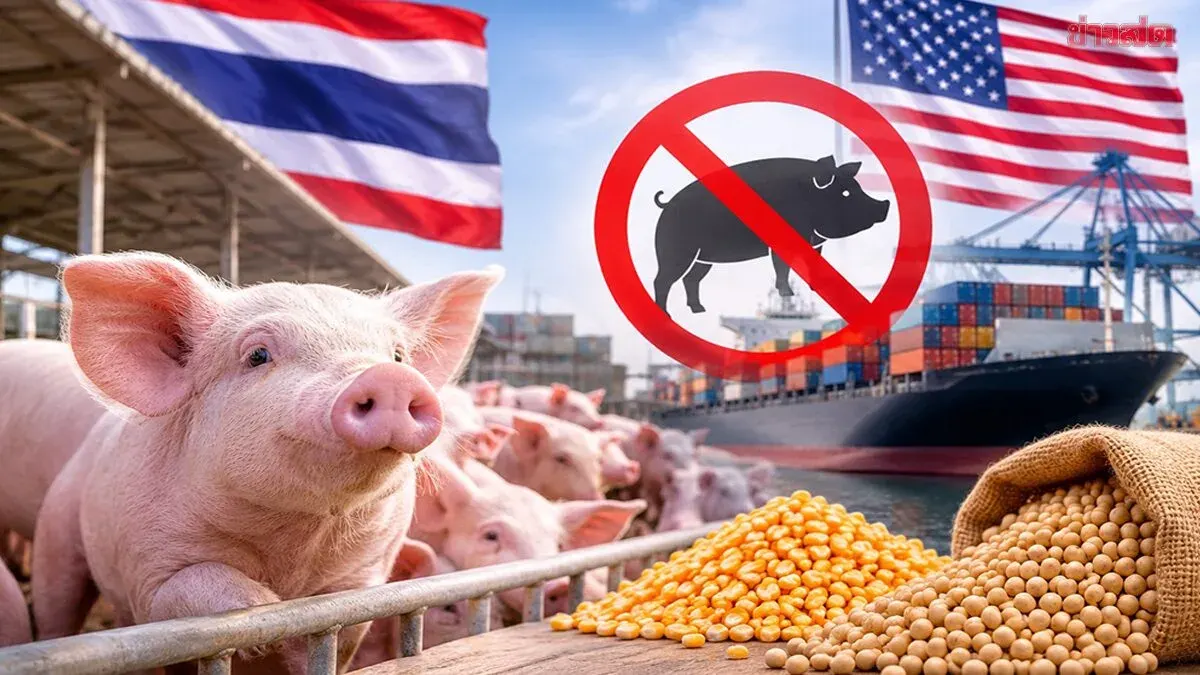
On November 19, 2026, the National Swine Raisers Association released a statement opposing the opening of the Thai market to U.S. pork imports under the Agreement on Reciprocal Tariffs (ART) between Thailand and the United States. The agreement covers market access, tariff reductions, and relaxation of non-tariff measures for agricultural and livestock products.
As the representative body for pig farmers nationwide, the association presented four key arguments against the move:
1. Alternative trade options: During early negotiations, the livestock sector proposed using agricultural goods that Thailand does not produce in sufficient quantities — such as feed corn, soybeans, and soybean meal — as trade concessions. Thailand currently imports over 90% of its soybeans and soybean meal from Brazil, and could shift sourcing to the U.S. without harming domestic production stability.
2. Domestic industry readiness: Thai pig farms have been upgraded to mandatory standards, making product quality internationally competitive. Domestic pork output is sufficient for local consumption and the industry is expanding exports to neighboring countries. Importing foreign pork would inevitably disrupt the domestic supply-demand balance.
3. Mounting costs and losses: Thai farmers face persistently high production costs, including the world's highest domestic feed corn prices and elevated soybean meal prices driven by government policy on bottled soybean oil. At the same time, authorities have pressured farmers to keep pork selling prices near cost. This has caused three consecutive years of losses (2023–2025), with a fourth year projected for 2026.
4. Legal standards and CODEX reservations: Thai law strictly prohibits the use of ractopamine (a beta-agonist) in animal feed. However, the Codex Alimentarius Commission adopted maximum residue limits for ractopamine in 2012 based on a U.S. proposal. The association has repeatedly urged the Thai government to file a formal reservation to preserve domestic standards, but has not yet succeeded.