Tawee Says Solar Loans Contradict Govt Debt Relief Policy
The user wants a short summary (1-2 sentences, 120-220 characters, max 240) in English for a local English-language news site covering Ko Lanta/Southern Thailand. The article is in Thai about MP Tawee Sodsong criticizing the government's de

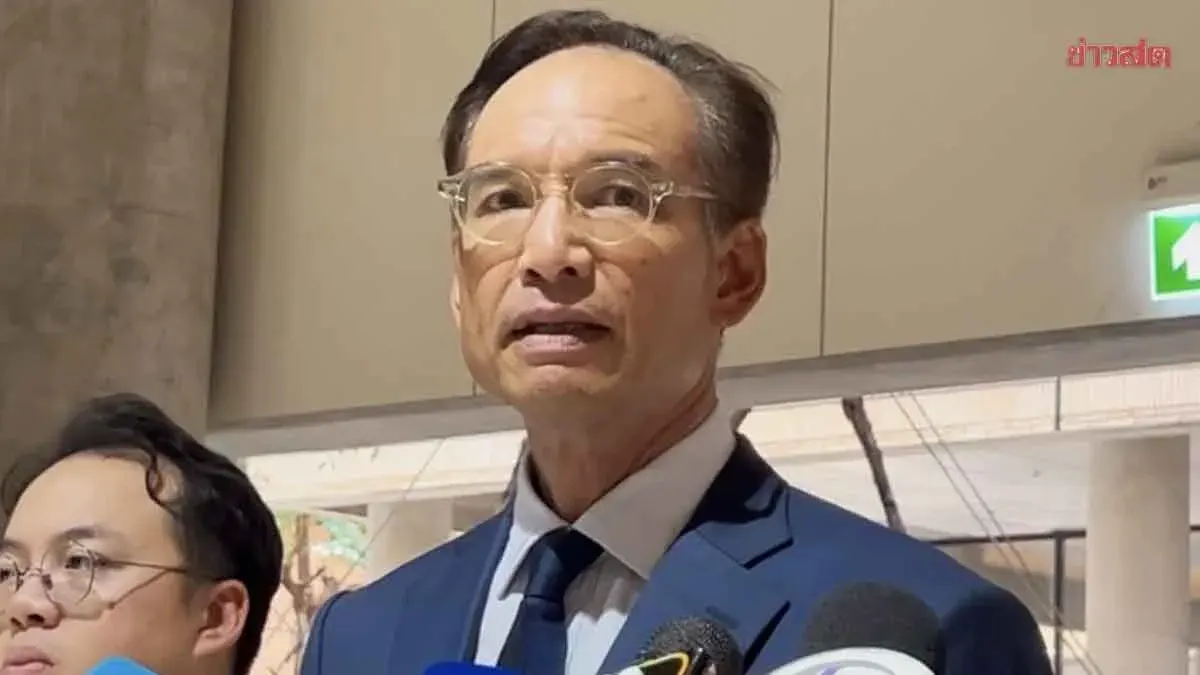
MP Tawee Sodsong, leader of the Prachachart Party, posted on Facebook on October 29, 2026, stating that the 'Solar for People' loan scheme and Government Savings Bank loans make the government's 'comprehensive debt relief' policy untrue. He questioned who benefits, who bears the risk, and who is accountable for the policy outcomes.
The government of Prime Minister Anutin Charnvirakul declared its policy to parliament on April 9, 2026, promising in section 1.1 to 'assist and resolve debt problems comprehensively and holistically, with the debtor at the center,' alongside reducing energy expenditures. Section 13 promised 'free education for real, free education with jobs.'
However, implementation raises questions: is the government reducing household debt burdens, or continuing to use borrowing to solve problems the state has a duty to address? National Economic and Social Development Council data shows household debt reached 16.31 trillion baht in Q3 2025, or 86.8% of GDP. The government should focus on reducing existing debt, increasing income, and preventing unnecessary new debt.
First issue — Solar for People: The state borrows 50 billion baht but does not fix the expensive electricity pricing structure.
Section 56 of the Constitution requires the state to provide basic utilities universally and ensure service costs are not an excessive burden. The Cabinet approved the Solar for People project on October 27, 2026, with a 50 billion baht loan ceiling to support one million households at 50,000 baht each. This is not the government's private money but a fiscal burden the state must repay with interest from national resources.
If a 5-kilowatt solar system costs 140,000 baht to install, households must pay or borrow the 90,000 baht difference. Thus, a single policy could involve two loan tiers totaling up to 140 billion baht: 50 billion in state borrowing and an assumed 90 billion in household credit if one million households borrow the full amount. Not all will borrow; some may use savings.
I support clean energy, but the government must prove that after deducting installments, interest, maintenance, and equipment replacement, households actually save on net electricity costs.
Before encouraging people to borrow for solar installation, the government must urgently review the existing electricity cost structure, especially Availability Payments (AP) under power purchase agreements with major private producers, and the renewable energy subsidy burden through Adders and Feed-in Tariffs (FiT).
The Supreme Administrative Court's precedent on administrative contracts holds that termination for public interest requires reason and necessity, with fair compensation for non-breaching parties. This provides a framework for the state to renegotiate power purchase agreements by comparing savings against costs and compensation — not cancelling contracts arbitrarily.
Constitutional Court Decision 1/2023 ruled that private power production does not violate Section 56, but advised the Energy Regulatory Commission and Energy Policy and Planning Office to set private production proportions and reserve capacity aligned with actual demand.
Section 65 of the Energy Industry Act B.E. 2550 requires service prices to reflect true costs and appropriate returns.