Thai Firm Develops Cocoa Feed Supplement to Cut Cattle Methane
Thai agri-tech startup Locol Company has developed a cocoa-based feed supplement that reduces methane emissions from cattle while improving feed efficiency. CEO Akkharaphol Thanawathanacharoen, drawing on experience in Australia, tailored the product for Thai smallholder farms, balancing cost, supply, and ease of use. The firm has already secured a cross-border carbon-credit deal with Singapore, aiming to be the first in ASEAN to sell livestock methane-reduction credits internationally.
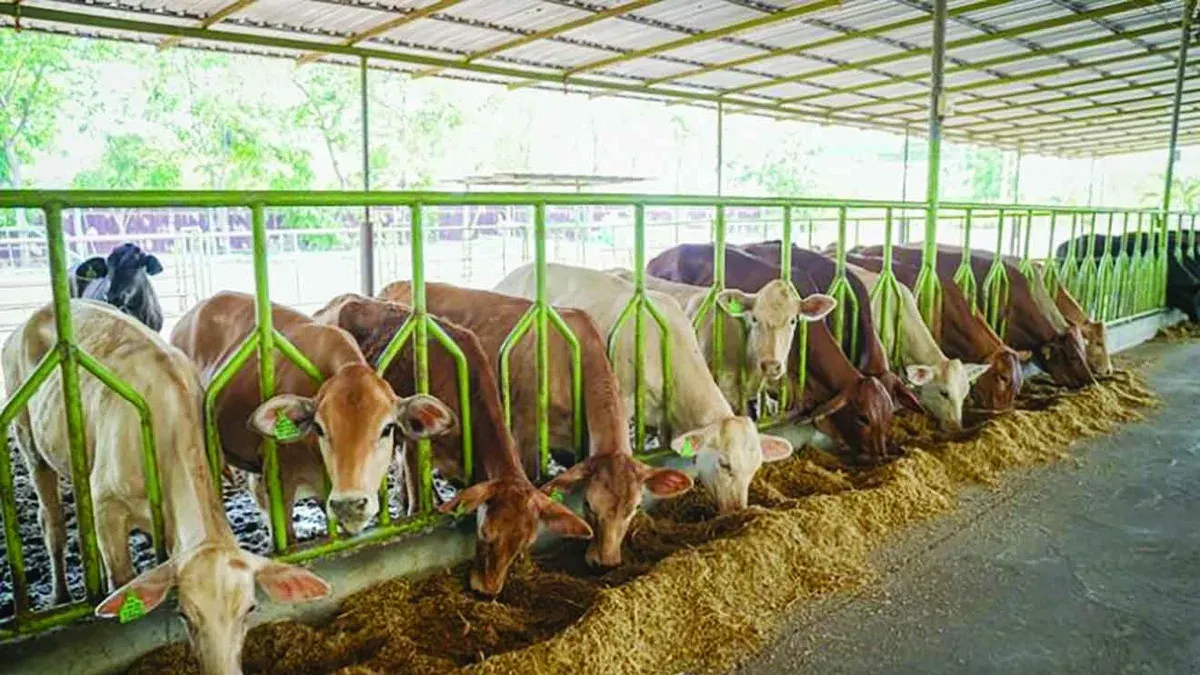
As the world faces climate challenges, reducing greenhouse gases is no longer a distant issue. Livestock farms are adopting technology and innovation to lessen environmental impact, particularly by cutting methane from cattle digestion. Beyond mitigating global warming, this can improve feed efficiency and add value to animal husbandry.
Akkharaphol Thanawathanacharoen, CEO and Co-Founder of Locol Company, spotted this opportunity from his work experience in Australia, leading to the development of a methane-reducing product for Thai livestock using cocoa extract.
Most methane from cattle arises during feed fermentation in the rumen, a key part of the ruminant digestive system. While this process lets cows utilize grass and fibrous feed, it also produces methane that is exhaled — a greenhouse gas with significant warming impact.
Akkharaphol explains that there are various approaches to developing methane-reducing products, but in the Thai context one must consider not only emission-cutting efficacy but also cost, raw-material volume, and practical ease of use. To cut methane: 1) ingredients must suit the region at accessible prices; 2) supply must be large enough for the national herd; 3) the product must not overburden farmers on price and must benefit them by helping cattle grow and solving health issues.
Locol Company began by designing a lick-block supplement suited to local breeds and smallholder farms. Lick blocks let cows self-feed conveniently, but production trials showed that adding crystalline cocoa ingredients caused poor binding, affecting block hardness. The team switched to a pre-mix powder to blend with feed, yet some smallholders still wanted a more convenient form, prompting renewed research on lick blocks to solve the binding issue and better integrate cocoa with minerals.
The company focuses on polyphenols — plant compounds studied for their effects on fermentation in ruminant digestive tracts — incorporating them into the supplement formula to modify rumen processes, cut methane, and add minerals.
"Compared with powder, lick blocks make daily intake harder to measure, which matters for carbon-credit claims," Akkharaphol says. "We already have a contract with a Singapore counterpart and will be the first in ASEAN to sell livestock carbon credits across borders to Singapore."
Methane reduction ties directly to cattle energy efficiency, since some feed energy is lost as methane. Cutting that loss without harming digestion can boost nutrient utilization, though real-world results depend on feed quality, farm management, and animal trials.
Akkharaphol adds that the product has been tested on both dairy and beef cattle, with dosing tailored to each system. Dairy cows receive about 100 grams per head per day, with outcomes evaluated after roughly one month.
The supplement…