Thai Floods Disrupt Schooling, UNICEF Urges Climate Preparedness
Widespread flooding across Thailand has disrupted schooling for hundreds of thousands of children, with many schools closed or turned into shelters. UNICEF Thailand urges urgent preparations to make schools resilient to climate‑related hazards so learning can continue. The floods have affected over four million people and nearly a thousand schools nationwide.
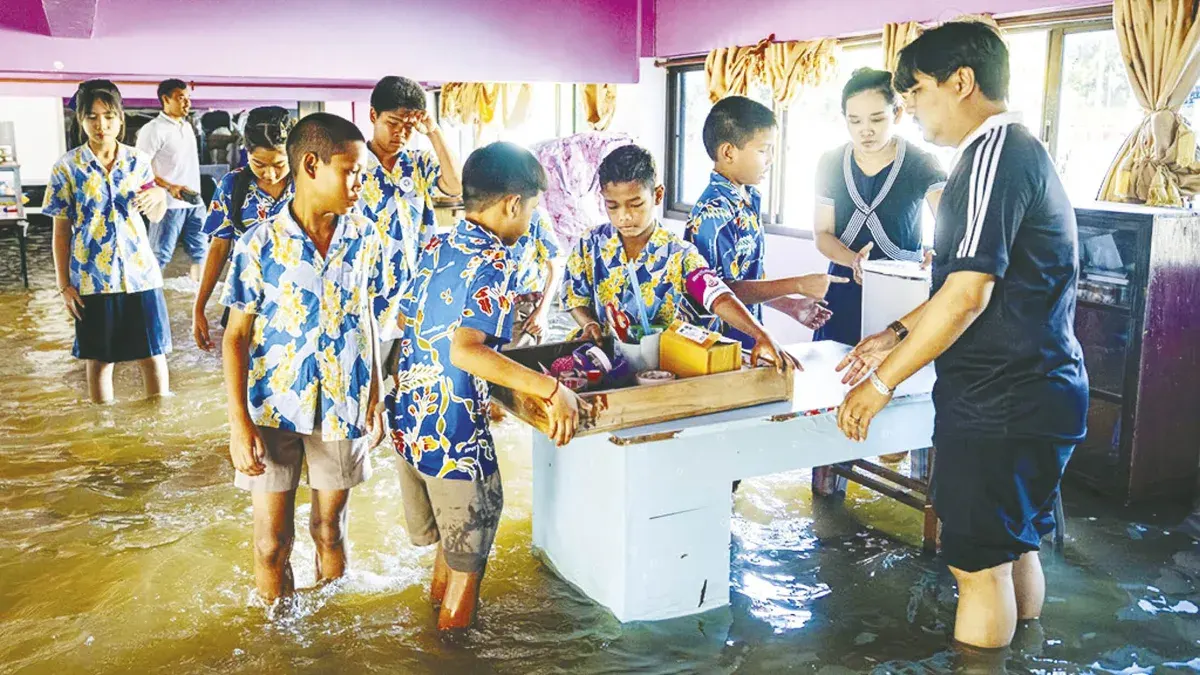
The flood situation in many parts of Thailand is affecting children's learning, with schools in affected areas ordered to suspend classes and some converted into temporary shelters. Over four million people in 1.4 million households spread across 47 provinces are experiencing the floods. According to the Ministry of Education, 988 schools in 29 provinces have been impacted, including 188 schools in Bangkok, some of which are being used as evacuation centres. Last week the Bangkok Metropolitan Administration announced temporary school closures in 15 districts that suffered severe flooding. UNICEF Thailand director Ken Legins said that when floods force schools to shut, children lose not only study time but also their daily routines, time with friends and teachers, and familiar safe environments; such disruption can affect both learning and mental health. He stressed that making schools resilient and able to reopen quickly helps children keep learning, stay connected with peers and teachers, and receive needed support. Preparing now is essential for building an education system ready for climate‑change risks. The situation in Thailand mirrors a global trend: in 2025 more than 171 million students worldwide had their education interrupted by flood storms, heatwaves, droughts and wildfires. In Thailand alone, 167,106 students were affected by climate‑related hazards that year, with floods being the leading cause. UNICEF is supporting the Thai government to strengthen disaster‑preparedness plans and early‑warning systems to better protect schools, child‑development centres and children. Its recommendations will feed into the national disaster‑prevention and mitigation plan for 2028‑2032. UNICEF also calls for measures that allow children to return to learning quickly, such as temporary education during closures, mental‑health and psychosocial support for affected children and teachers, investment in safer school infrastructure, and teacher training on disaster response. Through the #CountMeIn campaign, UNICEF advocates for stronger laws and policies to safeguard children's health, development and future from climate impacts, and promotes meaningful youth participation in climate‑policy making.