Thai Health Ministry Shares Tips to Keep Kitchen Sponges Bacteria-Free
The Thai Ministry of Public Health warns that kitchen sponges can harbor bacteria like Salmonella and offers five cleaning methods: rinse and dry, sun‑dry, vinegar soak, microwaving or boiling, and regular replacement. It notes that appearance and smell do not guarantee safety, advising replacement when off‑odors appear. Following these steps helps prevent food‑borne illness.
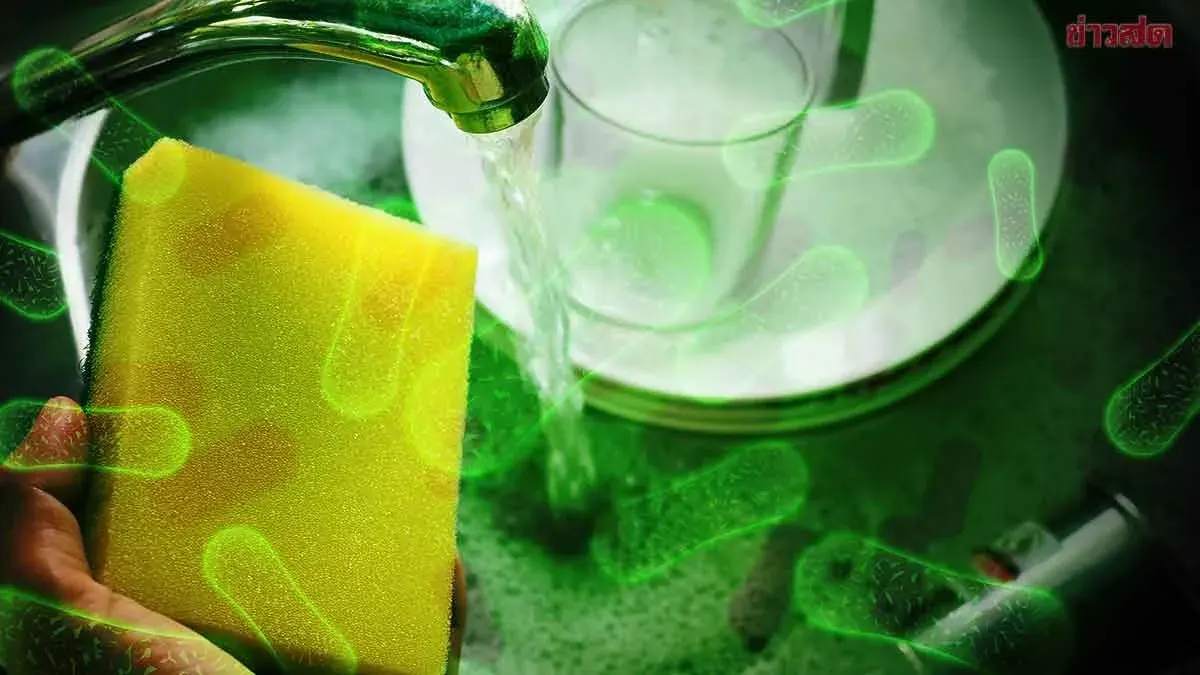
Check out these five techniques to clean dish sponges so they don’t harbor germs. The article reveals signs it’s time to throw a sponge away and points out that color and odor don’t guarantee it’s germ‑free.
Dish sponges are a kitchen essential used to clean dishes, glasses, bowls, pots, pans and other utensils, as well as various cookware. Many people may not realize that although sponges are used to clean dirt, the sponge itself is an excellent breeding ground for germs, especially Salmonella, which causes gastrointestinal illnesses, food poisoning, diarrhea and dysentery. If we don’t keep the sponge clean, these germs can attach and spread to other items and cookware we need to clean.
Today we will share easy tips on how to clean and maintain dish sponges properly so they can be used safely without worry.
5 techniques to do after use: 1. Rinse clean and squeeze dry each time; do not leave dish soap sitting until the next wash as it accumulates germs. 2. Sun‑dry for 2‑3 hours, because sunlight heat reduces microbial counts. 3. Each night after use, mix four tablespoons of vinegar with half a liter of water, soak the sponge used that day overnight, changing the vinegar daily as its acidity kills bacteria. After the overnight soak, in the morning squeeze clean and let air dry. 4. Place a damp sponge in the microwave on high for 60 seconds, or immerse it in boiling water for 5‑10 minutes; this method kills 99% of bacteria. 5. If the sponge or scouring pad starts to smell or shows signs of wear, replace it with a new one every 1‑4 weeks.
Many people judge a sponge by its smell or appearance, assuming it’s still good if it looks clean and odorless. However, research from the German Federal Institute for Risk Assessment shows that appearance and odor do not reflect the amount of bacteria hidden inside. Therefore, even if a sponge still looks new and has no bad smell, it may not be germ‑free; but if it begins to emit an unusual odor, it should be replaced immediately, as that signals that microorganisms have spread widely.
Source: Ministry of Public Health, Department of Medical Sciences, Zerosickth.