Thai Military Pushes Back on Cambodia Border Accusations
Thai military denies Cambodian accusations of border encroachment, stating that security activities aim to protect troops and civilians rather than violate sovereignty, and insisting disputes should be resolved through established joint com
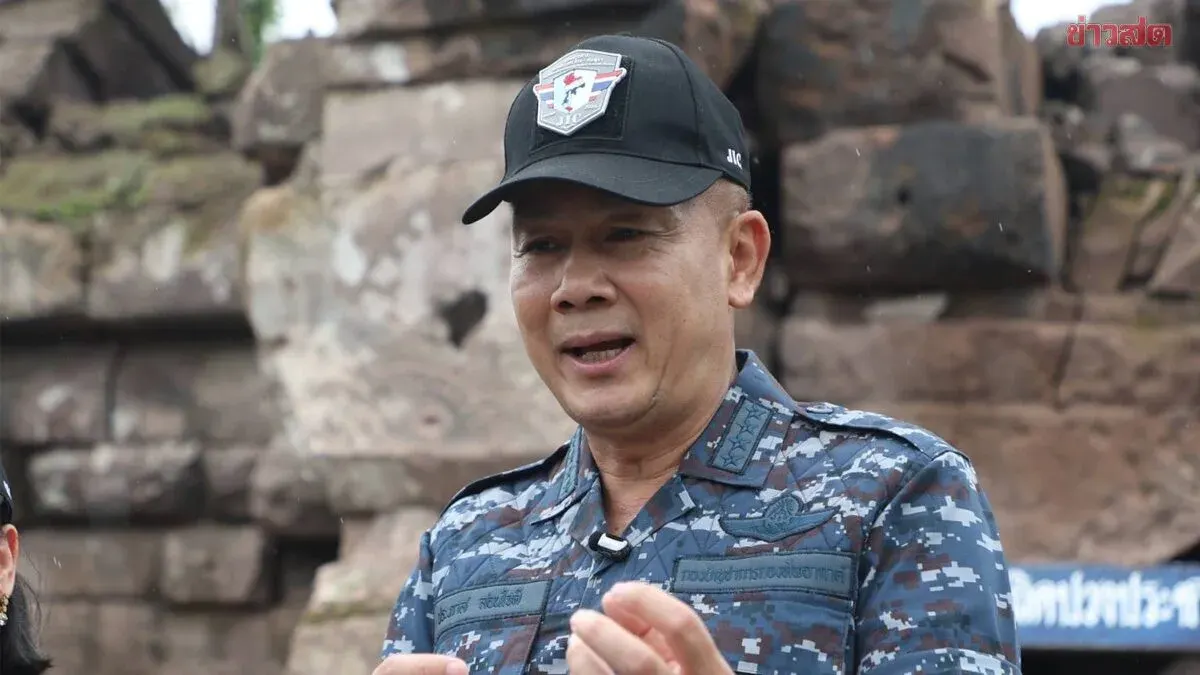
On August 22, Air Vice Marshal Prapas Saonjai, Deputy Commander of the Royal Thai Air Force and Director of the Thai-Cambodian Joint Information Center, responded to Cambodian media allegations that Thai forces have cleared land, built roads, and established military positions in border areas, which Cambodia claims violates its sovereignty. Prapas firmly stated that Thailand has no policy of invading or occupying neighboring territory and stressed the importance of separating allegations from facts.
Thailand's border activities are aimed at ensuring the safety of troops and civilians, preventing threats, and maintaining security in areas under Thai control and responsibility, he explained. He clarified that security measures are not border demarcation and should not be interpreted as changing the outcome of the bilateral boundary delimitation process that both countries have agreed upon.
When asked how Thailand would respond if Cambodia insisted the area was Cambodian territory, Prapas said anyone can make claims, but a claim does not automatically become fact. Any disputes over border lines or activities in disputed areas should be resolved by bringing maps, evidence, and facts to mechanisms both countries have agreed to use. He emphasized that both the General Border Committee and Joint Border Committee exist for this purpose and should be utilized.
Prapas stressed that borders cannot be changed by force and cannot be redefined through statements, news reports, or social media posts. When asked if Cambodia's accusations violated the ceasefire agreement, he noted that Thailand remains committed to the joint statement from the third special General Border Committee meeting on December 27, 2024, and de-escalation measures. However, agreements are obligations for both parties, not one-sided commitments.
Regarding information warfare, Prapas said he preferred not to label either side but emphasized that the Joint Information Center's role is to verify and clarify facts when allegations concern Thailand. He warned against allowing repeated claims to be perceived as facts and outlined the center's approach: allegations must be answered with facts, disputes with evidence, and disagreements through mutually accepted mechanisms.
When asked if Thailand agreed with Cambodia's stated preference for a peaceful resolution, Prapas strongly affirmed Thailand's commitment to this principle, stressing that peace must prevail both on the ground and in the information space.