Thai PM Anuthín Visits Australia on Official State Trip
Thai PM Anuthín Charnweerakul received a formal state welcome in Canberra on August 19, marking the first official visit by a Thai prime minister to Australia in 14 years, with both leaders pledging to deepen strategic partnership on trade,
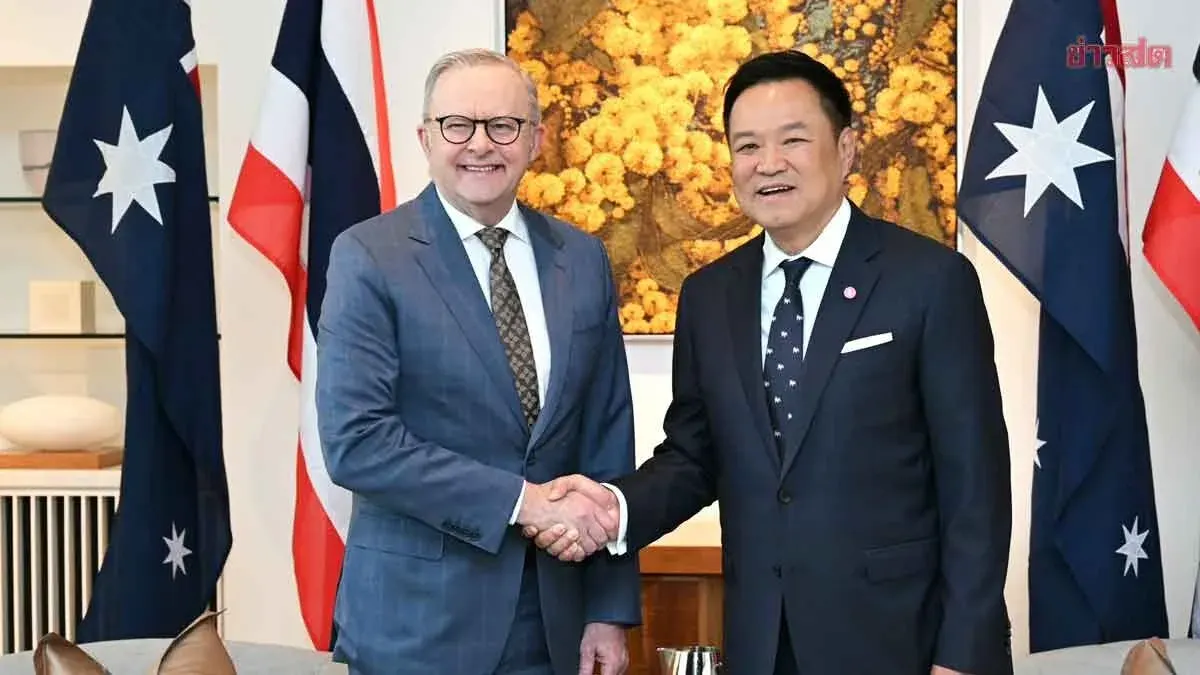
Thai Prime Minister Anuthín Charnweerakul received an official welcome on his state visit to Australia at 9 a.m. on August 19, 2025 (Canberra time, three hours ahead of Thailand) at Parliament House. Australian Prime Minister Anthony Albanese warmly received the Thai leader before the formal ceremony, which included a 19-gun salute, inspection of an honor guard, and the playing of both national anthems. Following the reception, the two prime ministers held a small-group discussion in a warm and constructive atmosphere, exchanging views on deepening the Thailand-Australia strategic partnership. They discussed matters of mutual importance including economic cooperation, removal of trade barriers, prevention and suppression of transnational and online crime, and shared approaches to common challenges. Both leaders committed to advancing the bilateral relationship and achieving concrete results that benefit their peoples. They then held a full bilateral meeting to explore expanded cooperation across multiple sectors. At 10:45 a.m., both prime ministers issued a joint statement. Government spokesperson Ratchada Thanadirek noted that the visit aims to strengthen the strategic partnership and deliver tangible results in facing shared challenges and creating benefits for both nations. This marks the first official visit by a Thai prime minister to Australia in 14 years and comes ahead of Thailand and Australia celebrating 75 years of diplomatic relations next year. The two countries elevated their relationship to a strategic partnership in 2020 and have continued developing cooperation. The discussions covered four key areas of mutual interest: politics and security, with both sides agreeing to enhance cooperation on traditional and emerging security threats, particularly transnational crime, using existing mechanisms and developing new cooperation.