Thai PM Opens Infineon Semiconductor Plant in Samut Prakan
Prime Minister Anutin Charnvirakul opened the first phase of Infineon’s new semiconductor factory in Samut Prakan on 1 October 2029, a 48‑billion‑baht project promoted by the Board of Investment. The plant will produce power modules, test chips and wafers, and conduct R&D, with plans to expand to five phases that would make it Infineon’s largest back‑end base worldwide. The investment is intended to boost Thailand’s role in the global semiconductor supply chain and develop local talent and technology.
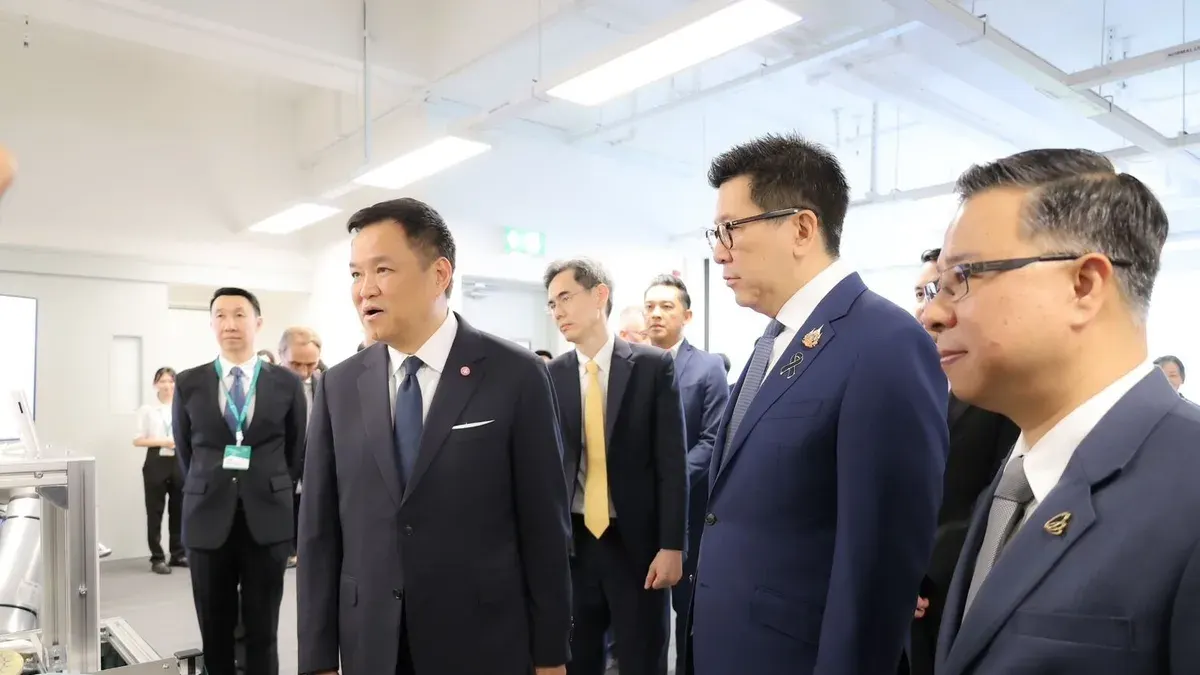
Prime Minister Anutin Charnvirakul pressed the button to open the first phase of the Infineon plant in Samut Prakan on 1 October 2029. The initial investment exceeds 48 billion baht, backed by the Board of Investment, and covers the production of power modules, integrated circuit (IC) testing, wafer processing, and semiconductor research and development. The plant is Infineon's third power-module base worldwide, after Germany and China, and will begin with Module A on a 30,000‑square‑metre cleanroom floor. If fully expanded to five phases (Modules A‑E), the cleanroom area would reach 150,000 square metres, making it the company’s largest back‑end manufacturing site globally.
The factory is designed as an autonomous facility from the outset, employing robots, automated material‑handling systems, and digital production technologies that integrate wafer‑front‑end testing with power‑module and IC back‑end processes under one roof. It also hosts a prototype‑product R&D centre in Thailand.
Power semiconductors are essential for global megatrends such as electric vehicles, charging stations, solar power, batteries, robotics, automation, data centres and AI. The worldwide market for these chips was valued at over 60 billion US dollars in 2025 and is projected to exceed 107 billion US dollars by 2032. Thailand’s investment will strengthen its capabilities in power semiconductors and link them with existing industries in automobiles, electronics, automation and energy, while paving the way for next‑generation chip technologies like silicon carbide (SiC) and gallium nitride (GaN).
Infineon plans to employ more than 5,000 Thai workers if all five phases are completed, focusing on high‑skill engineers and technicians. The company aims to develop over 600 local science and technology professionals, send more than 130 staff abroad for specialised training, and create at least 60 semiconductor‑related courses that will enable over 1,100 students to participate in training and research projects. Additionally, it will collaborate on no fewer than 18 research projects with Thai universities and research institutes and build a supplier network through partnerships with domestic industry groups and the Thai Semiconductor Association.
BOI Secretary‑General Nariterm Teedsathirasak said the goal is not only to attract investment and build a factory but to ensure that the global technology company’s presence creates real investment value for Thailand—through technology transfer, R&D, skill upgrades and domestic supply chains—laying the foundation for a long‑term Thai semiconductor industry and advancing the "Made‑in‑Thailand Chip" vision.