Thai Youth Khon Master Brings Ancient Dance to Global Stage
An 18-year-old Thai-American-Danish student has become a rising khon master, performing Thailand's ancient masked dance on global stages including before Britain's Princess Royal and African leaders.
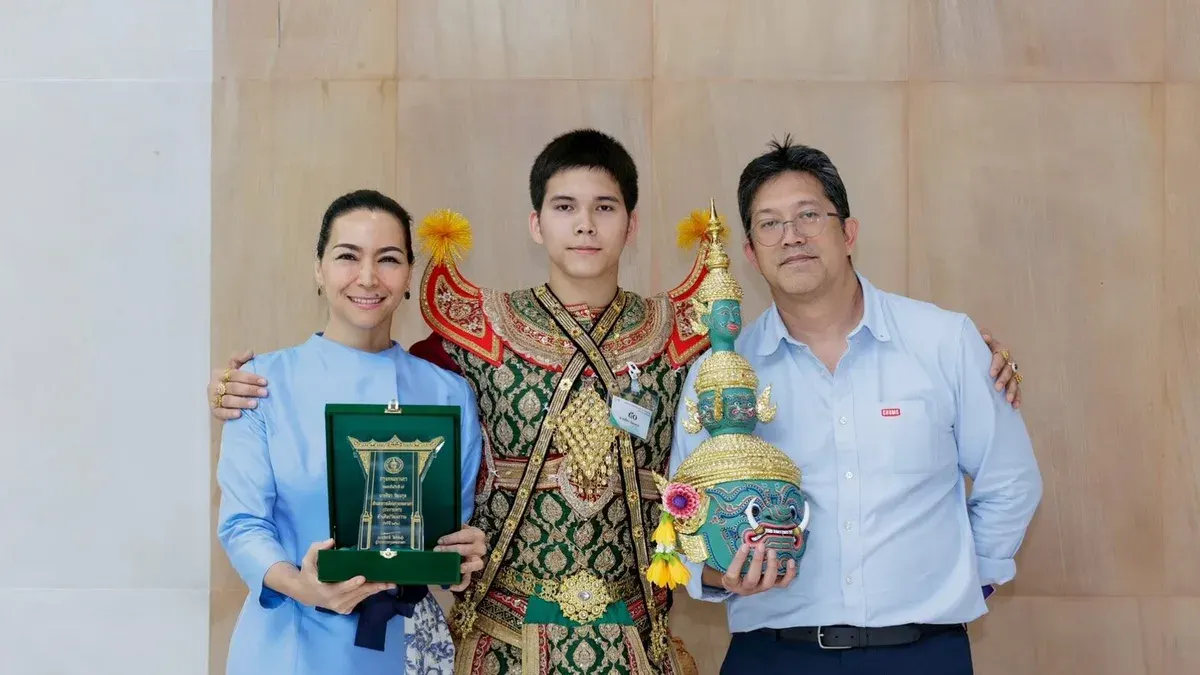
An 18-year-old high school student named Mako Sila Wattanakul has become a rising star by mastering khon, Thailand's traditional masked dance art form. Despite his multicultural heritage as a Thai-American-Danish teenager, Mako has devoted himself to rigorous khon training and has earned continuous opportunities to perform on prestigious stages.
Mako is the son of Sathit Wattanakul (Laura), a broadcaster and businesswoman, and Sithit Wattanakul. He completed kindergarten at Chitralada School and primary education at VERSO International School before studying at Bangkok Christian College, where he is now preparing for university entrance exams. His hobbies include model building and cooking, and he is bilingual in Thai and English.
In 2024, Mako performed in a youth khon production of the Ramayana, playing the demon Thotsakan, in a diplomatic performance before Lesotho's King Letsie III and other African leaders. He received the Bangkok Youth Cultural Award in 2025 and the Ministry of Education's 2025 Arts and Music Award. Most notably, in 2026, he performed in the English-language theatrical production The King's Command, based on a work by King Mongkut (Rama IV), with the Siam Repertory Theatre Company in the presence of Britain's Princess Royal during her visit to Thailand.
When asked about his journey, Mako explained that his interest in khon began with watching performances as a child, but he soon discovered it was far more demanding than it appeared. Khon requires strict foundational training in hand movements, footwork, posture, and precise body control synchronized with rhythm. He learned that being a khon demon performer requires not just physical strength but controlled power and emotional discipline until the body remembers movements instinctively. Though he has faced pain, exhaustion, and self-doubt, he chose not to give up, believing that khon is not merely a performance but a discipline that unites body, mind, and spirit.
As a young person today, Mako emphasizes the importance of time management, carefully balancing schoolwork, khon training, and rest through careful planning and prioritization. He does not see his studies and passion for khon as competing demands but rather as complementary pursuits that strengthen each other.