Thailand Launches Repair-and-Build Plan to Revive Economy
Thailand's government launched a two-phase economic plan combining immediate relief for households and businesses with long-term infrastructure and tech investments to boost growth from under 3 percent toward historical rates of 6-7 percent

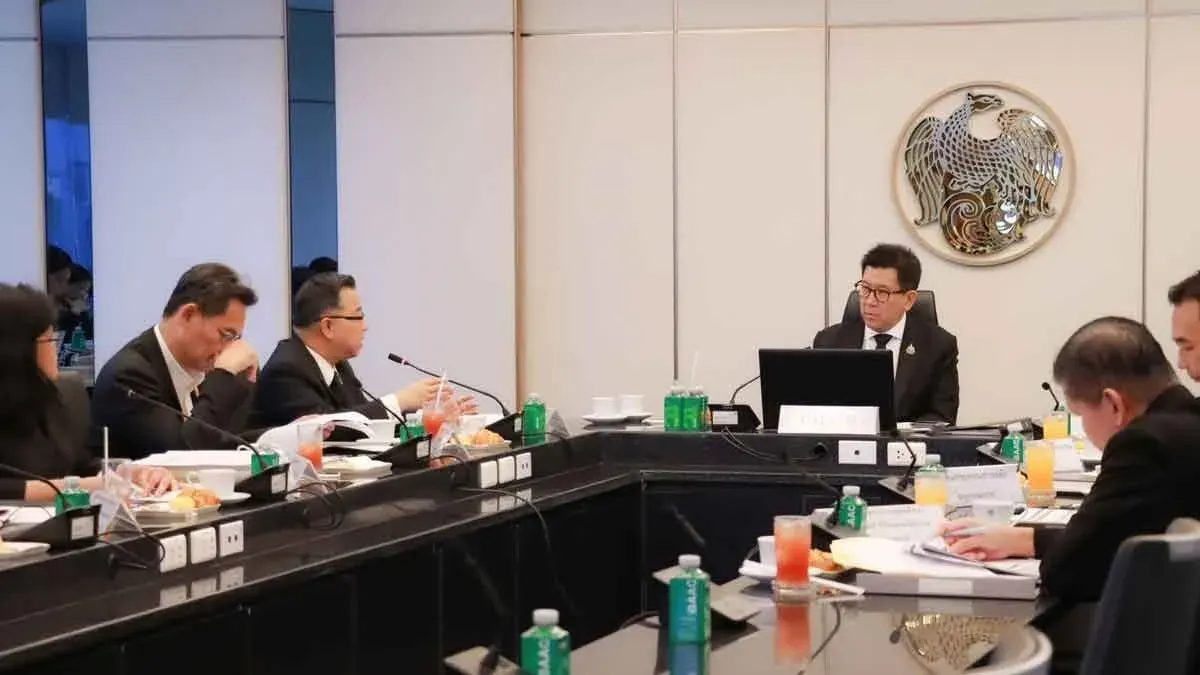
Deputy Prime Minister and Finance Minister Ekniti Nitithanprapas outlined his economic vision at the TNN Future Forum 2026: Thailand Beyond Tomorrow, describing how Thailand's economy is underperforming at less than 3 percent growth compared to historical rates of 6-7 percent due to prolonged underinvestment. This has eroded household incomes, accumulated household debt, and forced the state to spend heavily on relief, pushing public debt higher. The government faces additional global pressures including geopolitical polarization, trade barriers, AI technology competition, environmental regulations, and an aging society.
To reverse this downturn, the government is pursuing simultaneous repair and build strategies. The repair phase targets immediate relief for households and small businesses through several measures: a debt resolution and AI-powered credit program in partnership with the Bank of Thailand and Thai Bankers Association to help over one million borrowers with debts up to 100,000 baht; the launch of "Whisper Credit" using AI to analyze sales and cash flow for small traders without requiring collateral; an SME Credit Boost program injecting 60,000 million baht in liquidity through commercial banks and the Financial Institutions Development Fund; tax refunds of 60,000 million baht through digital channels; supply chain financing support; and retail savings bonds with 2.8 percent interest available in small lots from 500 baht.
The build phase focuses on future growth through infrastructure and technology investments. Plans include high-speed rail development and attracting data centers, semiconductor manufacturing, and clean energy projects from global leaders, particularly the world's top photonics companies that have already established production bases in Saraburi province, creating over 30,000 jobs. The government also aims to subsidize household solar panel installation for one million homes at 50,000 baht each, converting citizens from energy consumers to producers. Complementary efforts include promoting biodiesel and ethanol to distribute income to palm, sugarcane, and cassava farmers, and positioning Thailand as a global wellness hub by leveraging Thai herbal medicine and traditional practitioners while attracting international pharmaceutical companies to establish local manufacturing.