Thailand Launches STI Strategy to Attract Global Investment
Deputy Prime Minister Ek Niti Nitithanpraphat unveiled Thailand’s new ‘STI’ economic strategy aimed at attracting foreign investment by emphasizing safety, neutrality, and trade openness. He highlighted a surge in BOI investment requests to 1.47 trillion baht in 2025, driven by growth in AI, electronics, and EV sectors. The plan focuses on stabilizing the economy, transitioning to clean energy, and investing in future technologies.

He pointed out that foreign investors are looking for places that are safe, neutral, and able to trade with all parties—qualities Thailand possesses. The government is accelerating the promotion of seven target industries.
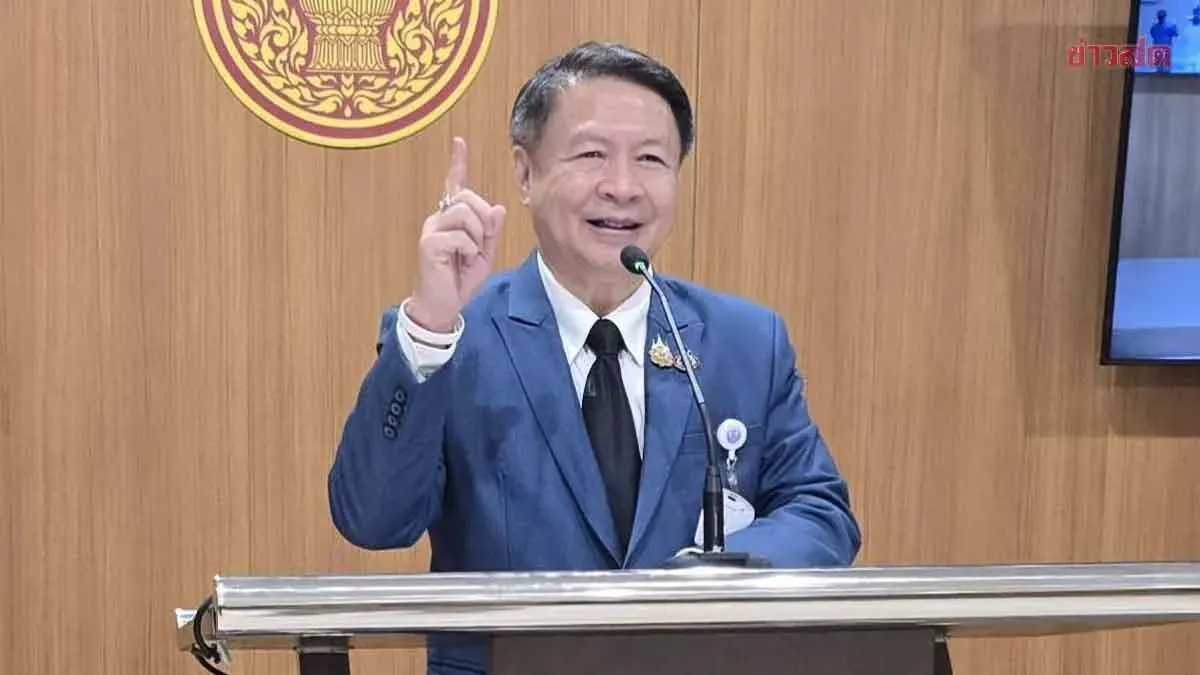
Ek Niti Nitithanpraphat, Deputy Prime Minister and Minister of Finance, gave the special lecture “Down to Earth, No Luck: Thailand’s Economic Strategy in a Rule‑Free World.” He said this is a crucial moment to “look back” and review Thailand’s past lessons, “look ahead” to assess challenges, and “sketch the future” to set the country’s direction in an era where the world order has completely changed.
Looking back at Thailand’s economic history since 1980, the world was driven by three major poles—the United States, Europe, and Japan—together accounting for more than 50‑60 % of global GDP. This led to the Plaza Accord, which forced a rapid yen appreciation, pushing Japan to shift production bases abroad. At that time, Thailand was ready, thanks to infrastructure projects such as the Eastern Seaboard development, Laem Chabang port, the Map Ta Phut industrial estate, and improved transport links, enabling a leap from an agrarian to an industrial economy, boosting income and employment.
However, when looking ahead to today, the global context is far more complex. The world is no longer dominated by the old three powers; it has become economically multipolar, with the combined share of the U.S., Europe, and Japan now only about 25 % of global GDP. Moreover, current trade‑restriction measures are not limited to exchange‑rate issues but have shifted to tariff increases, and the wave of capital relocation by foreign investors is no longer solely about seeking the lowest costs. Instead, they prioritize safety and neutrality—places where they can trade with all sides.
Thailand clearly possesses these advantages, which is reflected in the surge of investment promotion applications to the Board of Investment (BOI). In the past year 2025, requests reached 1.47 trillion baht, growing nearly 40 %. Especially notable are new‑industry sectors such as artificial intelligence (AI), high‑end electronic components like printed circuit boards (PCB) and high‑speed optical transceivers, where Thailand has risen to become the world’s number‑one or two production base, alongside the push for future mobility (Future Mobility / EV) that is replacing traditional combustion‑engine vehicles.
Ek Niti said that to sketch the future, Thailand must move forward with the “STI” strategy—clear‑minded and mindful—to cope with volatility. The strategy comprises:
1. **S – Stabilize Today**: Build stability from now by solving long‑standing structural problems such as low economic growth, household debt, and SMEs’ access to credit, while maintaining strict fiscal discipline, which serves as a crucial backstop that has led global rating agencies to upgrade Thailand’s outlook to a stable level.
2. **T – Transition Now**: Immediately shift the energy structure to reduce dependence on imported oil and natural gas, which heavily strains the current account during Middle‑East unrest, by promoting clean energy such as solar panels together with modernizing the power grid to support peer‑to‑peer electricity trading, helping cut expenses and create revenue.
3. **I – Invest for Tomorrow**: Invest in new machinery and technology, including human‑capital development...