SAFE Fertility Group Targets 50k Families and 15% Profit Growth
SAFE Fertility Group PLC plans to increase the number of families under its care from about 40,000 to 50,000 over the next three to five years, targeting average annual revenue and profit growth of 10‑15%. The company aims to achieve this by expanding services across the full patient journey, pursuing partnerships with Thailand’s National Health Security Office and social security system, and diversifying its foreign client base beyond China into Japan, South Korea, Taiwan, Malaysia and other markets. It also sees growth potential in the Thai market if government support for childbirth expenses expands.
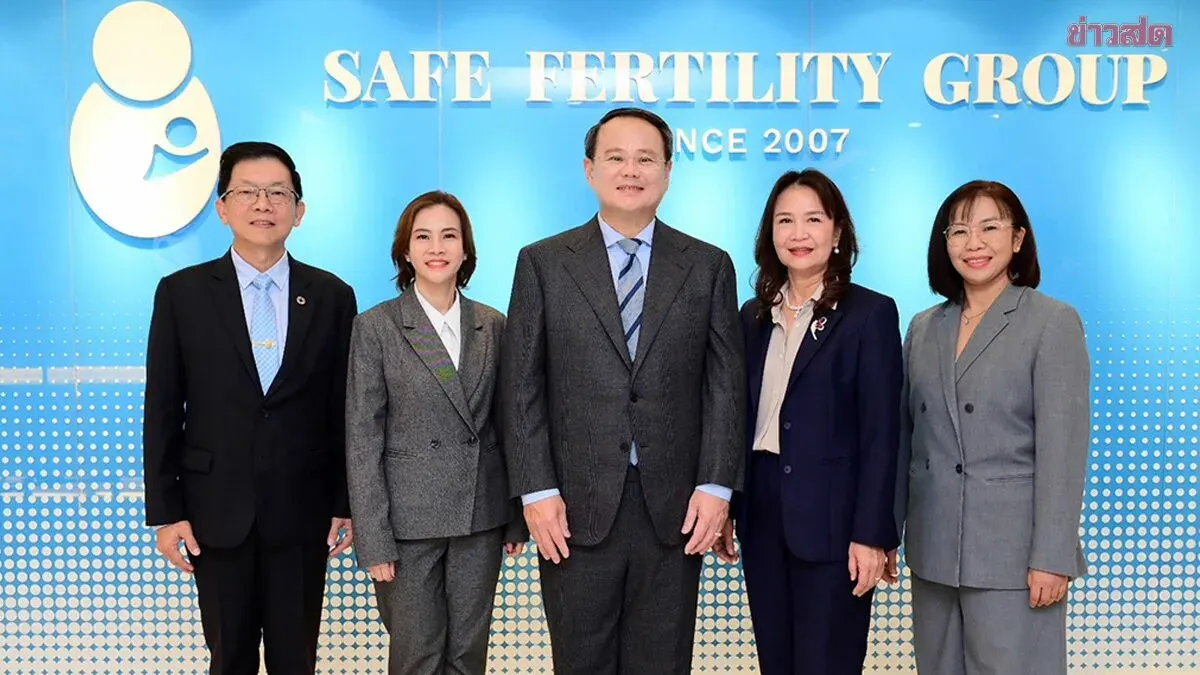
SAFE Fertility Group PLC is pushing forward with its reproductive medicine business, aiming over the next three to five years to increase the number of families under its care from about 40,000 to 50,000 while driving average annual revenue and profit growth of 10‑15% by expanding services across the full patient journey and launching new domestic and international markets. Dr. Viwat Kwangkananurach, founder and chief executive officer of SAFE Fertility Group PLC, said that over the next three to five years the company will focus on expanding its user base among both Thais and foreigners, targeting an increase in families under care from the current approximately 40,000 to 50,000, and aiming for average annual revenue and profit growth of 10‑15% through expanding services to cover the full patient journey and adding new markets. Pushing collaboration with the government, one of SAFE’s key strategies is to expand cooperation with the state. The company is currently in talks with the National Health Security Office (NHSO) to study joining a program that provides screening for fetal chromosomal abnormalities using maternal blood, known as NIPT, with the expectation that services under the NHSO scheme could begin in 2027 (Buddhist year 2570 corresponds to 2027 CE). In addition, the company is considering extending the cooperation to intrauterine insemination (IUI) services for beneficiaries of the national health security system, which is presently under study regarding details and conditions before entering into formal agreements. SAFE also sees opportunities to expand cooperation with the social security system in the future, noting that pushing such initiatives will require time and gradual development of benefits suited to public demand, especially after several Asian countries have begun supporting childbirth expenses to counter declining birth rates. “We see that the Thai market still has significant growth potential if the government steps in, because having a child is a major family investment, and reducing cost burdens will enable more people to access services.” Expanding the foreign customer base to reduce reliance on existing markets. Currently, foreign customers account for about 50% of SAFE’s total users, with clientele from China, India, Vietnam, Singapore, and Japan. While the Chinese market, which used to be a primary market, is seeing its share decline, the company is moving to diversify its customer base across other countries to avoid overdependence on any single market. One market the company emphasizes is Japan, where it sees potential due to the government’s beginning to subsidize infertility treatment and egg‑freezing on a cost‑sharing basis. At the same time, SAFE is looking at opportunities in South Korea, Taiwan, Malaysia, and other Asian countries where governments are starting to prioritize low birth‑rate issues. In particular, South Korea’s increasing governmental support measures are a factor that helps stimulate demand for assisted reproductive technology. However, the foreign market remains volatile due to geopolitical factors and each country’s situation, especially the Cambodian market, which has been affected by international relations and travel conditions, prompting the company to accelerate customer diversification and new market entry to mitigate overseas market volatility. Driving the Preserve‑Prevent line to catch the family‑planning trend. Meanwhile, as the company enters its 20th year of operation, it is ready to continue developing chromosome‑screening technology for embryos.